ISLAMABAD: Pakistan on Sunday strongly condemned what it called “highly provocative and irresponsible” remarks by India's defense minister Rajnath Singh's on the Jammu and Kashmir dispute, saying the comments distorted internationally recognized facts and threatened regional peace and security.
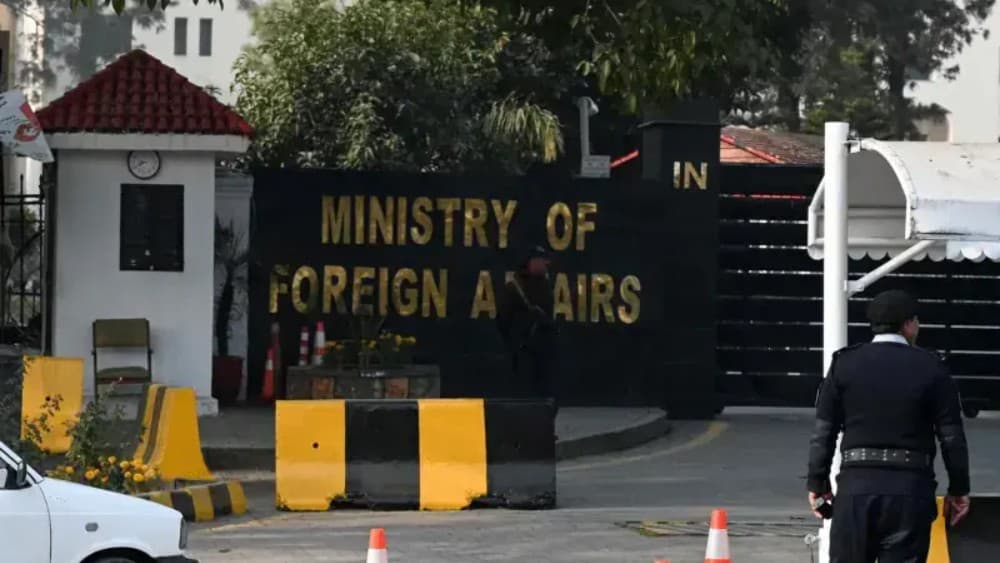
In a statement, the Foreign Office said the Indian minister’s remarks misrepresented the status of the Jammu and Kashmir dispute, which it said remains on the agenda of the UN Security Council.
The Foreign Office said the comments reflected India's “deliberate policy to threaten regional and international peace and security” and were aimed at diverting attention from what it described as India's continued occupation of Indian Illegally Occupied Jammu and Kashmir (IIOJK), its alleged sponsorship of terrorism in the region and its domestic challenges.
It said India's “misplaced rhetoric of aggression and belligerence” should not be mistaken for weakness on Pakistan's part, adding that the Pakistani people and armed forces remained fully prepared to respond to any “adventurism,” citing Operation Bunyan-ul-Marsoos as an example of the country's resolve.
The Foreign Office also urged the international community, particularly the United Nations, to take note of what it called India's “continued rogue behavior” and hold New Delhi accountable for failing to implement relevant UN Security Council resolutions guaranteeing the right to self-determination for the Kashmiri people.
The reaction came after Singh, addressing a ceremony in New Delhi, reiterated that there will be no direct talks with Pakistan, and that any future dialogue would only focus on Azad Jammu and Kashmir, which India claims as its territory.
Asif rebukes Indian counterpart
Separately, Defense Minister Khawaja Asif also rejected the Indian defense minister's remarks, saying India's attempts to rewrite “internationally recognized legal realities through coercive rhetoric” could not change the facts.
He said Pakistan categorically rejected the remarks, describing them as an attempt to distort the internationally recognized status of Jammu and Kashmir through political rhetoric and coercive posturing.
Asif said Jammu and Kashmir remained an internationally recognized disputed territory whose final status must be determined in accordance with relevant UN Security Council resolutions and the freely expressed will of the Kashmiri people.
He also rejected India's allegations against Pakistan, saying New Delhi lacked credibility because of what he described as its own record of state-sponsored terrorism and destabilizing activities in the region. He accused India of being “the biggest sponsor of terrorism” in South Asia and pursuing "aggressively revisionist designs.”
The defense minister warned that India's rhetoric risked lowering the threshold for interstate conflict in South Asia. While reaffirming Pakistan's commitment to peace and dialogue, he said the country remained fully determined to safeguard its sovereignty, territorial integrity and national security.
Asif added that the Indian defense minister's remarks appeared intended to divert attention from India's internal political turmoil and growing public discontent with Prime Minister Narendra Modi's governance.