


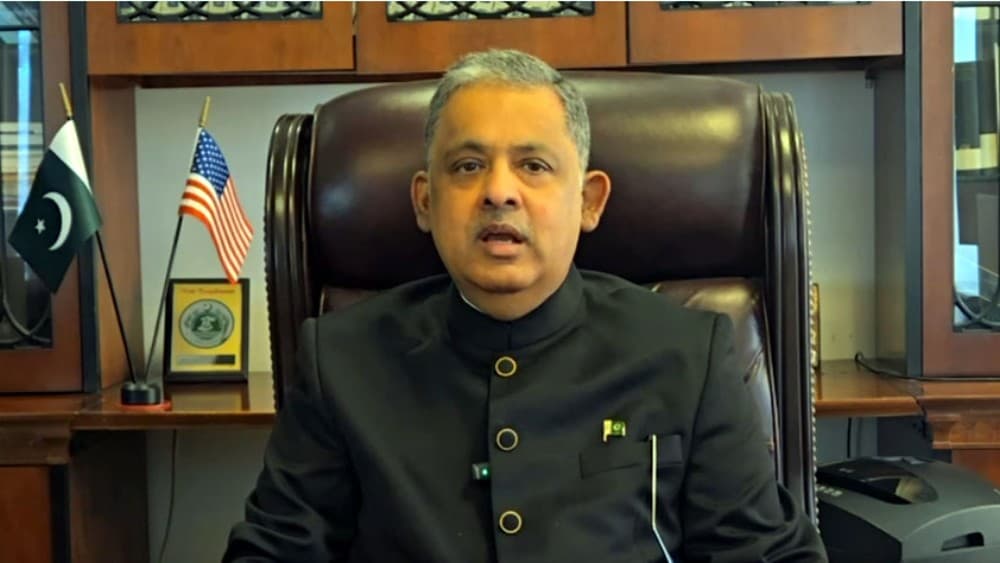
ISLAMABAD: Pakistan’s ambassador to the United States in a recent op-ed rejected Indian claims that Pakistan undermined the Indus Waters Treaty long before India moved to suspend the agreement, calling the argument a distortion of the treaty’s history and legal framework, according to Pakistan's Press Information Department (PID).
In an article published August 28 on Newsweek, Ambassador Rizwan Saeed Sheikh said India’s decision in April 2025 to place the treaty “in abeyance” had no basis in the agreement or international law.
The ambassador was responding to an August 1 article by India’s ambassador to the United States, Vinay Kwatra, who claimed that the 1960 treaty was an "asymmetric arrangement" and Pakistan was 'obstructing' India’s hydropower development on rivers allocated primarily to Pakistan.
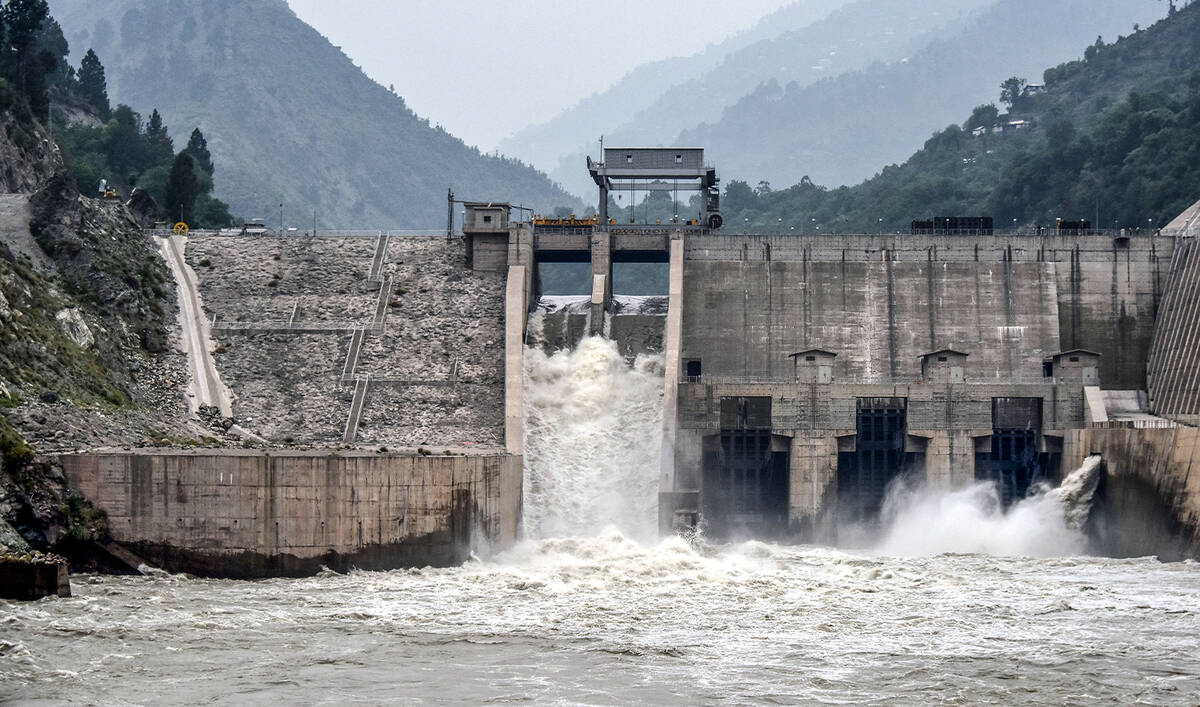
The Indus Waters Treaty, negotiated with World Bank assistance and signed in 1960, divided control of six rivers between the two countries. India received unrestricted use of the eastern rivers Ravi, Beas and Sutlej. Meanwhile, Pakistan’s rights to the western rivers Indus, Jhelum and Chenab were protected under the agreement.
Rizwan Saeed Sheikh said the arrangement was not an Indian concession but a negotiated settlement intended to establish predictable rules for managing the Indus River system.
He rejected India’s allegation that Pakistan has obstructed Indian hydropower projects, saying the treaty expressly allows India to build run-of-river hydroelectric projects on the western rivers as long as they meet specified design and operating requirements.
.jpg)
.jpg)
The ambassador said Pakistan’s use of the treaty’s dispute-resolution mechanisms to raise technical concerns about Indian hydropower projects is a right provided by the agreement, not an attempt to obstruct development.
The dispute intensified after India announced in April 2025 that it was putting the treaty in abeyance following an attack in Indian-Illegally Occupied Kashmir (IIOJK). India blamed Pakistan for the attack, an allegation Islamabad rejected and offered to address through a third-party investigation.
The ambassador said political and security disputes do not give either country a unilateral right to suspend or rewrite the treaty. Citing Article XII, he said the agreement remains in force unless both governments conclude and ratify a new treaty to terminate it.
"The Treaty remains valid, operative and binding,” he said.
He also cited decisions by the treaty’s Court of Arbitration, including a supplemental award issued in May 2026, as supporting the agreement’s continuing validity and the restrictions governing hydroelectric projects on the western rivers.
The Indus Waters Treaty has remained in place through decades of tensions, wars and diplomatic disputes between the two nuclear-armed neighbors.
Rizwan Saeed Sheikh said Pakistan remains committed to implementing the treaty. He urged India to reverse its unilateral measures and return to the agreement’s established institutional and dispute-resolution mechanisms.
“Pakistan will continue to defend its legitimate rights under the Treaty through all available means,” he said, describing the dispute as a matter of water security affecting the well-being of millions of Pakistanis.