ISLAMABAD: Pakistan has accused India of violating international law by unilaterally placing the Indus Waters Treaty (IWT) in abeyance, warning that the move undermines treaty sanctity and poses serious risks to regional peace, humanitarian stability and environmental security.
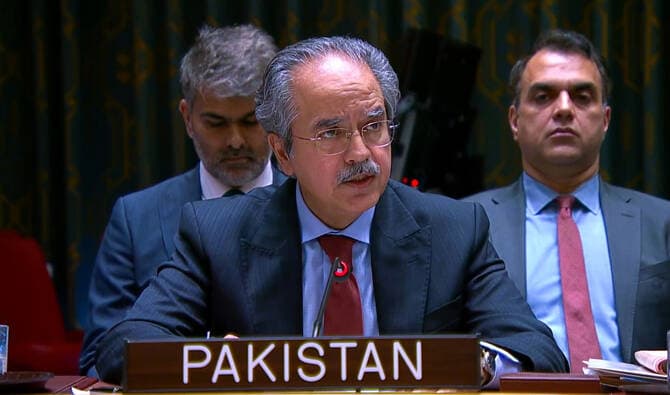
Addressing an Arria-formula meeting of the United Nations Security Council convened by Pakistan, the country’s Permanent Representative to the UN, Ambassador Asim Iftikhar Ahmed, said India’s action marked a “grave departure from established legal norms, international law, and historical precedent.”
“The unilateral holding in abeyance of the Indus Waters Treaty by India constitutes a serious violation of international legal obligations, with far-reaching humanitarian, environmental, and peace and security implications,” Ahmed said.
The meeting was held under the theme “Upholding the Sanctity of Treaties for the Maintenance of International Peace and Security,” and focused on the broader consequences of disregarding binding international agreements.
Recalling the August 2025 decision of the Court of Arbitration, the ambassador noted that the rulings reaffirmed that the Indus Waters Treaty remains in force and that its dispute-settlement mechanisms are binding.
He said these findings reinforced the legal continuity of the Treaty despite India’s unilateral stance.
According to an official statement, Ahmed cautioned that undermining such agreements sets a dangerous global precedent.
He warned that treaties governing shared natural resources, borders, and confidence-building measures could be weakened if unilateral abeyance is normalized.
Participants at the meeting reaffirmed the central role of treaties as instruments of stability and conflict prevention, the statement said.
Member states also underscored the preventive responsibilities of the United Nations system, including the Security Council, the Secretary-General and the International Court of Justice, in ensuring treaty compliance and strengthening the international rule of law.
The Pakistan-organized meeting was described in the statement as a timely and substantive intervention, contributing to international efforts to prevent the erosion of treaty-based cooperation and to safeguard legal frameworks essential for maintaining international peace and security.



.jpg&w=3840&q=75)
.jpg&w=3840&q=75)