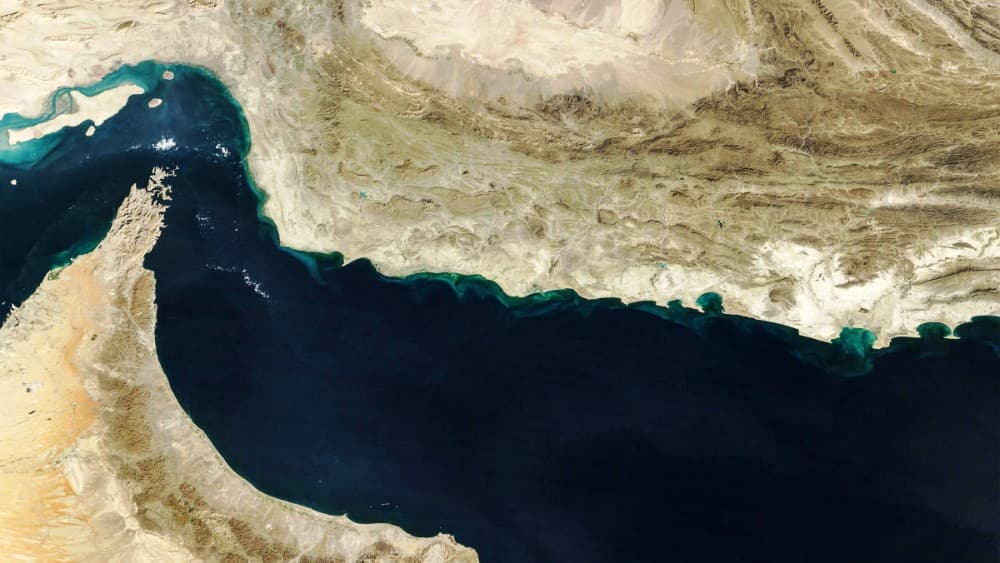
ISLAMABAD: Iran attacked US allies in the Gulf on Wednesday, threatening to keep the Strait of Hormuz closed "until the US ends its aggression." American forces attacked Iran and reinstated a naval blockade on its ports, according to news agencies.
The strikes began just hours after US President Donald Trump reversed his plan to impose a 20% tax on ships passing through the strait, which is the epicenter of a conflict that has driven up energy costs worldwide.
Iran's Revolutionary Guards warned that channels supporting US and allied interests may also be closed, saying that the reinforced US blockade had stopped oil and gas shipments to "America's economic rivals" and other countries.
"Oil and gas exports from the region will either be available for everyone or for no one," the Guards said.
According to the US Energy Information Administration (EIA), the disruption is expected to have the greatest impact on China, India, Japan and South Korea, which together account for roughly 69–74% of all crude oil. Japan and South Korea are considered especially vulnerable given how heavily their overall energy mix depends on imported fossil fuels, while China and India represent the largest single volumes.
Major Gulf exporters, including Saudi Arabia, the United Arab Emirates, Qatar, Kuwait, and Iraq, also depend on the Hormuz waterway for most of their energy exports.
Deputy Foreign Minister Kazem Gharibabadi said the US decision to restore the blockade "has, in a way, dismantled the Islamabad memorandum", referring to the interim deal reached last month to halt hostilities and pursue peace talks.
Hostilities continue
In an effort to "degrade Iran's ability to threaten commercial shipping and civilian crews," the US Central Command (CENTCOM) claimed to have hit a number of Iranian military targets close to the strait and elsewhere along the nation's coast during an escalation that continued into the fifth day.
Explosions on the island of Qeshm, in Bandar Imam Khomeini, and close to the port city of Bandar Abbas were also reported by Iranian state media. Bahrain sounded sirens shortly after the strikes, and Kuwait and Jordan reported intercepting Iranian missiles and drones.
State news agency IRNA reported that Iranian forces launched a drone attack on a military base in Jordan that hosts American warplanes. At the same time, the Guards had hit US facilities in Bahrain and Kuwait.
If Tehran fails to come to the negotiating table, Trump has threatened to escalate the strikes to include power plants and bridges next week.
"Next week it gets really bad for them," he told Fox News.
"The retaliatory operations of the fighters will continue, and the Strait of Hormuz will remain closed until the United States ends its acts of aggression," the Guards said in a statement on Wednesday.
Trump’s fee reversal
The continued violence has sent oil prices up yet again, with crude rising more than 10% since last week.
Meanwhile, Trump declared on Monday that he canceled a proposed tax on ships transiting the Strait of Hormuz and replaced it with trade agreements with Gulf allies.
"I have decided to replace the 20% United States Reimbursement Fee with Trade and Investment Deals that the various Gulf States will be making into the United States," Trump said in a post on his Truth Social network.
According to an AFP calculation based on Iranian media and official statements, at least 28 people have died in Iran as a result of fresh US attacks since last week.
Ships still stranded
Since Wednesday, there has been a significant decline in traffic via the Strait of Hormuz, particularly via the UN-backed Omani route, according to analysts, following attacks on vessels earlier this week.
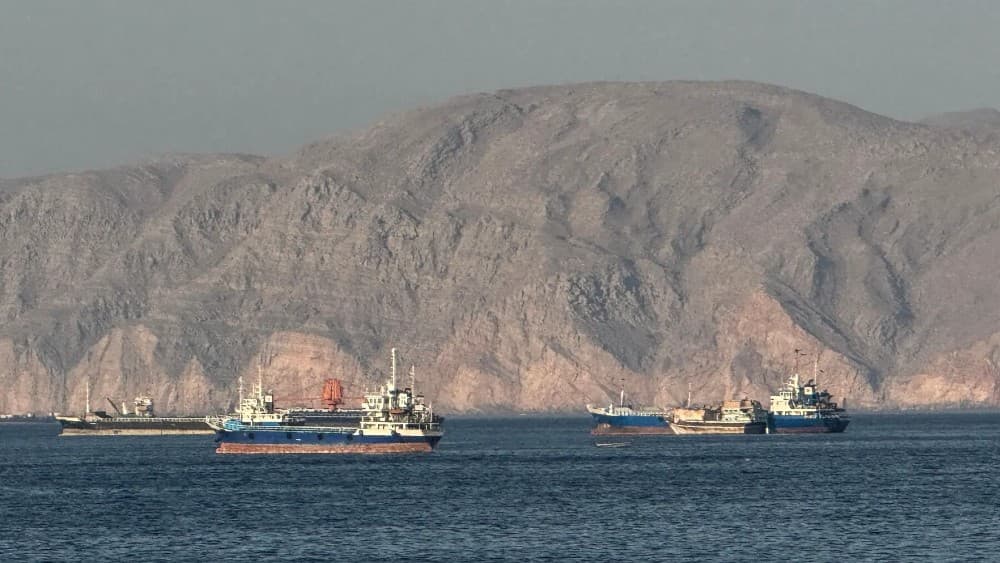
As of early June, Al Jazeera reported that roughly 2,000 ships remain stranded in the Gulf awaiting clearance to transit the waterway, while maritime intelligence firm Kpler has estimated the figure at around 600 vessels.
According to Kpler data as of 1430 GMT, only six commodity tankers had crossed so far on Thursday, compared with 21 on Wednesday.
According to AFP, most ships crossing since Wednesday either switched off their transponders or used the northern Iranian route, which requires Iranian approval to transit.
Only 19 commodity tankers crossed on June 28, the day after a tanker was attacked off Oman, making it the only day with less traffic since the US-Iran agreement.
The southern Omani route, used in past weeks by many vessels not linked to Iran, has been largely avoided since Wednesday.
By Thursday afternoon, no ships had taken the route, according to the ship-tracking service MarineTraffic.



.jpg&w=3840&q=75)

.jpg&w=3840&q=75)