


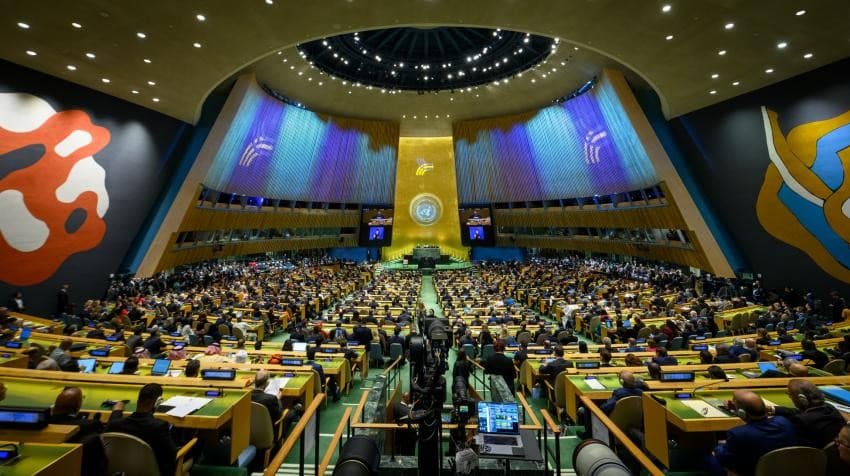
ISLAMABAD: Afghanistan's representative to the UN, Naseer Ahmad Faiq, has said that the Taliban regime in Kabul cannot claim the country’s permanent representation in the United Nations.
In a post on the social media platform X on Wednesday, Faiq said that representation in the world body is the legitimate right of a government, which has attained power and sovereignty through legitimate means and is based on the people's will.
“On what basis of positive action and what criterion of legitimacy do the Taliban demand the handing over of Afghanistan's seat in the United Nations?” asked the Afghanistan representative in the UN, while responding to the Taliban Foreign Minister, Amir Khan Muttaqi.
Muttaqi had called on the UN to hand over Afghanistan’s representation in the UN to the Taliban administration in Kabul.
Naseer Faiq, an appointee of the former Afghan president Ashraf Ghani's government, still serves as the country’s legitimate representative in the organization.
However, the Taliban regime has its own designated representative who also uses the platform.
The United Nations doesn't recognize the Taliban regime as the legitimate ruler of Afghanistan. Thus, the country’s seat in the organization is still occupied by the appointee of the former regime.
Faiq said that after five years of the Taliban regime, it has neither responded positively to the legitimate demands of the Afghan people nor to the explicit demands of the international community.
He added that the doors of schools and universities remain closed to girls, women are deprived of the right to work and social participation, there is no legitimate and inclusive national system in place, corruption and repression have spread widely, and security in Afghanistan and the region has deteriorated further due to the harboring and support of international terrorist groups.
Afghanistan’s representative in the UN went on to say that poverty, forced marriages, suicides among youth due to unemployment, targeted killings of former military forces, suppression of freedom of expression, expansion of jihadist madrassas, and the promotion of terrorism and extremism have increased to an unprecedented degree.
He said that only a legitimate government, which has guaranteed the rights of all citizens within the framework of the law without discrimination on grounds of gender, ethnicity, or religion, and has remained committed to its national and international obligations, can claim a permanent seat in the UN.