


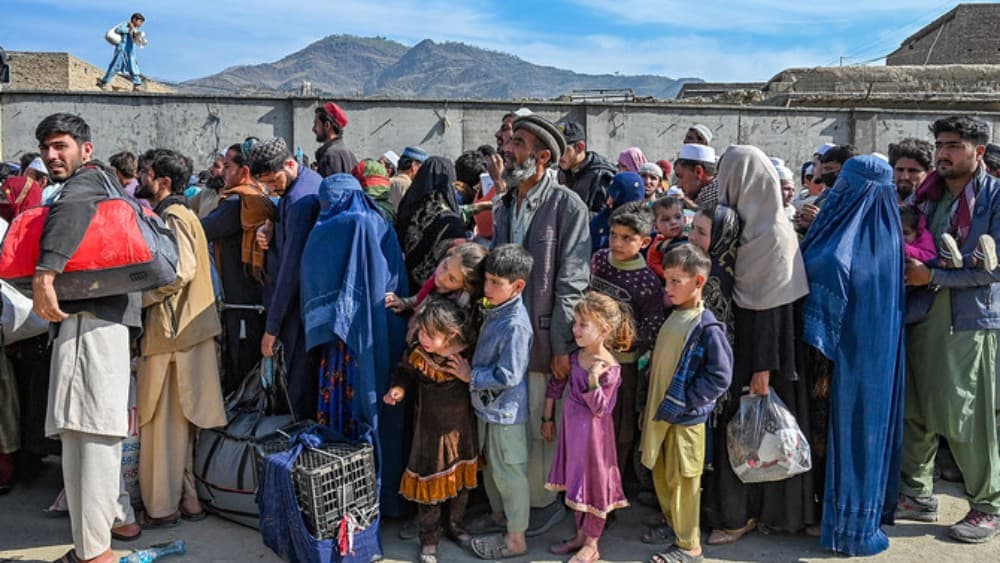
ISLAMABAD: Afghanistan is facing one of the world's largest displacement crises, with worsening poverty, climate shocks and the return of millions of Afghans placing mounting pressure on livelihoods and public services, according to a joint assessment by the United Nations Development Program (UNDP) and the UN refugee agency (UNHCR).
The assessment warns that nearly 2.7 million returnees are returning to a country already struggling with a fragile economy, decades of conflict and repeated natural disasters, leaving communities increasingly unable to absorb the growing humanitarian burden.
The findings add to mounting international concern over Afghanistan under Taliban rule.
Since seizing power in August 2021, the Taliban regime has governed the country without holding national elections while imposing sweeping restrictions on women and girls that the United Nations says continue to undermine economic recovery, social development and long-term stability.
"In Afghanistan, crises rarely happen one at a time," said Alexander De Croo, head of UNDP, who is visiting Afghanistan alongside UN High Commissioner for Refugees Barham Salih to meet returnee communities, partners and local authorities.
According to the assessment, 74% of the population, or about 29 million people, cannot meet their basic needs, while livelihoods continue to shrink across the country.
The report says declining participation of women in education, employment and public life is further weakening Afghanistan's economy by reducing household incomes, limiting productivity and complicating humanitarian and development efforts.
UN officials stressed that emergency relief alone cannot reverse Afghanistan's deepening crisis and called for sustained international investment in livelihoods, housing and essential infrastructure to help returnees and host communities rebuild.
"Emergency aid saves lives. Development gives people their lives back," De Croo said.
During their visit, UN officials met earthquake-affected communities in Jalalabad and travelled to the Sutan Valley, where recovery projects are helping restore livelihoods through flood protection, irrigation works and income-generating initiatives involving local communities.
The assessment also highlighted ongoing efforts to support displaced families, including the identification of 425 households for permanent housing, the prioritisation of 28 small-scale infrastructure projects, and the clearance of 6,478 square metres of mine-contaminated land in displacement-affected communities.
UN officials warned that repeated humanitarian shocks continue to overwhelm local communities and public services, increasing the risk of prolonged displacement unless sustainable economic opportunities are created.
The agencies said Afghanistan's humanitarian emergency has entered a new phase in which recovery will depend not only on lifesaving assistance but also on restoring livelihoods, rebuilding infrastructure and removing barriers that continue to prevent inclusive economic and social development.