


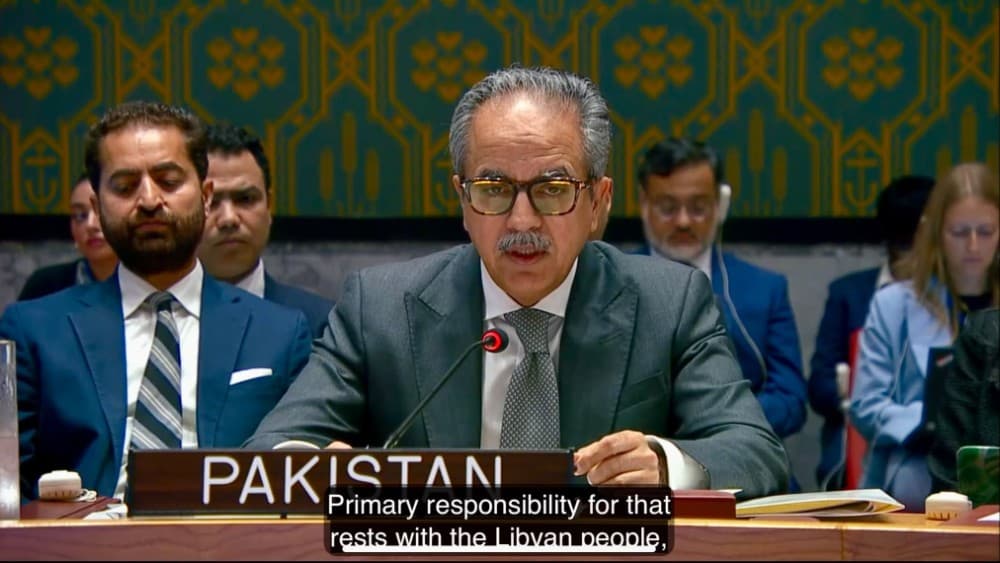
ISLAMABAD: Pakistan has reaffirmed its steadfast support for Libya’s sovereignty, independence, territorial integrity, and national unity, and has called for an inclusive, Libyan-led, and Libyan-owned political process to resolve the country’s challenges.
Speaking at the UN Security Council briefing and consultations on the UN Support Mission in Libya (UNSMIL) on Tuesday, Pakistan’s Permanent Representative to the United Nations, Ambassador Asim Iftikhar Ahmad, welcomed the efforts of UNSMIL in facilitating Libya’s political process and national reconciliation.
The ambassador said, “Sustained dialogue and genuine compromise among Libyan stakeholders are essential to addressing the country’s political, security and institutional challenges.”
He welcomed UNSMIL’s engagement through the Smaller Convening on priorities of the political roadmap and noted agreement on a new mechanism for appointing the Chairperson of the Board of the High National Elections Commission.
The Pakistani envoy also welcomed regional and international efforts, including those by the United States, to support the UN-facilitated political process, as well as the roadmap announced by Libya’s Presidential Council, House of Representatives and High Council of State on June 18.
Ambassador Asim Iftikhar further welcomed the conclusion of the Structured Dialogue, expressing hope that its recommendations translate into practical measures for institutional reunification and national reconciliation.
He urged sustained dialogue and confidence-building measures to advance the unification of Libya’s military and security institutions.
The ambassador stressed the importance of addressing challenges facing Libya’s judiciary, saying judicial unity, the rule of law and stronger constitutional oversight are essential for institutional stability.
Asim Iftikhar added: “Progress across political, security, economic and judicial tracks can contribute to national reconciliation and the establishment of a unified government, paving the way for durable peace, stability and prosperity in Libya.”