


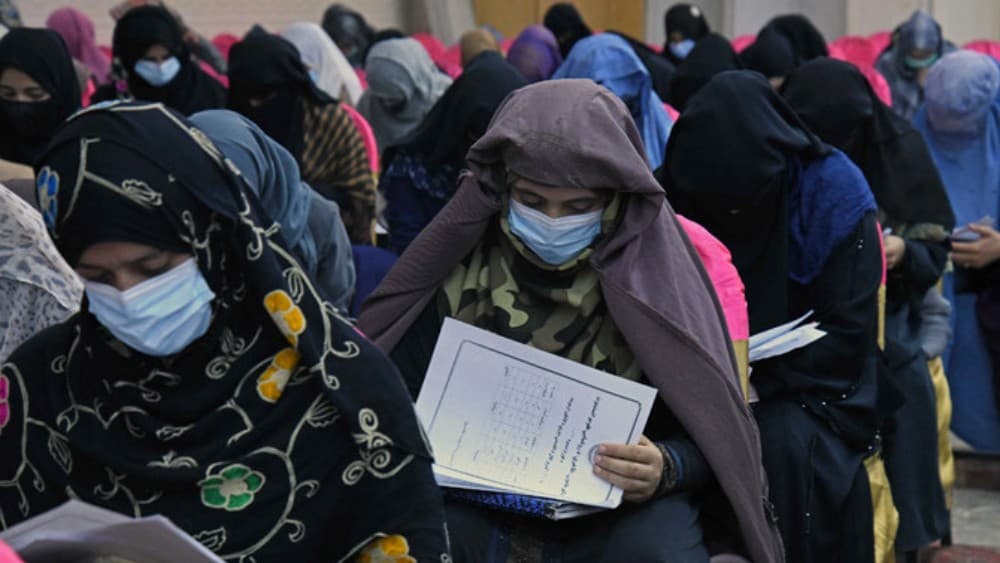
ISLAMABAD: Afghan women are facing growing exclusion from the country’s labor market as restrictions on their economic participation combine with a broader jobs crisis, according to a new International Labour Organization (ILO) report.
The ILO’s latest modelled estimates reflect that female labor force participation in Afghanistan has fallen to just 5.1%.
The figure highlights the dramatic deterioration in women’s access to paid work and economic opportunities since the Taliban returned to power five years ago.
Stark gender divide
The report, titled “Afghanistan’s labor market five years after the Taliban takeover: Trends, challenges and emerging risks”, said, "women are being disproportionately affected by restrictions and worsening employment conditions."
"At the same time, the wider Afghan labor market continues to struggle with limited job creation and persistent economic pressures."
The latest figures show a stark gender divide.
According to the report, Afghanistan’s female labor force participation stands at 5.1%, while the corresponding rate for men is 69.5%.
“Afghanistan’s overall labor force participation rate is 37.3%, while unemployment reaches 12.7%, with women recording a particularly high unemployment rate of 24.7%,” the ILO report added.
Restrictions deepen employment crisis
The ILO further said restrictions on women’s participation in economic life are compounding the impact of Afghanistan’s broader employment difficulties.
Women who remain outside the labor market face fewer opportunities to earn incomes, support their families, and contribute to the country’s economy.
The situation also raises concerns about the loss of skills and human capital at a time when Afghanistan faces significant economic and social challenges.
The exclusion of women from employment reduces the pool of available workers and limits the contribution women can make across sectors of the economy.
Labor market under pressure
The report comes five years after the Taliban takeover, when Afghanistan’s labor market was already under severe pressure.
The ILO report said that employment conditions have remained difficult, while the country faces emerging risks that could further undermine livelihoods and economic recovery.
The organization’s findings underscore the importance of expanding decent work opportunities and removing barriers that prevent women from fully participating in economic activity.
Wider gender gap
For Afghan women, however, the latest figures point to a deepening crisis.
With only a small fraction of women now participating in the labor force and unemployment remaining substantially higher among women than men, the gender gap in Afghanistan’s labor market continues to widen.
The ILO warns that the country’s employment challenges cannot be separated from women’s exclusion.
“Greater access to work for women, alongside broader efforts to create jobs and strengthen livelihoods, remains central to any sustainable improvement in Afghanistan’s labor market.”