


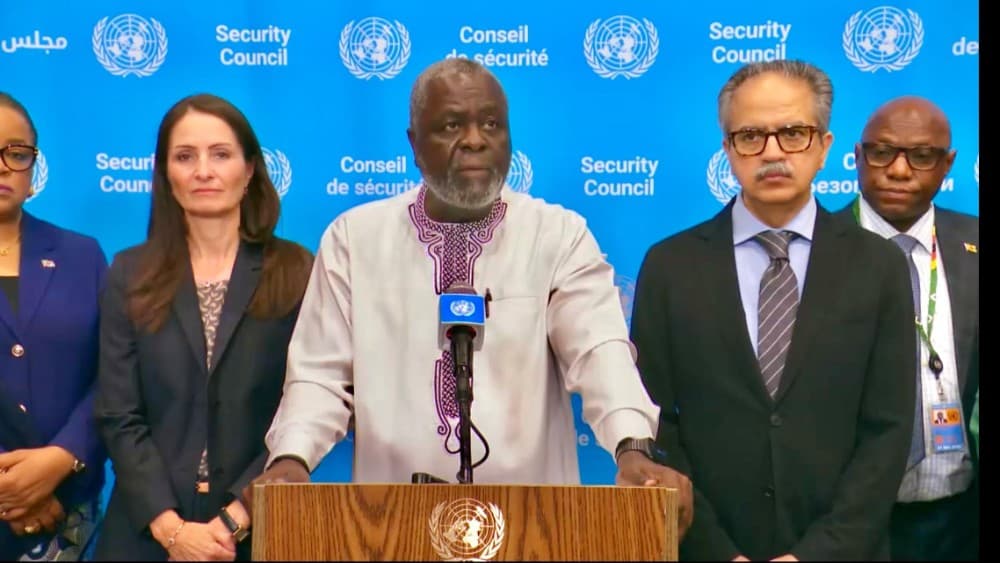
ISLAMABAD: Pakistan has joined other elected members of the United Nations Security Council in calling for an immediate resolution to an unprecedented delay in appointing chairs and vice-chairs of the Council’s subsidiary bodies, according to a statement from the Permanent Mission of Pakistan to the UN posted on X on Thursday.
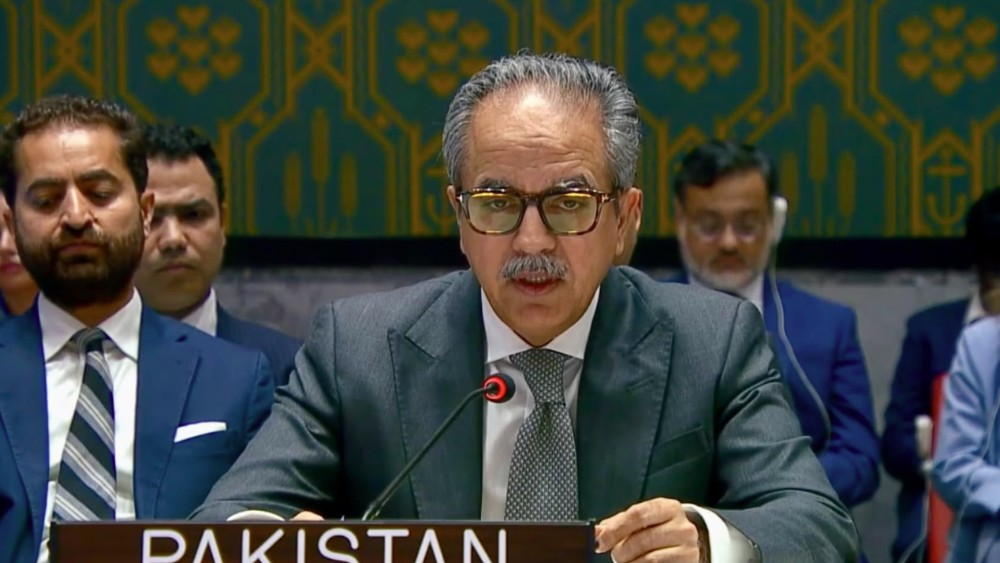
Representing Pakistan at a joint press stakeout, Pakistan’s Permanent Representative to the UN, Ambassador Asim Iftikhar Ahmad, said, “The delay was undermining the Council’s effectiveness, credibility and institutional integrity.”
With eight months of 2026 already gone, the appointments remain unresolved, making this the longest period without agreed chairs and vice-chairs since the annual allocation process was first recorded in a presidential note in 1979.
Why the appointments matter
According to a UNSC report, the Security Council’s subsidiary bodies include sanctions committees and working groups that carry out important parts of the Council’s mandate.
Their chairs conduct meetings, the report says, brief the Council on their committees’ work and handle important casework, including requests concerning the listing and delisting of individuals and entities under sanctions regimes.
Traditionally, these bodies are chaired mainly by elected members of the Council, known as the E10.
“The absence of permanent chairs has therefore affected the day-to-day functioning of several bodies,” the report explained.
According to the report, sanctions committees and working groups have operated at only a minimal level during the first half of 2026, with Council presidencies taking on some urgent responsibilities normally performed by subsidiary-body chairs.
How are chairs appointed?
The process normally begins with negotiations among the incoming five elected members and the continuing elected members.
The proposed allocation is then transmitted to the five permanent members, China, France, Russia, the United Kingdom and the United States, for final approval.
Council members generally treat the appointments as a package, meaning agreement is required on all positions before the full list can be formally announced.
Under the Council’s working methods, members are expected to make every effort to reach a provisional agreement by Oct 1. In practice, however, that target has never been met.
If agreement is reached by the end of the year, the Council president normally issues a note listing the chairs and vice-chairs early in the following year.
What caused the 2026 deadlock?
The negotiations for 2026 began after the election of the incoming members in June 2025.
According to the UNSC report, an initial allocation was agreed among the elected members, but disagreements emerged over individual committees.
One major dispute centered on the Security Council’s 1737 Sanctions Committee concerning Iran.
China and Russia opposed including the committee in the overall allocation package, while the United States, France, Britain and other members considered the committee part of the existing subsidiary-body structure. The dispute became more complicated following the escalation between the United States, Israel and Iran in 2026.
Attempts were subsequently made to find a compromise, including informal meetings among Council members, but no final agreement was reached.
E10 calls for flexibility
The elected members, the E10, have repeatedly warned that the continuing impasse is damaging the Council.
On July 30, the E10 submitted a letter to the Council president expressing what Security Council Report described as their “shared and deep concern” over the absence of agreement.
Pakistan has now joined that call, urging greater flexibility and political will to break the deadlock.
The issue is particularly significant because the delay is no longer simply a procedural dispute. Security Council Report says the lack of functioning chairs has already affected sanctions committees and working groups, while uncertainty over the 2026 allocations could also complicate negotiations over subsidiary-body positions for the incoming 2027-2028 Council members.