


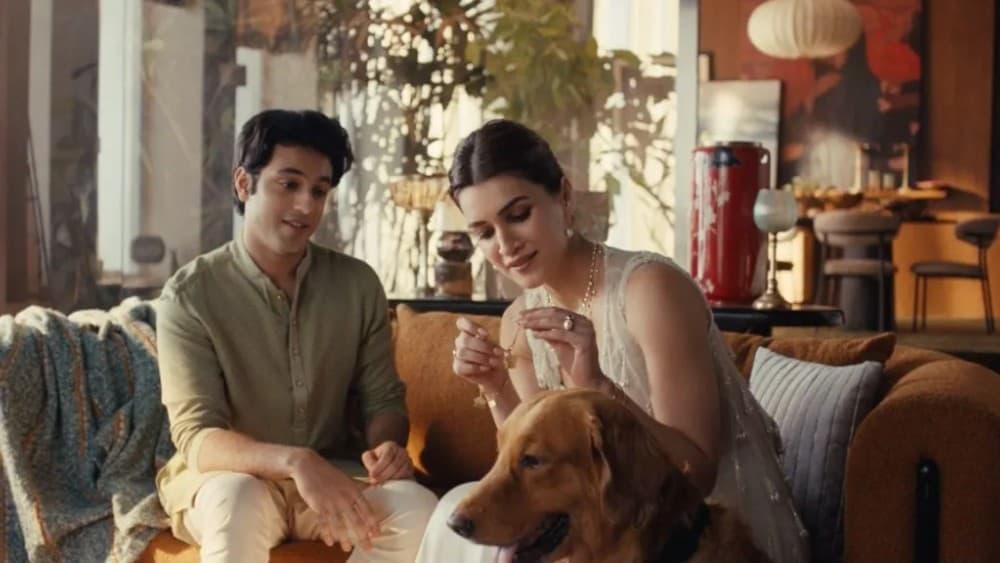
ISLAMABAD: Indian jewelry brand Giva has withdrawn a Raksha Bandhan advertisement featuring Bollywood actor Kriti Sanon after the campaign sparked an online controversy over her outfit and the portrayal of the Hindu festival.
The advertisement promoted “rakhi for pets” and showed Sanon celebrating Raksha Bandhan while wearing a cropped blouse, skirt and draped fabric.
The outfit drew criticism from BJP lawmaker and actor Kangana Ranaut, who called the advertisement “intentionally creepy” in a social media post.
Ranaut questioned why a woman would wear what she described as a “bikini” while tying a rakhi, prompting a heated online debate.
While some users supported her criticism, others accused her of policing women’s clothing.

Opposition leader Rahul Gandhi defended Sanon, saying what a woman wears, does, or where she goes is her choice. He urged people to stop trolling women for exercising their freedom.
Sanon also responded, saying that the essence of festivals lies in their emotions and traditions rather than clothing. She argued that culture and traditions are “in her heart, not in her neckline.”
Raksha Bandhan, meaning "Knot of Protection," is a Hindu tradition in which sisters tie a thread around their brothers' wrists to honor the loving relationship and lifelong duty of care between brothers and sisters.
Bond of protection for dogs
In addition to Sanon's outfit, the advertisement also faced criticism over her tying a rakhi, a decorative thread, to her pet dog.
Defending the campaign, she said that the bond of protection celebrated during Raksha Bandhan could extend to pets because dogs are part of the family.
Her sister, Nupur Sanon, also criticized Ranaut and urged her to “evolve.”
Despite the support, Giva announced on Wednesday that it had removed the advertisement from all platforms, saying that it respected Indian culture, traditions and festivals.
The company said that the advertisement might have “inadvertently hurt the sentiments” of some sections of society and stressed that this was not its intention.
The controversy echoes the backlash faced by jewelry brand Tanishq in 2020, when it withdrew an advertisement featuring an interfaith couple after criticism from right-wing groups.