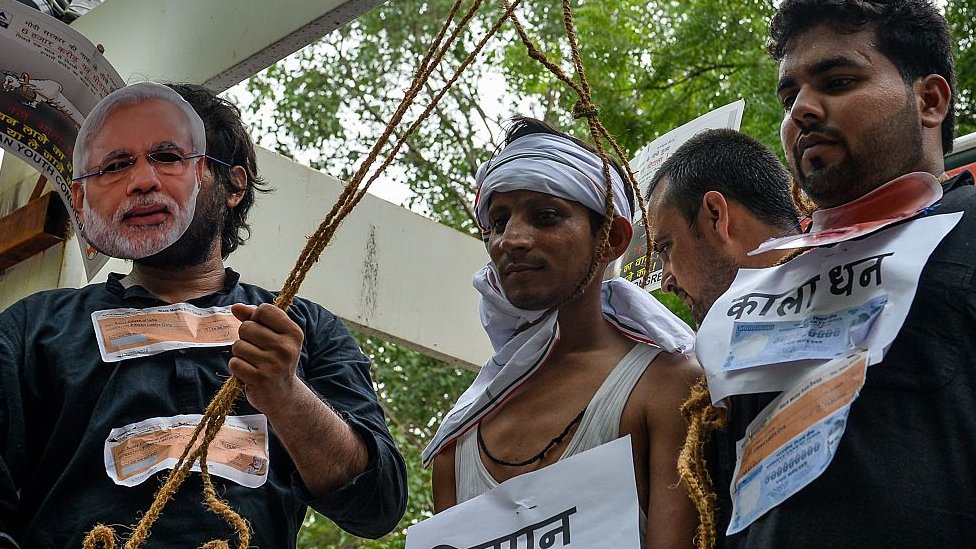

How its response to President Zardari exposes India's diplomatic double standards

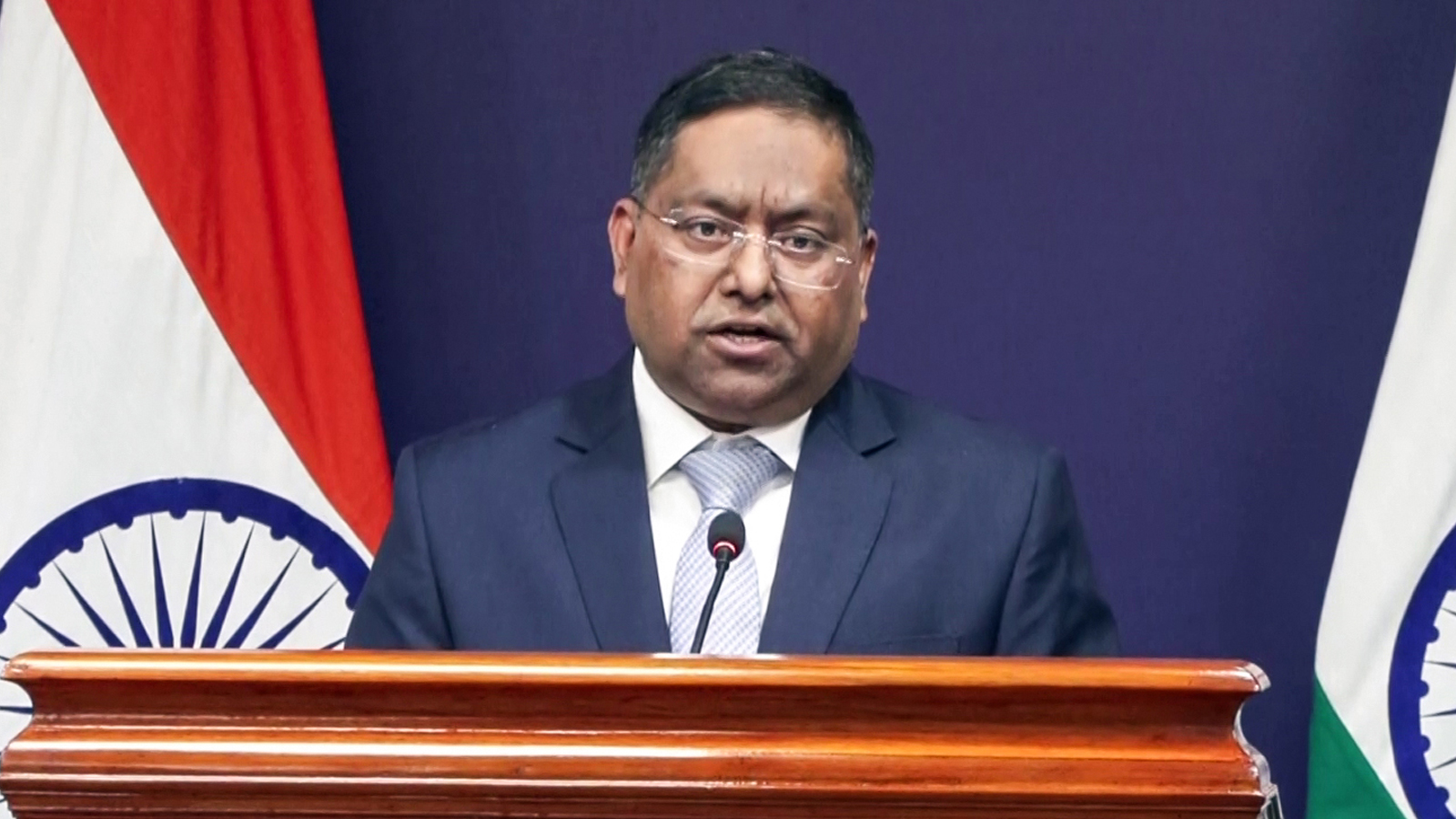
Indian Ministry of External Affairs spokesperson Randhir Jaiswal speaks during a press briefing. (DD News)
ISLAMABAD: India's Ministry of External Affairs dismissed this week concerns raised by Pakistan's President Asif Ali Zardari about the treatment of Muslim religious sites in India, stating that Islamabad has "no locus standi," or legal standing, to comment on the country's internal affairs.
Days later, New Delhi condemned Pakistani airstrikes in Afghanistan as an assault on Afghan sovereignty.
The contrast was immediate. The same government that rejects outside comment on its own conduct claimed standing to judge Pakistan's military response to a deadly terrorist attack inside its own borders.
Indian MEA spokesperson Randhir Jaiswal called President Zardari's remarks "unwarranted" and accused Pakistan of a "deliberate" political attack driven by what he termed policies of bigotry and hatred, according to India Today.
India urged to protect minority rights
President Zardari had voiced concern days earlier over a demolition notice served to the centuries-old Masjid Ganj Shaheeda, a mosque in Varanasi. The Pakistani president warned the move risked communal unrest and urged India to protect minority rights.
A notice, posted on the mosque wall on June 12, ordered the structure removed by June 20 or face demolition, according to Maktoob Media. The mosque committee, Anjuman Intizamia Masajid, said the notice carried no signature, stamp or date, and is challenging it in the Allahabad High Court.
The committee traces the mosque to the Hijri year 1034, the Islamic lunar calendar, corresponding to around 1624-25 CE, and predating the Mughal Empire’s expansion over much of South Asia. It points to an 1883-84 British colonial-era settlement map listing the site as "Palang Shahid," according to documents reviewed by Maktoob Media.
The warning came 11 days after authorities demolished the roughly 200-year-old Azgaib Shaheed mosque and an adjacent Muslim tomb in Varanasi, clearing the site in 22 minutes overnight under heavy security as part of a railway redevelopment project, according to Deccan Herald.
India's roughly 200 million Muslims make up about 14% of the country's population, the largest Muslim minority of any non-Muslim-majority nation in the world.
India's claim that its internal affairs are off-limits to outside comment runs counter to a domestic record that is neither private nor settled. Riots in northeast Delhi in February 2020, set off by protests over the Citizenship Amendment Act (a law widely criticized by rights groups for excluding Muslims from an expedited path to citizenship), killed 53 people and injured more than 200, according to NDTV.
Inter-ethnic violence in the northeastern state of Manipur, which began in May 2023 and has continued since, has killed more than 200 people and displaced over 60,000 residents, Reuters reported.
According to The Indian Express, communal clashes in Nuh and Gurugram, in the northern state of Haryana, in July and August 2023 killed six people and triggered a prolonged internet blackout.
The pattern has continued into the past year. Communal violence in Nagpur, a city in the western state of Maharashtra, in March 2025, sparked by demands to remove a tomb linked to a 17th-century Mughal emperor, left one person dead, more than 30 injured, and over 105 arrested, according to The Hindu's Nagpur Bureau.
India's NDTV reported that clashes over the Waqf Amendment Act (a law altering how Muslim charitable land endowments are governed, which critics say weakens Muslim control over religious property) in Murshidabad, in the eastern state of West Bengal, in April 2025 left three people dead after police opened fire on demonstrators.
Rioting during Hindu festival processions in Cuttack, in the eastern state of Odisha, in October 2025 injured 25 people and forced a 36-hour curfew, according to The Hindu's Odisha Bureau.
Abuse of Muslims India's 'domestic issue'?
None of these incidents drew the kind of foreign-government statement that India issued against President Zardari this week; they were treated as domestic matters. Meanwhile, President Zardari's comment on Varanasi was treated as an intrusion.
That same government found no difficulty commenting on events across Pakistan's western border with Afghanistan. Pakistan struck targets inside Afghanistan on the night of June 28-29, days after a deadly attack on paramilitary Rangers personnel in the southern Pakistani port city of Karachi on June 27.
Pakistan's Information Minister Attaullah Tarar said the strikes targeted Jamaat-ul-Ahrar, a splinter faction of the Pakistani Taliban, also known as the Tehreek-i-Taliban Pakistan. The terrorist groups operate from safe havens on Afghan soil with the tacit tolerance of the Taliban government in Kabul.
India's external affairs ministry called the strikes "a blatant act of aggression" and said they amounted to an assault on Afghanistan's sovereignty, NDTV reported.
India has issued no statement condemning the terrorist attack in Karachi that preceded those strikes, nor has it commented on the broader pattern of terrorist attacks on Pakistani soil operating from Afghan territory.
The silence on attacks against Pakistan stands next to the speed of condemnation for Pakistan's response to them.
Latest News
Pakistan must adopt climate adaptation, water security measures on war footing: Bilawal
39 MINUTES AGO
Pakistan takes seat as permanent member of International Olive Council for first time
2 HOURS AGO
How its response to President Zardari exposes India's diplomatic double standards
3 HOURS AGO
US experiences unseasonal snow as country braces for heatwave
3 HOURS AGO
.jpg)
Decade of debt: Farmer suicides persist across India's BJP-governed states
4 HOURS AGO