


ISLAMABAD: Europe was the fastest-warming continent in 2025, with heatwaves reaching inside the Arctic Circle, ocean temperatures at an all-time high, and wildfires burning more land than ever before measured, according to a joint report released Wednesday by the World Meteorological Organization and the European Centre for Medium-Range Weather Forecasts (ECMWF).
Rising temperatures across the continent
The European State of the Climate 2025 report found that at least 95% of the continent recorded above-average temperatures last year and has been warming at more than twice the global average rate since the 1980s.
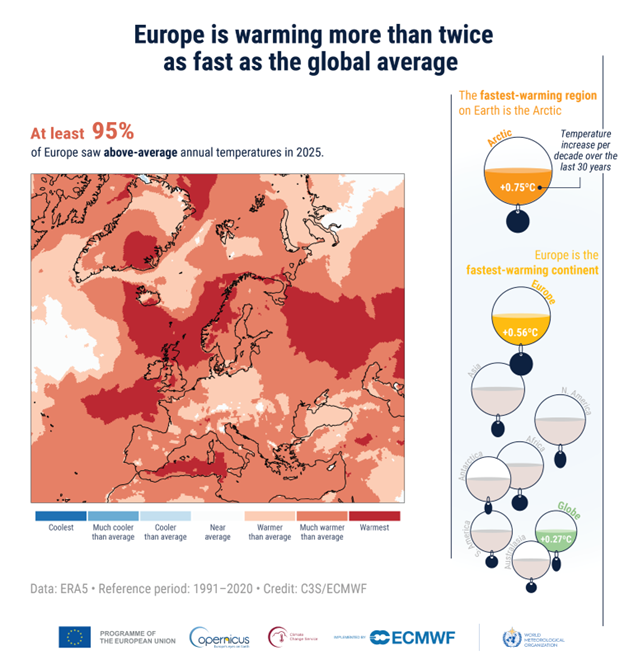
Date taken from: European State of the Climate 2025 report
European land temperatures are now running approximately 2.4°C above pre-industrial levels, the report said.
"Europe is the fastest-warming continent, and the impacts are already severe," said Florian Pappenberger, Director-General of the ECMWF, which co-produced the report. "Almost the whole region has seen above-average annual temperatures."
The WHO said in a statement accompanying the report that the continent experienced "record heatwaves from the Mediterranean to the Arctic," alongside continued glacier retreat and rising sea surface temperatures.
Oceans and glaciers in net loss
According to the report summary, the annual sea surface temperature for the European ocean region was the highest on record in 2025, the fourth consecutive year that the record was broken.
Glaciers across Europe recorded net mass loss, with Iceland experiencing its second-largest glacier loss on record.
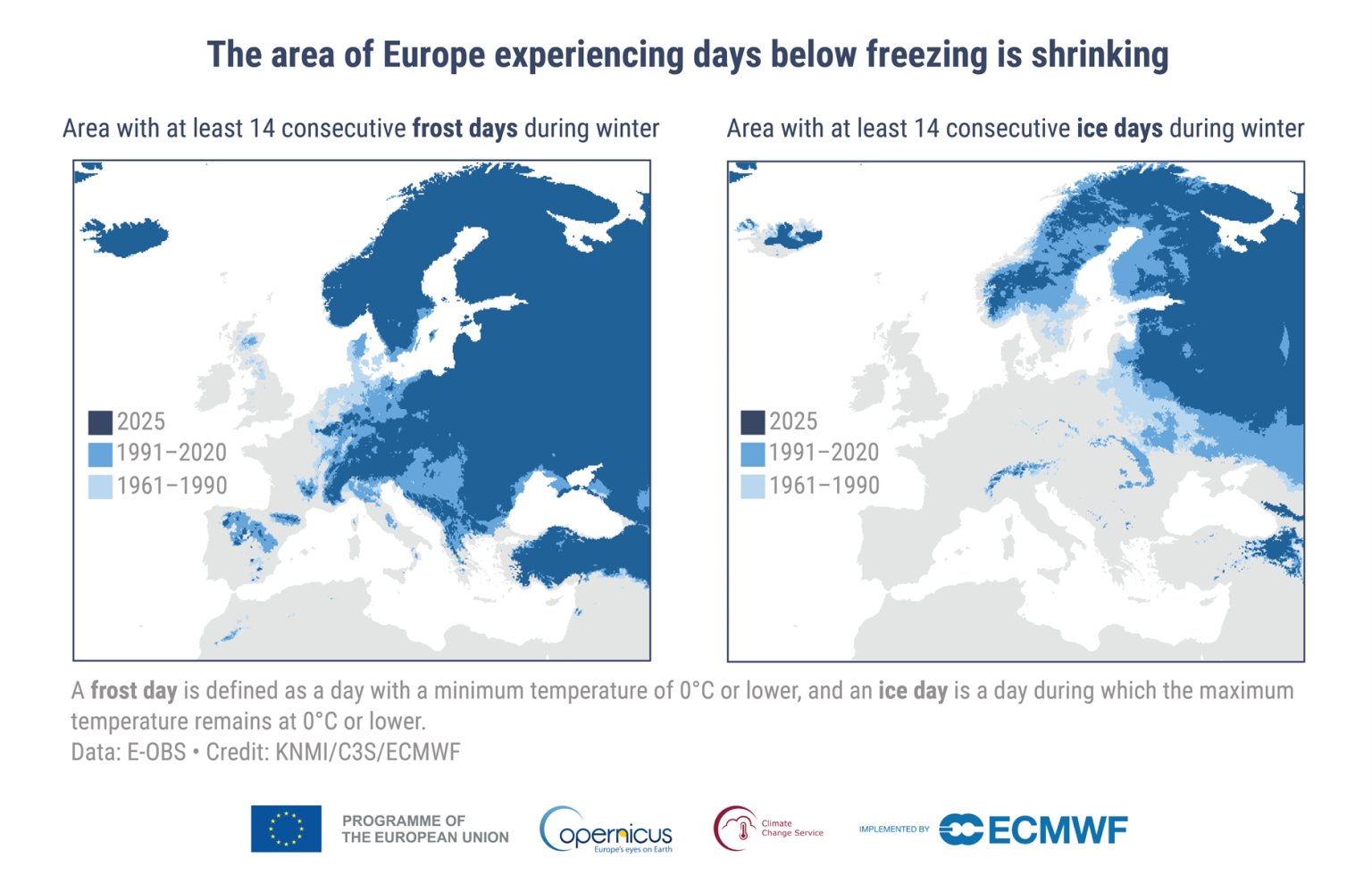
Date taken from: European State of the Climate 2025 report
The Greenland Ice Sheet lost around 139 billion tonnes of ice, "equivalent to losing 100 Olympic-sized swimming pools every single hour", said Samantha Burgess, strategic lead for climate at the European Centre for Medium-Range Weather Forecasts (ECMWF), which operates Copernicus.
Wildfires and emissions surge
Around 1,034,000 hectares burned across Europe in 2025, an area larger than Cyprus, the report said, with wildfire emissions also reaching their highest recorded levels.
Spain accounted for roughly half of those emissions, with fires across the Iberian Peninsula in August proving particularly destructive.
Above-average spring rainfall had produced abundant vegetation that summer heat subsequently dried into fuel. Cyprus, the United Kingdom, the Netherlands, and Germany each set national records for wildfire emissions.
The report warned that peatland fires, which can smolder underground for months and release large stores of long-sequestered carbon when they burn, posed a compounding threat to both biodiversity and the climate.
Biodiversity at risk
The report devoted significant attention this year to the accelerating link between climate change and biodiversity loss, finding that 2025's droughts, wildfires, and marine heatwaves caused measurable harm to species and habitats across marine and terrestrial ecosystems.
The European Union's Biodiversity Strategy 2030, which includes legally binding targets to restore at least 20% of land and sea areas by 2030, had seen roughly half its recommended actions completed or underway by the end of 2025, the report said, but cautioned that progress must accelerate to keep pace with ecological loss.
In a post on X, the agency described the findings as further evidence of accelerating climate change across the region, warning that the impacts are becoming increasingly severe and widespread.
The Copernicus Climate Change Service warned that if warming continues at its present rate, the Paris Agreement's 1.5°C long-term limit could be breached before the end of this decade, more than a decade ahead of the timeline envisioned when the accord was signed.