


ISLAMABAD: Bangladesh has approved plans to establish a defense industrial park in the Mirsarai area after scrapping a previously planned government-to-government Indian economic zone, according to Bangladeshi media reports.
These policy decisions are aimed at accelerating investment and attracting foreign direct investment, including plans to establish a defense industrial park in Mirsarai and the country’s first free trade zone in Anwara, according to Bangladeshi media reports.
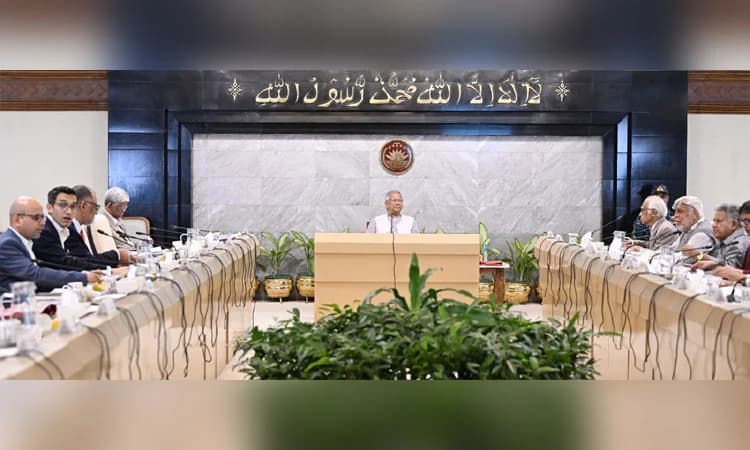
The decisions were approved on Sunday at a joint meeting of the governing boards of investment-related agencies, chaired by Chief Adviser Professor Muhammad Yunus.
The meeting also endorsed initiatives to revive the Kushtia Sugar Mill, allow the establishment of economic zones within municipal areas, offer a 1.25% cash incentive on foreign direct investment brought in by expatriate Bangladeshis and reaffirm plans to merge six investment promotion agencies.
Briefing reporters at the Foreign Service Academy after the meeting, Chowdhury Ashik Mahmud Bin Harun, executive chairman of the Bangladesh Investment Development Authority, said several important decisions had been taken to simplify investment procedures and attract foreign investors, Bangladeshi local news outlets reported.
Defense industrial park in Mirsarai
Ashik said one of the key decisions was to repurpose land previously earmarked for a foreign economic zone into a defense industrial park.
He said about 850 acres in the Mirsarai area of Chattogram would be designated as a defense industrial zone. The land had earlier been allocated for an Indian economic zone project, which was later cancelled, leaving the site available for reuse.
The area will now be incorporated into the master plan of the Bangladesh Economic Zones Authority as a defense industrial park, he added.
“In the current global context, demand for defense products is rising, and supply constraints have highlighted the importance of having domestic production capacity,” Ashik said.
Responding to questions on investment and operations, he said Bangladesh currently has one state-run arms manufacturing facility, but the new zone would be developed by the private sector with both local and foreign investment.
“Defense equipment produced here will be exported abroad,” he said.