


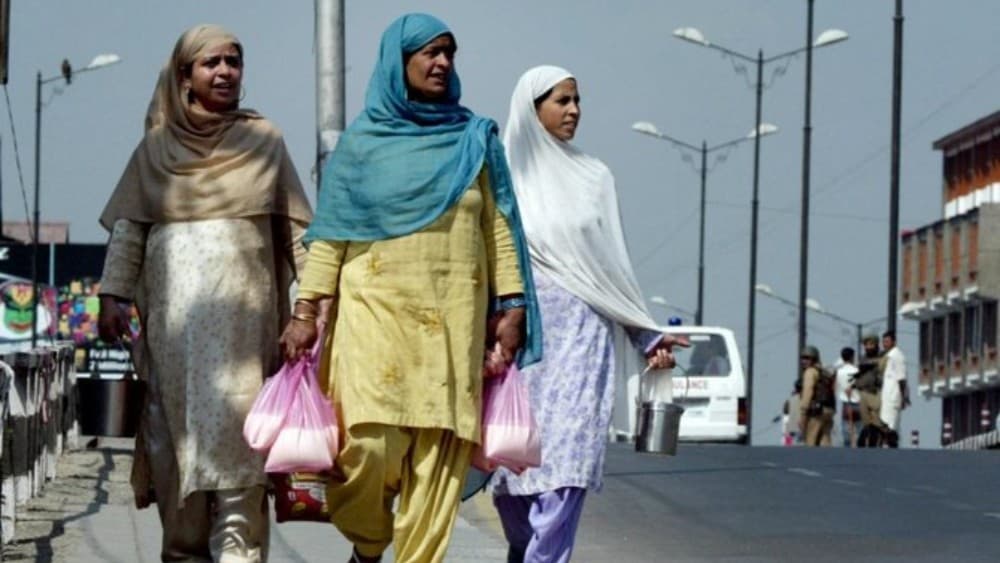
ISLAMABAD: Women's employment in urban India has declined by at least 0.5%, with the latest official data showing fewer city-based women joining the workforce than a year ago, according to recently released official data.
National Statistics Office's Periodic Labor Force Survey (PLFS) shows that urban female labor force participation fell from 25.8% in July 2025 to 25.3% in July 2026, underscoring a widening employment gap between urban and rural women.
The analysis, published by The Hindu using data from the National Statistics Office’s Periodic Labor Force Survey (PLFS), highlights a persistent rural-urban divide in female employment despite an overall rise in women’s labor force participation across India.
According to the analysis, rural women have consistently recorded higher labor force participation than their urban counterparts over the past several years. The gap has widened as more rural women have entered the workforce, particularly through agriculture, livestock and other forms of self-employment.
Rural women drive female workforce growth
The latest PLFS figures show that female labor force participation in July 2026 rose to 34.4% nationwide from 32.7% in June.
Rural India led the increase, with female labor force participation reaching 38.8%, while participation among urban women remained substantially lower and declined during the period.
The Hindu analysis notes that rural women are far more likely to be classified as self-employed or unpaid family workers, particularly in agriculture and allied activities. Urban women, despite generally having higher levels of education, continue to face greater barriers to entering the labor market.

Informal work dominates rural employment
Self-employment has emerged as the largest source of work for women in rural India. Many women work on family farms, rear livestock or contribute to small household enterprises, while regular salaried employment remains limited.
The higher participation rate, however, does not necessarily indicate better-quality employment. A significant number of rural women remain engaged in low-paid or unpaid work, often without stable incomes, job security, or social protection.
Urban women face multiple barriers
Urban women continue to participate in the labor force at lower rates despite higher literacy and education levels.
The analysis points to childcare responsibilities, social norms, safety concerns, and a shortage of flexible employment opportunities as factors limiting women’s participation in cities.
Urban women are also more likely to seek regular salaried jobs, but the availability of such employment has not expanded at the same pace as the potential female workforce.
Gender gap remains despite labor market gains
India’s overall unemployment rate fell to 5.1% in July 2026, the lowest level in four months, amid improving employment opportunities in rural areas.
However, analysts caution that headline improvements in labor market indicators can mask significant differences in the nature and quality of employment available to women.
Experts say India needs greater investment in manufacturing and services, alongside better childcare facilities, safer transport and more flexible workplaces, to increase women’s participation in formal employment.
The challenge, they argue, is not simply to bring more women into the workforce but to ensure that rising participation translates into secure, paid and productive employment for women across both rural and urban India.