


ISLAMABAD: The Pakistan military has categorically rejected claims by the Afghan Taliban regarding an air strike in Kabul, stating that the site was a military installation housing explosives and drones rather than a drug rehabilitation facility.
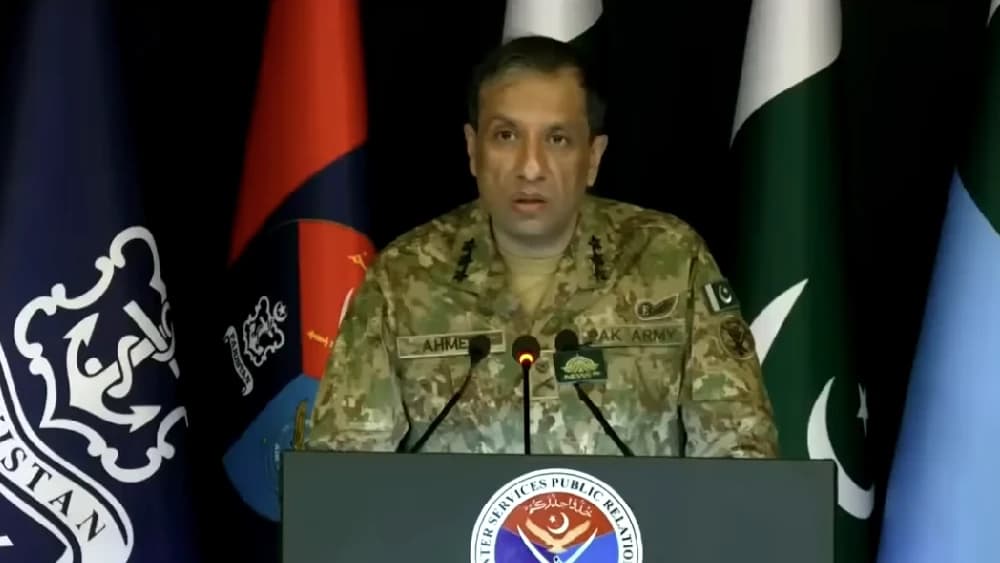
Speaking in an exclusive interview with Hamid Mir of private Pakistani broadcaster Geo News, Director General of Inter-Services Public Relations (DG ISPR) Lieutenant General Ahmed Sharif Chaudhry explained that the strike on a military camp in Kabul was a key component of Operation Ghazab lil Haq.
He asserted that massive “secondary detonations” observed after the strike provided undeniable evidence that the location was an “ammunition storage site and a drone storage site.”
"Because our intelligence was correct and we hit an ammunition storage... the world saw that... secondary detonations occurred," the DG ISPR stated.
He further explained that the facility contained heavy weaponry, including “Russian-era Scud missiles” and various technical equipment.
Addressing reports from the Afghan Taliban and international media claiming the target was the "Umeed" drug rehabilitation center, Chaudhry questioned the logic of such a placement.
“Why you built a drug rehab center in an ammunition storage center where you have kept missiles and weapons?” he asked, noting the facility was located within a military perimeter.
The DG ISPR further alleged that the regime utilizes drug addicts for militant purposes, stating that while not every addict is a bomber, “all suicide bombers are drug addicts” acting under the influence of narcotics.
He suggested the targeted “military containerized structure” was likely a “suicide bombing bomber training facility” or a hideout for terrorists.
The military confirmed that 81 air strikes have been conducted across various locations to dismantle “terrorist support infrastructure,” which includes core headquarters and ammunition depots. These actions are a response to 53 attacks on Pakistani border posts carried out by the Afghan Taliban’s “regular militia.”
Chaudhry emphasized that the military is employing “precision-guided munitions” (PGMs) to ensure accuracy and minimize collateral damage while targeting those facilitating “Indian-sponsored funded terrorism” from Afghan soil.
He concluded that the Afghan regime must decide whether to support “Fitna al-Khawarij” (TTP) or prioritize regional peace.