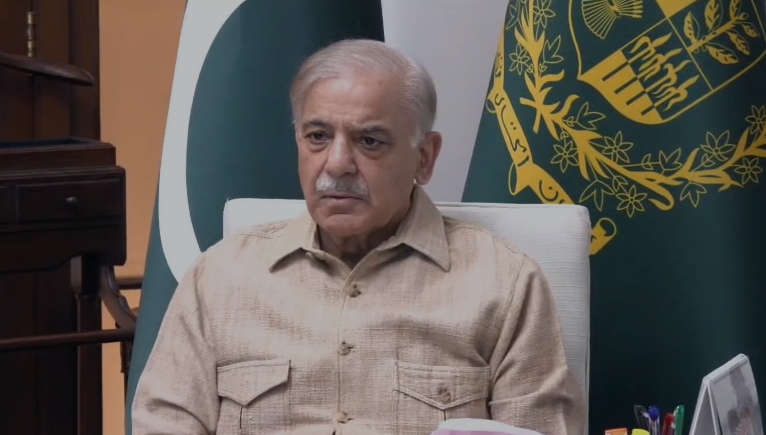
ISLAMABAD: Pakistan’s Prime Minister Shehbaz Sharif has directed the formulation of a relief-focused policy framework emphasizing economic growth, austerity, and savings amid global economic pressures.
A review meeting on the country’s economic situation in the context of recent global developments was held under the chairmanship of Prime Minister Sharif, said a press release issued on Saturday by Prime Minister’s Office (Media Wing).
During the meeting, a briefing was given on the recent global tensions and their economic impacts on the region.
The prime minister directed that a policy framework based on economic growth, simplicity (austerity), and savings be formulated.
In view of the current global economic pressures caused by these tensions, the prime minister instructed that an austerity- and savings-based strategy be developed.
He also directed the committee to present practical proposals in this regard within the next 48 hours.
Sharif instructed that the policy framework should not only minimize the burden on the public but also give top priority to public relief.
The prime minister was briefed by the active committee working on this matter.
Sharif had already formed a committee last week to review the global economic effects of the recent tensions.
The committee had been working on a policy plan, due to which no shortage of petroleum products occurred in the country.
According to the briefing, the increase in petroleum product prices yesterday was made on the committee’s recommendation, in which the minimum possible burden of global price increases was passed on to consumers.
The prime minister directed the committee to work more actively and present simple and practical recommendations for the public as soon as possible.
Sharif issued clear instructions that any petrol pump or company found involved in creating an artificial shortage or hoarding must be immediately shut down, its license canceled, and legal action taken.
The prime minister also directed the minister for finance and the minister for petroleum to visit all four provinces and, in coordination with provincial governments, prepare a plan and strategy to ensure the conservation of petroleum products and their uninterrupted supply to the public.