
Pakistan finance minister holds talks on trade, reform and investment

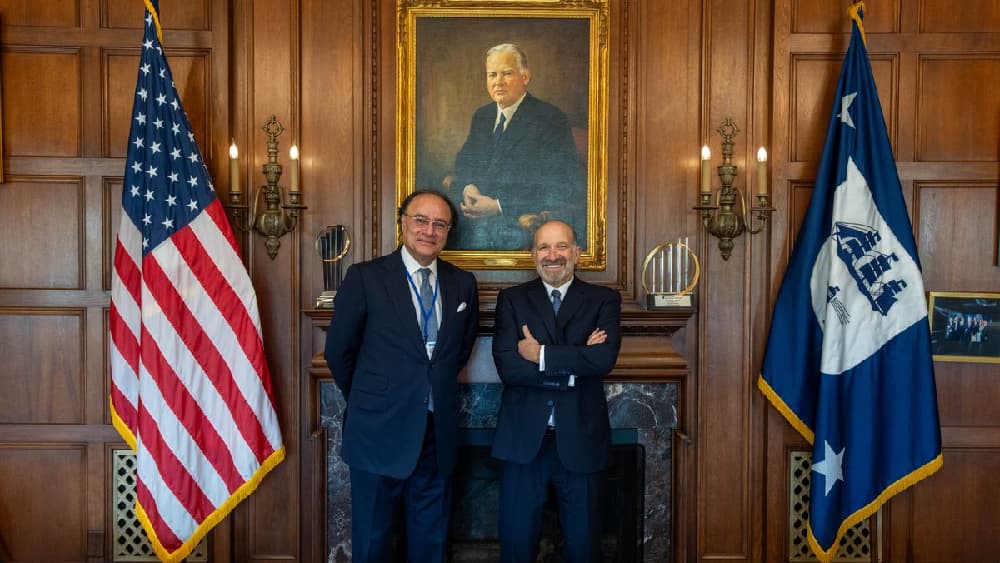
Pakistan’s Finance Minister Muhammad Aurangzeb meeting US Secretary of Commerce, Howard Lutnick. (Photo: X/@CommerceGov)
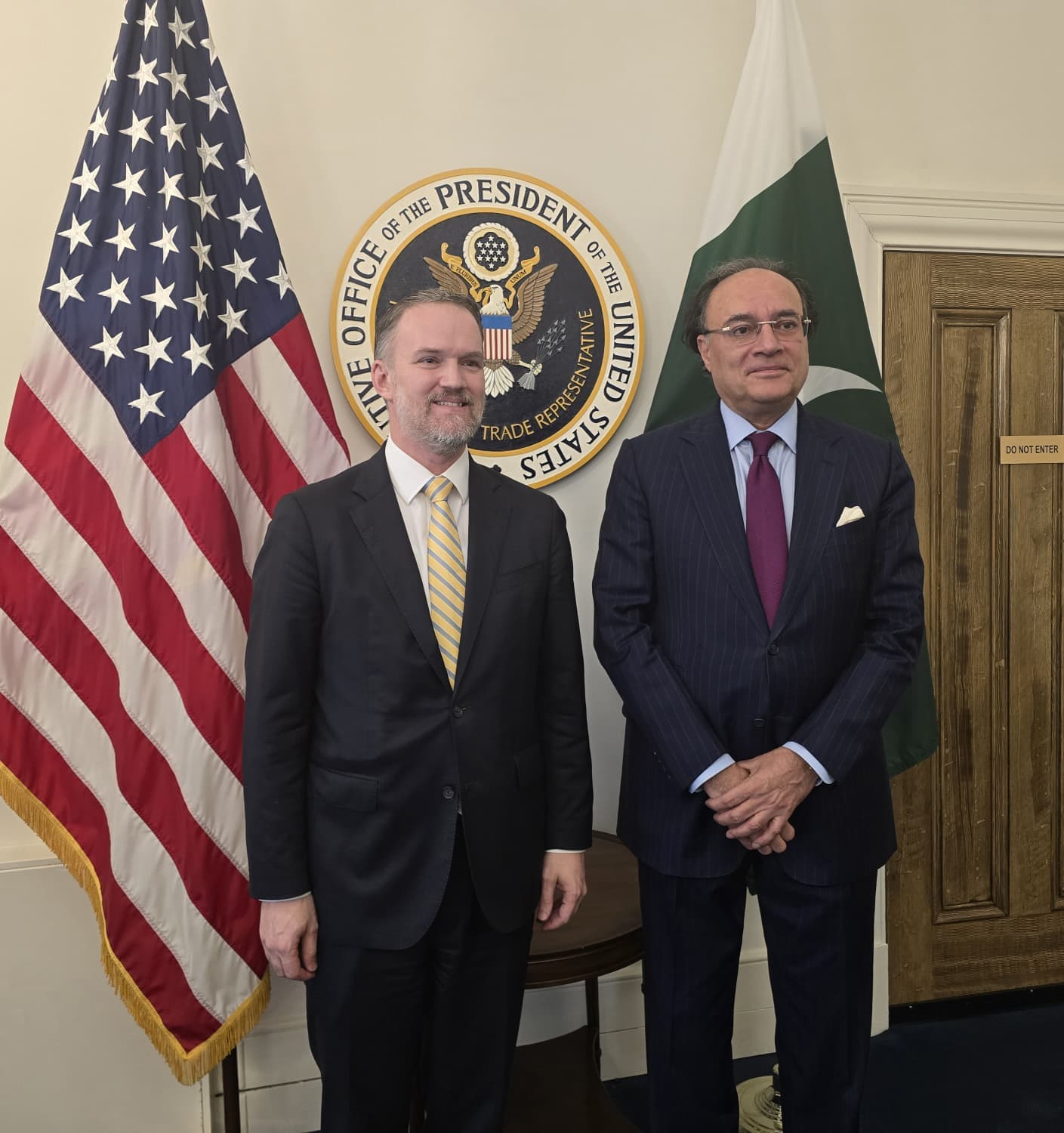
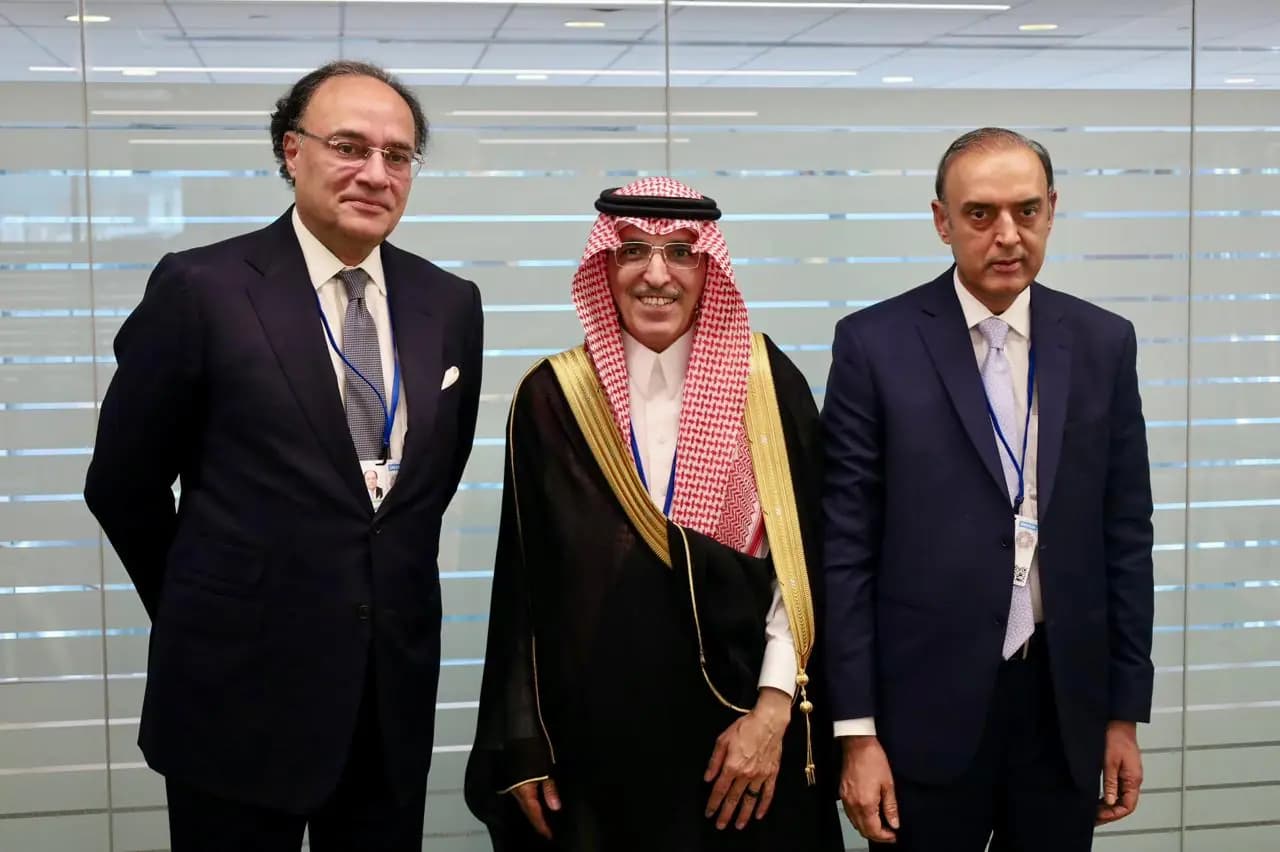
ISLAMABAD: Pakistan’s Minister for Finance and Revenue Muhammad Aurangzeb held a series of meetings on the sidelines of the IMF-World Bank Spring Meetings and separate engagements in Washington, according to posts the Ministry of Finance shared on X.
The minister’s meetings covered global economic issues, Pakistan’s reform program, debt and development finance, sovereign credit, bilateral cooperation, privatization, capital markets and investor outreach.
US Commerce Secretary Howard Lutnick
In a meeting with US Commerce Secretary Howard Lutnick, the discussion focused on advancing trade and broader economic interests between Pakistan and the United States.
Both sides discussed avenues to deepen bilateral economic partnership, focusing on enhancing trade, promoting investment flows, and facilitating private-sector engagement.
The discussions also covered cooperation in key sectors, including mining, energy, and information technology, with an emphasis on unlocking new opportunities for mutually beneficial economic collaboration.
United Nations Secretary-General António Guterres
Minister Aurangzeb also met with United Nations Secretary-General António Guterres, during which the discussion focused on global economic challenges and international cooperation.
The two sides discussed the global economic implications of the ongoing situation in the Middle East, particularly its impact on food and energy security in developing countries.
The UN Secretary-General lauded Pakistan’s role in facilitating peace and stability in the region and beyond and expressed confidence in its continued constructive engagement on the global stage.
IMF Managing Director Kristalina Georgieva
According to Pakistan’s Ministry of Finance, the finance minister also met with IMF Managing Director Kristalina Georgieva, who commended Pakistan’s reform progress and economic stability. She credited strong program implementation with helping maintain macroeconomic stability and build investor confidence, and said sound policies and deeper structural reforms would be important for sustaining growth.
Borrowers’ Platform
Aurangzeb also participated in the launch of the Borrowers’ Platform. He said that the platform addresses a long-standing gap as borrowing countries have lacked a dedicated forum to share experiences, identify emerging risks, and bring coherence to their collective perspectives.
He said that the platform is not intended as a negotiating bloc but rather as a voluntary, Member State-led initiative focused on peer learning, experience sharing and amplifying the voices of borrowing countries in global financial discourse.
Fitch Ratings
Minister Aurangzeb later met with Fitch Ratings, during which discussions covered Pakistan’s credit profile and market strategy. The meeting came shortly after Fitch affirmed Pakistan’s long-term foreign-currency issuer default rating at B- with a Stable Outlook, citing progress on fiscal consolidation and macroeconomic stability measures in line with the IMF program.
President, Asian Development Bank, Masato Kanda
The minister also met with the president of the Asian Development Bank, Masato Kanda, to discuss bilateral cooperation.
According to Radio Pakistan, the finance minister highlighted the recent signing of the Country Partnership Strategy as an important milestone in advancing bilateral cooperation between Pakistan and the Asian Development Bank. He thanked President Kanda for ADB’s support in providing credit enhancement for the issuance of Pakistan’s inaugural Panda Bond.
JP Morgan Chase
Aurangzeb also met senior management of JP Morgan in Washington and briefed them on Pakistan’s planned inaugural Panda Bond issuance as a green bond, acccording to Radio Pakistan.
Radio Pakistan said he also discussed privatization, interest in Reko Diq, EXIM Bank participation and Saudi Arabia-Pakistan digital collaboration through the GO AI Hub initiative.
Franklin Templeton
The finance minister also met the senior leadership of investment firm Franklin Templeton. The discussion focused on privatization and capital markets.
The minister updated the delegation on the government’s ongoing privatization program. He also discussed the outsourcing of airports, including Islamabad, Karachi, and Sialkot, as well as the privatization of electricity distribution companies, according to Radio Pakistan.
Citi Macro Forum
Aurangzeb then addressed the Citi Macro Forum, where he briefed investors on Pakistan’s economic strategy.
He said that Pakistan has reached a Staff-Level Agreement with the IMF for the third review under the EFF and second review under the RSF, with Executive Board approval expected in early May.
The finance minister described the Middle East crisis as one of the most significant supply shocks in recent history, outlining a three-stage government response to address its cascading economic effects and expressing gratitude for Saudi Arabia's financial support.
On the capital markets front, the minister said Pakistan has launched its Global Medium-Term Note program, with RFPs issued for Eurobonds, Islamic Sukuk, and a novel dollar-settled, rupee-linked bond. Additionally, the country's first-ever Panda Bond issuance is targeted for May, following the signing of counter-indemnity agreements with the ADB and AIIB.
Looking ahead, the finance minister stressed the need to build strategic petroleum reserves and accelerate the shift toward renewable energy as key lessons from the current crisis. He also pointed to emerging opportunities, including rising transit activity at Karachi Port and renewed potential for Gwadar to emerge as a major strategic trade corridor.

Latest News
Tech back in fashion as Asian markets extend rebound
3 HOURS AGO
India monsoon floods, landslides kill more than 100 since July: officials
3 HOURS AGO
.jpg&w=3840&q=75)
Pakistan, Japan reaffirm commitment to expand cooperation in key sectors
3 HOURS AGO
More than 800,000 displaced Lebanese returning home after war: UN
3 HOURS AGO

Total eclipse gives scientists chance to probe Sun's mysteries
3 HOURS AGO