


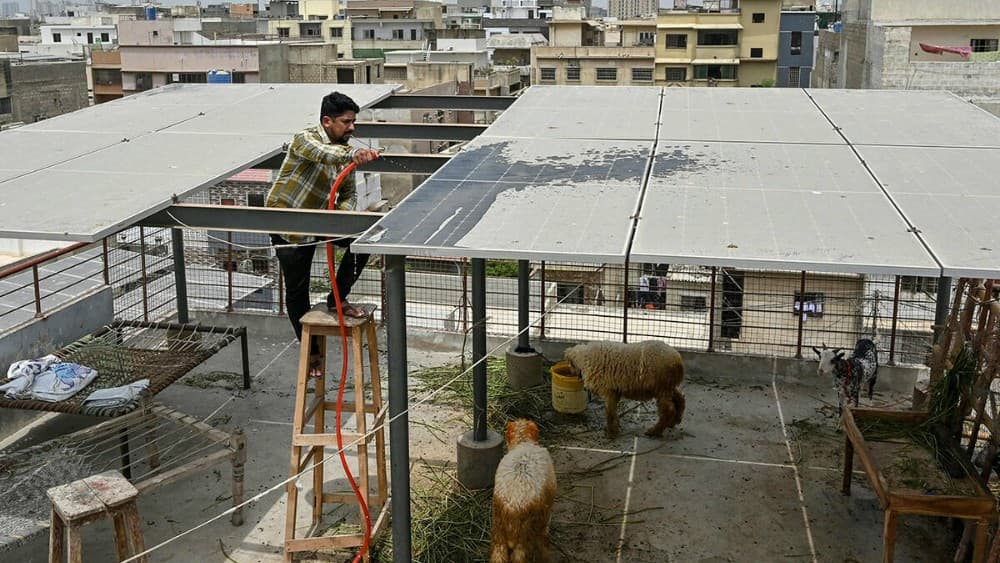
ISLAMABAD: Pakistan has become the world's third-largest importer of solar equipment, underscoring the country's accelerating transition toward renewable energy as it seeks to reduce dependence on expensive imported fossil fuels and tackle the growing challenges of climate change.
According to the Pakistan Climate Prosperity Plan (PCPP), a national roadmap prepared jointly by the Ministry of Finance and the Ministry of Climate Change, Pakistan imported solar equipment with a combined capacity of 17 gigawatts (GW) in 2024, nearly double the volume imported a year earlier.
The plan describes the surge as evidence of rapidly increasing demand for clean and affordable energy across the country.
The PCPP outlines ambitious long-term targets for transforming Pakistan's energy landscape.
It aims to generate 60% of the country's energy from clean sources by 2030, while increasing the share of renewable electricity to 95% by 2040.
The plan recommends accelerating investment in renewable energy projects, modernizing the national electricity grid and reducing reliance on costly fossil fuel imports.
It says these measures would strengthen Pakistan's energy security, lower electricity costs for consumers, improve industrial competitiveness and significantly reduce greenhouse gas emissions.
The PCPP also presents a roadmap for attracting climate finance and private investment in clean energy, climate-resilient infrastructure and green economic initiatives.
It highlights renewable energy as a key driver of sustainable economic growth, job creation and environmental protection.
The rapid increase in solar imports reflects growing adoption of rooftop solar systems by households, businesses and industries seeking relief from rising electricity tariffs and frequent power shortages.
The PCPP presents Pakistan's renewable energy transition as a central pillar of the country's broader strategy to strengthen climate resilience while supporting long-term economic development.