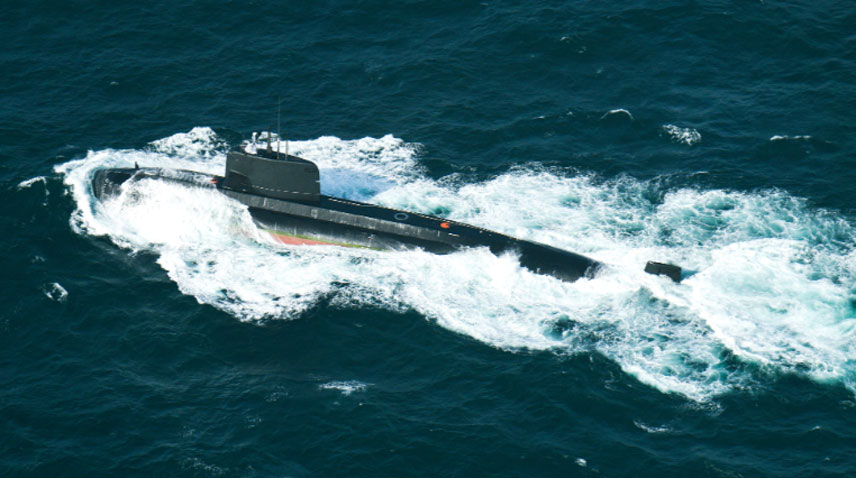
ISLAMABAD: Pakistan has inducted the Hangor-class submarine, equipped with air-independent propulsion that enables quieter, longer underwater operations and enhances the navy's stealth capabilities. This development indicates that New Delhi can no longer take for granted its uncontested control over the waters that separate the two nations.
The submarine, equipped with air-independent propulsion, operates more quietly and at greater depth than Pakistan's existing fleet, according to the South China Morning Post. This technology matters because it makes detection harder.
India's surveillance infrastructure, while extensive, relies partly on acoustic detection and surface monitoring. A submarine that remains underwater longer and generates less noise increases the operational burden on Indian naval patrols.
Pakistan's current fleet numbers five attack submarines, compared with India's approximately 19, according to the SCMP. By numbers alone, India dominates. But raw submarine counts miss the point. Pakistan is acquiring eight new vessels, half of which will be built domestically with Chinese technology transfer, according to Radio Pakistan. This means Pakistan's fleet will effectively double within a decade. India cannot easily match this expansion rate without substantially increasing naval budgets.
The deeper problem for India is geography and China's role. Pakistan lacks friendly ports east of India and has no logistical infrastructure to sustain operations far from home, the SCMP noted.
That might be today's reality. But China permanently stations eight warships in the Indian Ocean and maintains port access at Gwadar in Pakistan and Hambantota in Sri Lanka, according to the SCMP.
Over time, these bases become refueling stops and resupply points for Pakistani submarines. What seems logistically impossible now becomes feasible within five to ten years as the infrastructure matures, notes the SCMP.
For India, this creates a persistent surveillance and deterrence problem. Every merchant vessel transiting the Bay of Bengal, every naval task force, now operates with the possibility of Pakistani submarines in the water. India must dedicate more resources (destroyer escorts, anti-submarine aircraft, coastal patrol vessels) to mitigate this threat.
The Hangor forces India to work harder and spend more to maintain the same level of control it previously took for granted.
The historical dimension is also stark. Pakistan's last submarine in the Bay of Bengal sank the Indian frigate INS Khukri in 1971, according to the SCMP. That single incident shaped Indian naval doctrine for 50 years.
Pakistan's absence from those waters became a fact so routine that Indian planners treated the eastern waters as a sanctuary. The Hangor signals that the assumption no longer holds.
For India, it means the strategic environment has changed, and New Delhi will need to recalibrate its naval strategy and spending accordingly.



.png)


.jpg)
.jpg)