ISLAMABAD: The United Nations reports that the escalating conflict in Lebanon has displaced more than one million people. This situation has forced Syrian and Palestinian refugees, who had already escaped the wars in their home countries, to flee once more. Humanitarian agencies are referring to this as a "double displacement" crisis.
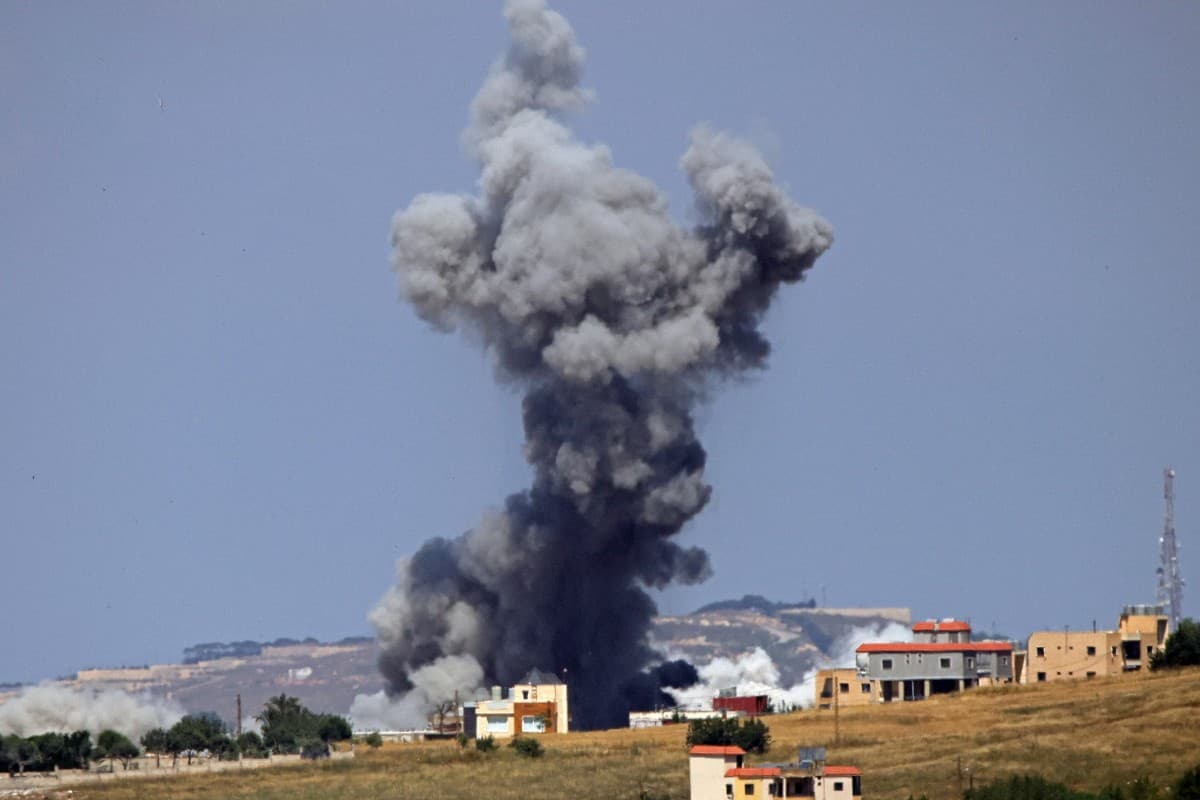
Over the weekend, an Israeli strike on Deir Zahrani killed eight people, including three women, according to Lebanon's health ministry, while Lebanese President Joseph Aoun on Monday said his country was facing "a vicious and reprehensible Israeli aggression."
This comes as Israeli Prime Minister Benjamin Netanyahu has vowed to push deeper into the ground offensive in Lebanon despite growing international condemnation.
The United Nations refugee agency UNHCR says Lebanon hosts the highest number of refugees per capita in the world, with roughly one in five people in the country a refugee. UNHCR data shows that the figure includes more than 1.4 million registered Syrians and approximately 200,000 Palestinian refugees.
According to UNHCR, nearly 700,000 people were displaced within a week of intensified fighting, while Lebanese authorities estimate that approximately 14% of the country's territory is currently under evacuation threat.
Geographic escalation
The Norwegian Refugee Council (NRC) says southern Lebanon, the Bekaa Valley, and the southern suburbs of Beirut, the hardest-hit areas in the escalation, were also where the vast majority of Syrian and Palestinian refugees had been concentrated.
According to data from UNHCR and the joint Lebanon Response Plan, Lebanon's strict "no-camp policy" for Syrians prohibited the creation of formal, UN-managed camps, forcing displaced communities into informal tented settlements heavily concentrated in the rural Bekaa Valley, southern Lebanon, and the outer suburbs of Beirut, the exact regions now under bombardment.
The UN Human Rights Office (OHCHR) says the breadth and circumstances of Israeli blanket evacuation orders, covering large swaths of Lebanese territory, may amount to unlawful forced displacement under international humanitarian law.
In a shelter for the displaced in Sidon, southern Lebanon's largest city, Zeinab Fakih, from Nabatieh, told AFP, "We are afraid."
"It is impossible for us to return to our home, because the city is in great destruction," she said.
Syrians cross back
UNHCR said more than 200,000 people crossed from Lebanon into Syria between March 2 and March 27 through official border crossings. The agency said nearly 180,000 were Syrians and more than 28,000 were Lebanese nationals.
The crossings included Syrians who had previously fled their country's civil war and settled in Lebanon before being displaced again by the current conflict.
"The bombs don't ask who you are," one community volunteer told The New Humanitarian in March. "But when people arrive at shelters, suddenly those questions matter again."
Health conditions in shelters
Aid agencies warn that conditions in shelters are deteriorating as displacement increases.
Lebanese authorities say more than 620 collective shelters have been opened across the country. However, UNHCR reports that nearly 94% of those facilities are operating at full capacity.
The World Health Organization has warned of acute public health risks inside those shelters, including rising rates of measles, hepatitis A, and diarrheal disease due to overcrowding. UNICEF says children make up roughly one-third of the displaced population.
Syrian and Palestinian refugees, as well as undocumented migrants, reports The New Humanitarian, have in numerous cases been turned away from official shelters, with facilities prioritizing Lebanese nationals or registered refugee populations.
The European Civil Protection and Humanitarian Aid Operations says an estimated 160,000 migrant workers, from Ethiopia, Bangladesh, the Philippines, Kenya, and elsewhere, have been left with no choice but to sleep in public parks, on roadsides, or in informal tented settlements with no protection.
The NRC warned in March that people were reliving "the same cycle of bombing, loss and displacement" experienced during previous rounds of conflict.
UN agencies have appealed for additional international funding, saying the scale of displacement is overwhelming available resources.



.jpg&w=3840&q=75)
.jpg&w=3840&q=75)