


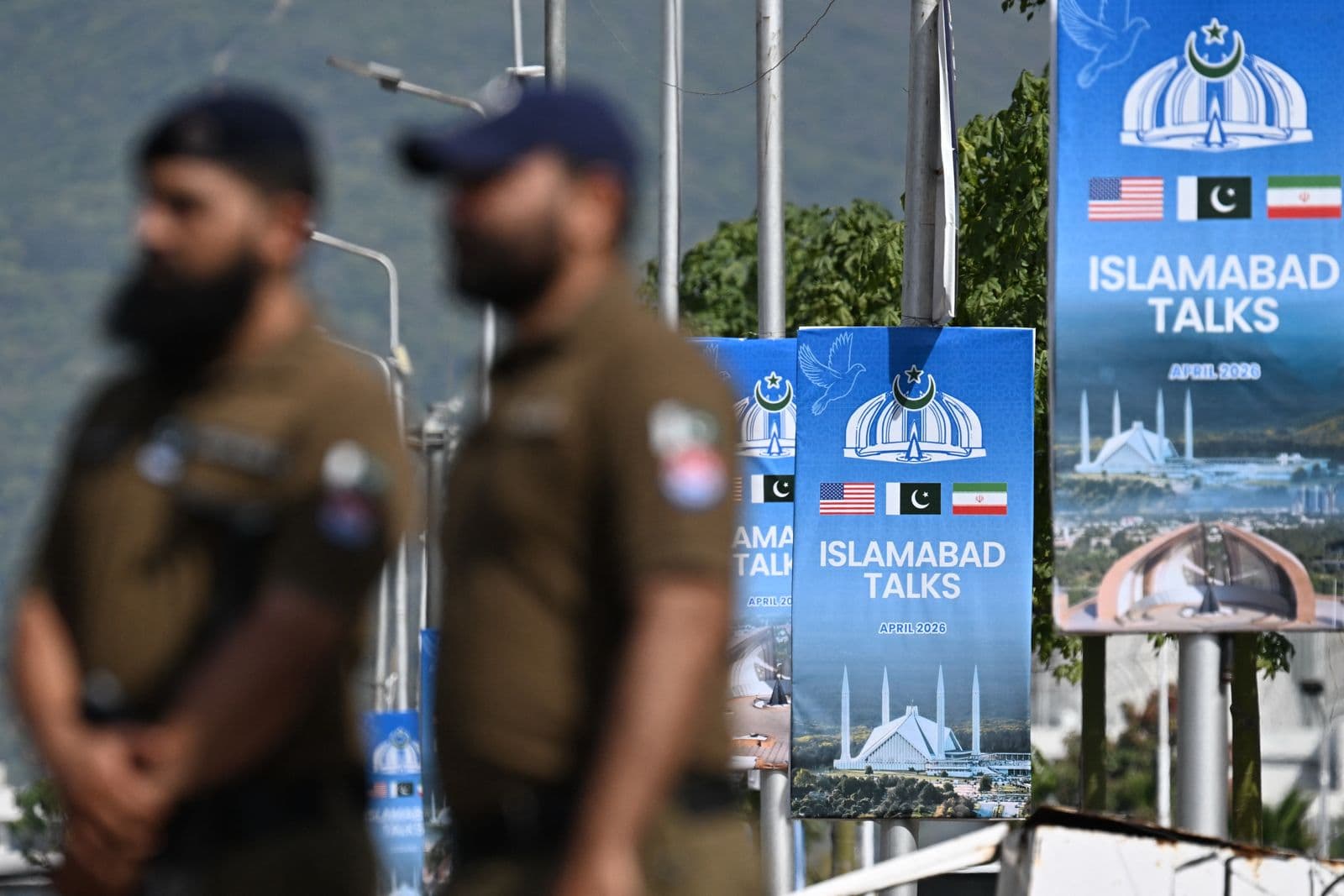
Editor's note: This live blog captures developments from April 11 & April 12, when Pakistan hosted the first round of talks under the Islamabad Memorandum of Understanding. From the arrival of the US and Iranian delegations to official statements, regional military developments, diplomatic reactions and expert analysis, the page provides a chronological account of events as they unfolded throughout the day.
It is for US to decide to earn our trust: Iranian speaker
Speaker of Iranian Parliament MB Ghalibaf in a series of posts on X on Sunday, stated, "America has understood our logic and principles, and now it's time for it to decide whether it can earn our trust or not?"
He said, "Before the negotiations, I emphasized that we have the necessary good faith and will, but due to the experiences of the two previous wars, we have no trust in the opposing side."
The Iranian speaker said, "My colleagues on the Iranian delegation Minaab168 raised forward-looking initiatives, but the opposing side ultimately failed to gain the trust of the Iranian delegation in this round of negotiations."
The Iranian speaker also expressed his thanks for Pakistan in facilitating the process. He said, "I am also grateful for the efforts of our friendly and brotherly country, Pakistan, in facilitating the process of these negotiations, and I send my regards to the people of Pakistan."
He further stated: "Iran is a body with 90 million souls, from all the heroic people of Iran who, following the advice of the Supreme Leader and by taking to the streets, supported their children and sent us on our way with their blessings—for this, I am grateful, and to my colleagues in these intense 21-hour negotiations, I say: well done, God strengthen you."
'Final and best offer'
Earlier, After 21 hours of high-stakes Iran–US negotiations in Pakistan’s capital, Washington said it had presented a “final and best offer,” while Tehran stressed that progress depends on “seriousness and good faith” and respect for its rights and interests.
US Vice President JD Vance said the proposal outlines Washington’s key red lines, while Iranian officials indicated discussions must address broader issues including sanctions relief, the Strait of Hormuz and an end to hostilities, reflecting differing positions as talks pause at this stage.
‘Substantive discussions’
Addressing the media in Islamabad, US Vice President JD Vance said no agreement was reached after 21 hours of negotiations with Iran, despite what he described as “substantive discussions” between the two sides.
“The good news is that we’ve had a number of substantive discussions with the Iranians… the bad news is that we have not reached an agreement,” Vance said.
He added that Washington had clearly outlined its position during the talks. “We’ve made very clear what our red lines are… and they have chosen not to accept our terms,” he said, confirming that the US delegation would return without a deal.
Vance also acknowledged Pakistan’s role in facilitating the negotiations, saying any “shortcomings” were not due to the hosts, who “did an amazing job” in trying to bridge differences between the two sides.
‘Seriousness and good faith’
Iran’s Foreign Ministry spokesperson Esmaeil Baqaei said Tehran remains committed to diplomacy but warned that progress in the Islamabad Talks depends on trust and respect for its interests, in remarks posted on X ahead of the US briefing.
“Diplomacy for us is the continuation of the sacred jihad of the defenders of the Iranian land,” Baqaei said, adding that Iran had not forgotten “America’s breaches of promise and malicious acts,” nor what he described as “heinous crimes” during the conflict.
He said the Iranian delegation had engaged in intensive, day-long negotiations in Islamabad, facilitated by Pakistan, with “numerous messages and texts” exchanged between the two sides. “Iranian negotiators are employing all their capabilities… to safeguard Iran’s rights and interests,” he said.
According to Baqaei, discussions over the past 24 hours have covered key issues including the Strait of Hormuz, Iran’s nuclear programme, sanctions relief, war reparations, and a “complete end” to hostilities in the region.
He stressed that the outcome of the talks would depend on the “seriousness and good faith” of the other side, urging restraint from “excessive and unlawful demands,” while reaffirming Iran’s determination to pursue its national interests through all means, including diplomacy.
He also expressed appreciation for Pakistan’s role in hosting and facilitating the negotiations.
Trump says US ‘wins regardless’ as talks enter second day
US President Donald Trump said he was unconcerned about the outcome of ongoing negotiations with Iran in Islamabad, asserting that Washington had already achieved its objectives in the conflict.
“Whether we make a deal or not makes no difference to me. The reason is because we’ve won,” Trump told reporters, adding that the United States had “defeated them militarily.”
His remarks come as US Vice President JD Vance is set to address a live press briefing, as the American delegation continues talks with Iran in Pakistan’s capital, with discussions now entering a second day amid efforts to build on a fragile ceasefire.
PM Sharif meets Iranian delegation
Prime Minister Shehbaz Sharif held a meeting with the Iranian delegation on the sidelines of the Islamabad Talks, with Tehran represented by Parliament Speaker Mohammad Bagher Ghalibaf and Foreign Minister Abbas Araghchi.
Appreciating Iran’s engagement, Sharif reaffirmed Pakistan’s commitment to facilitating dialogue and building momentum toward meaningful outcomes. He said Islamabad would continue to play its role as a mediator in pursuit of “regional and global peace and stability.”
Senior Pakistani officials, including Deputy Prime Minister Ishaq Dar and Army Chief Asim Munir, also attended the meeting, reflecting coordinated civil-military support for the process.
Vance meets Sharif as talks begin
US Vice President JD Vance met Prime Minister Sharif as negotiations got underway, with both sides signalling commitment to constructive engagement.
According to the Prime Minister’s Office, Sharif “commended the commitment of both delegations to engage constructively” and expressed hope that the talks would serve as a stepping stone toward “durable peace in the region.”
Vance was accompanied by Special Envoy Steve Witkoff and Jared Kushner, while the Pakistani side included Ishaq Dar and Interior Minister Mohsin Naqvi, underscoring the high-level nature of the engagement.
Iran central bank chief meets Dar
Separately, Iran’s central bank governor Abdolnasser Hemmati met Deputy Prime Minister Ishaq Dar on the sidelines of the Islamabad Talks, highlighting the economic dimension of the ongoing negotiations.
Both sides emphasised the importance of sustained dialogue, noting that peace and stability in the region remain essential for economic cooperation and shared progress.
The meeting reflects a broader effort to align diplomatic and economic priorities as talks proceed, with stakeholders seeking not only de-escalation but also long-term regional stability.
The Spotlight
Pakistan’s capital has transformed into a tightly secured diplomatic hub as it hosts the high-stakes Iran–US negotiations, with extensive arrangements in place to facilitate both delegations and the international media covering the landmark talks.
At the centre of the media operations, the Jinnah Convention Centre has been converted into a fully equipped international press hub, hosting hundreds of journalists from around the world.
Authorities have ensured high-speed connectivity, dedicated workspaces, and hospitality arrangements, alongside cultural programming including live traditional music performances, reflecting Pakistan’s efforts to present a welcoming and organised environment for global coverage.
The negotiations themselves are taking place at the Serena Hotel, one of Islamabad’s most secure and strategically located venues.
Known for hosting high-level international events, the facility offers a controlled environment with extensive infrastructure capable of accommodating large delegations. Its proximity to key government institutions and the diplomatic enclave has further enhanced coordination and accessibility.
Security across the capital has been significantly heightened, with thousands of personnel deployed to ensure smooth and secure movement of delegations. Key areas, particularly the Red Zone, have been placed under strict monitoring, with multiple checkpoints, controlled access routes, and coordinated civil-military oversight in place.
Temporary closures of certain public spaces and traffic diversions have also been implemented to support operational efficiency.
Despite the tight security, officials have emphasized facilitation at every level — from streamlined accreditation processes for media to coordinated reception of delegations led by US Vice President JD Vance and senior Iranian officials.
The comprehensive arrangements underscore Pakistan’s commitment to hosting the Islamabad Talks in a secure, orderly, and professionally managed environment as efforts continue toward advancing regional peace.
Negotiations underway
The talks follow a fragile two-week ceasefire brokered through Pakistan’s diplomatic engagement, positioning Islamabad at the centre of global efforts to de-escalate a conflict that has disrupted energy flows and heightened geopolitical tensions.
“In response to my sincere invitation, the leaderships of both countries are coming to Islamabad. There, negotiations will be held for the establishment of peace,” Sharif said earlier in a televised address.
He cautioned that while a temporary truce has been secured, the real challenge lies ahead, describing the current phase as a “make or break” moment for diplomacy.
US delegation in Pakistan
US Vice President JD Vance has arrived in Islamabad, leading a high-level delegation to participate in the negotiations, the foreign office said, marking a key moment in efforts to turn a fragile ceasefire into a broader peace framework.
The delegation includes Special Envoy Steve Witkoff and Jared Kushner. Officials said the US team will engage in negotiations aimed at addressing core issues, including regional security and de-escalation.
The delegation was received by Deputy Prime Minister Ishaq Dar, Chief of Army Staff Asim Munir and Interior Minister Mohsin Naqvi.
Welcoming the delegation, Dar commended the United States’ commitment to achieving “lasting regional and global peace and stability” and expressed hope that all sides would engage constructively.
He also reiterated Pakistan’s willingness to continue facilitating dialogue, saying Islamabad remains committed to supporting efforts toward a “lasting and durable solution” to the conflict as negotiations get underway.
‘Good intentions’
An Iranian delegation of more than 70 members, led by Parliament Speaker Mohammad Bagher Ghalibaf, arrived first in Islamabad under tight security, according to the Pakistan Foreign Office.
The delegation includes Foreign Minister Abbas Araghchi, senior military official Ali-Akbar Ahmadian, and politician-economist Abdolnasser Hemmati, underscoring Tehran’s high-level representation.
“We have good intentions but we do not trust,” Ghalibaf said upon arrival, according to Iranian state television. “Our experience in negotiating with the Americans has always been met with failure and broken promises.”
Vance heads to Pakistan
Before departing Washington for Islamabad, JD Vance expressed cautious optimism about the upcoming negotiations, saying the United States would pursue a constructive outcome while remaining firm in its approach.
“We’re going to try to have a positive negotiation,” he told reporters, adding, “If the Iranians are willing to negotiate in good faith, we’re certainly willing to extend the open hand… but if they try to play us, the negotiating team is not going to be receptive.”
The talks come after weeks of intense fighting that began late February, when the United States and Israel launched strikes on Iran, triggering a wider regional conflict as Tehran retaliated against US and allied targets. Now in its second month, the war has spread across the Middle East, disrupted global energy flows, and raised fears of a broader escalation, even as a fragile ceasefire attempts to halt hostilities.
‘Islamabad Talks’
Pakistan has moved to facilitate participation, offering visa-on-arrival for delegates and journalists.
“Pakistan has extended visa-free travel to delegates and journalists… for the duration of the talks,” Foreign Office spokesperson Tahir Andrabi said.
Security and logistical preparations have been reinforced.
Interior Minister Mohsin Naqvi chaired a high-level meeting reviewing arrangements, assuring “foolproof security measures” for visiting delegations.
Pakistan’s civil and military leadership reviewed the evolving situation. Pakistan Chief of Defense Forces and Chief of Army Staff Asim Munir met Sharif, with both stressing the need to “maintain peace and a ceasefire by all parties,” according to the Prime Minister’s Office.
“The two leaders expressed satisfaction over the de-escalation achieved so far… and reiterated Islamabad’s commitment to facilitate a negotiated settlement,” the statement said, adding that arrangements for delegations had been finalized with “highest consideration and support.”
International backing for Pakistan’s mediation continues to grow.
Foreign Minister Ishaq Dar held calls with counterparts from the Netherlands and France, who commended Islamabad’s role in securing the ceasefire and advancing a diplomatic pathway.
“Both sides underscored the importance of full implementation of the ceasefire to achieve sustained peace,” the Foreign Office said.
‘Indispensable role’
Beijing-based global affairs expert Victor Gao said Pakistan has played an “indispensable role” in bringing the United States and Iran to the negotiating table, calling the current ceasefire a critical breakthrough.
“I think mankind should give a lot of credit to Pakistan for the important and indispensable role… leading towards this two-week-long truce,” Gao told Pakistan TV Digital, warning that continued conflict risked triggering a wider economic crisis. “Otherwise this ongoing energy crisis will lead to a major economic crisis… one of the most important financial crises in human history.”
He said Pakistan’s sustained diplomatic engagement had been key in preventing further escalation and expressed hope that the ceasefire would hold.
“Pakistan has been doing great… engaged in hectic negotiation and good offices between Washington and Tehran,” he said, adding that Beijing and Islamabad were aligned in seeking an immediate end to the war. “China and Pakistan share the same desire to see an end to this war immediately,” Gao added.
At the same time, concern is mounting over continued violence in Lebanon, where Israeli strikes have intensified despite the truce.
Dar, in conversations with international partners, stressed the need for “full respect and implementation of the ceasefire.”
Deadly strikes in Lebanon
Lebanese Prime Minister Nawaf Salam has called for an immediate end to attacks, while the United Nations condemned the escalation.
“The United Nations strongly condemns the strikes… that resulted in significant civilian casualties,” spokesman Farhan Haq said.
Despite these challenges, Pakistan has intensified diplomatic outreach, with Sharif thanking global leaders for supporting what he described as Islamabad’s “sincere efforts” to advance peace.
“I earnestly and sincerely urge all parties to exercise restraint… so that diplomacy can take a lead role,” he said earlier.
With negotiations now underway and global attention fixed on Islamabad, the talks will test whether the fragile ceasefire can hold and evolve into a broader framework for lasting regional peace.
- This concludes Pakistan TV Digital's live coverage of April 12. Throughout the day, this live blog documented developments surrounding the first round of talks under the Islamabad Memorandum of Understanding, from the arrival of the US and Iranian delegations and official meetings to regional security developments, diplomatic reactions and statements as they unfolded. This story was first published on April 11 at 01:26 AM local time and is now closed.
- Reporting by Saqib Tanveer, Ayesha Mir, Asfandyar Yahya, Shizza Jasmin and Muhammad Ibrahim. Writing contribution: Muhammad Ibrahim, Maisam Ali, Hammaad Qayyum Khan, Maham Babar Khan, Maryam Shah, Ibrahim Babakhel, Imad Abbas and Syed Muhammad Zaid.