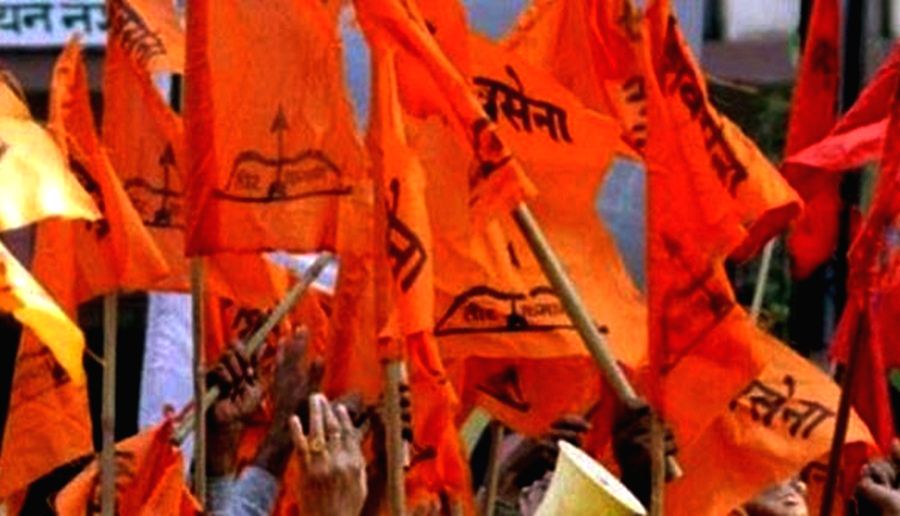
ISLAMABAD: Six lawmakers from the opposition faction of Shiv Sena switched allegiance this month in the western Indian state of Maharashtra, further consolidating the ruling alliance's control over one of India's most politically and economically significant states.
The defections reduced the opposition Shiv Sena (UBT) faction's representation in India's lower house of parliament from nine seats to three, according to Indian media reports. Under India's anti-defection law, legislators can avoid disqualification if at least two-thirds of a party's lawmakers merge with another political group, a threshold met by the six lawmakers.
The move strengthens the position of Chief Minister Eknath Shinde's Shiv Sena faction, which governs Maharashtra in alliance with Prime Minister Narendra Modi's Bharatiya Janata Party (BJP) and the Nationalist Congress Party (NCP) faction led by Ajit Pawar.
According to legislative data compiled by PRS India, the ruling coalition now holds an overwhelming majority in the state legislature, controlling 237 of 288 seats in the assembly and 16 of 17 seats won in recent upper-house elections.
Growing concerns over minority rights
The political consolidation comes amid criticism from opposition parties and minority groups over a series of policy measures affecting Muslims and Christians in the state.
In February, the Maharashtra government revoked a five-percent reservation quota for Muslims in education and public-sector employment. The quota had previously been upheld by the Bombay High Court, which cited the community's socio-economic backwardness.
Government studies, including the Sachar Committee Report, found Muslims lag behind national averages in education, employment and income indicators, with relatively low representation in government jobs.
Syed Imtiaz Jaleel, a leader of the All India Majlis-e-Ittehadul Muslimeen (AIMIM), accused the government of limiting opportunities for minority youth in the civil services, according to remarks carried by Indian media.
Earlier, the state government also withdrew certain welfare benefits for low-caste individuals who had converted to Christianity or Islam, a move criticized by rights groups.
Religious law draws criticism
The Maharashtra Freedom of Religion Act, passed this year, introduced new procedures for religious conversions, including advance notification requirements and official scrutiny before and after conversion.
Supporters of the law say it is aimed at preventing forced conversions. At the same time, critics argue that it places excessive restrictions on personal religious choices and could be used to harass minorities.
The legislation also grants courts the authority to examine marriages linked to religious conversion and determine related family matters.
Human rights organizations and opposition lawmakers have expressed concerns over rising communal tensions and alleged discriminatory practices targeting minorities.
Amnesty International and other rights groups have previously criticized what they describe as "bulldozer justice" — the demolition of homes and businesses without due process — a practice that India's Supreme Court has also scrutinized.
Political implications beyond Maharashtra
Political analysts say the latest defections further weaken the opposition in Maharashtra and strengthen the ruling alliance's influence at both the state and federal levels.
With Shinde's faction retaining a significant presence in India's parliament, the developments are expected to enhance the coalition's leverage within the Modi-led government and intensify debate over minority rights and democratic representation in one of India's most influential states.