
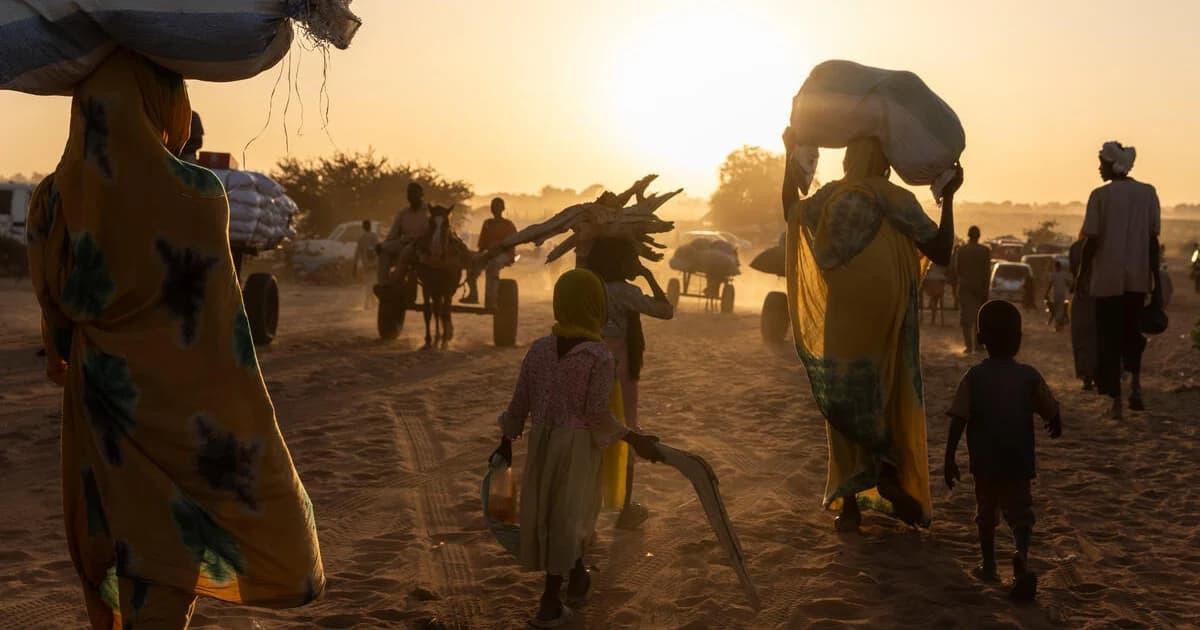
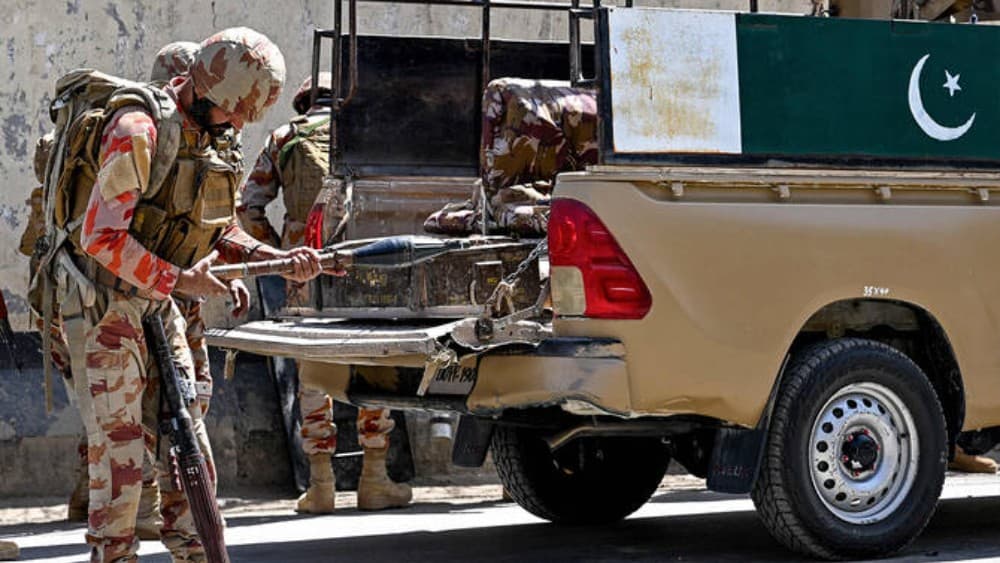
Photo from the Global Appeal 2025 report (UNHCR)
ISLAMABAD: Global forced displacement is projected to reach a record 139.3 million people by the end of 2025 across 136 countries, despite a brief mid-year decline, as severe funding cuts threaten humanitarian response and aid agencies warn donor fatigue has become the biggest crisis facing refugees worldwide.
UNHCR forecasts that 139.3 million people will be forcibly displaced by year-end, up from 123.2 million at the end of 2024. Mid-year figures showed 117.3 million displaced, a temporary dip of 5.9 million that masked the worsening crisis.
Sudan became the world's largest displacement crisis with 14.3 million refugees and internally displaced people, replacing Syria at 13.5 million, followed by Afghanistan with 10.3 million and Ukraine with 8.8 million.
The modest decline masks a deepening humanitarian catastrophe. Up to 11.6 million refugees risk losing UNHCR assistance in 2025, representing one-third of those reached last year. UNHCR's funding requirements for 2025 are $10.6 billion, yet only 23% have been met by mid-year.
UNHCR projects ending 2025 with $3.9 billion available, a decrease of $1.3 billion compared to 2024. High Commissioner Filippo Grandi noted the last time UNHCR had less than $4 billion was in 2015, when forcibly displaced people numbered half today's total.
The consequences
The funding crisis has forced brutal choices. The UNHCR reduced its global staffing by 30%, eliminated 3,500 permanent positions, terminated hundreds of temporary roles, and downsized or closed offices worldwide.
In South Sudan, 75% of safe spaces for women and girls supported by UNHCR closed, leaving 80,000 refugee women and girls without access to medical care or psychosocial support. In Afghanistan, protection services primarily for women and girls were cut by more than half, while in Lebanon, over 83,000 refugees lost shelter assistance, according to UNHCR.
In Uganda, malnutrition rates are soaring in reception centers with limited clean water and food. Education for 230,000 Rohingya refugee children in Bangladesh risks suspension, while UNHCR's entire health programme in Lebanon may shut down by year-end.
Nine of the top 20 humanitarian donors announced Official Development Assistance (ODA) cuts by mid-2025, including three of the four largest donors. Germany's draft 2025 budget proposed a 53% reduction in humanitarian assistance, while the UK government plans to cut foreign assistance from 0.5% to 0.3% of Gross National Income (GNI) by 2027.
UN aid coordination took in $15 billion in 2025 funding, the lowest level in a decade, reaching 25 million fewer people than in 2024.
The climate crisis
The decrease in displacement figures stems largely from Syrian returns. Nearly one million internally displaced Syrians returned between January and June 2025, reducing Internally Displaced Persons (IDPs) by 13% to 6.5 million, while at least 526,100 Syrians returned from abroad.
However, many returns happened under adverse conditions. A UNHCR report released on Nov. 10 revealed a troubling "climate trap": 75% of displaced people are living in countries with high-to-extreme climate exposure. In early 2025, about 1.2 million refugees tried to return home, but half returned to climate-vulnerable drought and flood zones, risking secondary displacement.
The report warns that by 2050, the world's 15 hottest refugee camps, mainly in the Sahel, will experience 200 days of dangerous heat per year, effectively making them uninhabitable. It remains unclear how sustainable current returns will be as active conflict has abated, but insecurity persists, and basic services remain inadequate.
Low and middle-income countries host 73% of the world's refugees, with 67% staying in neighboring countries and 60% never leaving their own country.
Looking ahead to 2026, donors pledged $1.161 billion to UNHCR, slightly above last year's all-time high and covering almost 18% of projected needs. Yet the percentage of unrestricted funding dropped to 17%, nearly half of what it was in 2023, limiting UNHCR's capacity to allocate resources where needs are greatest.
UN aid chief Tom Fletcher said disease outbreaks spiked, millions went without essential food and healthcare, and programmes protecting women and girls were slashed as hundreds of aid organizations shut.
Grandi warned that whether the decline in displacement continues or reverses depends largely on achieving peace in the Democratic Republic of Congo, Sudan, and Ukraine, preventing deterioration in South Sudan, improving return conditions in Afghanistan and Syria, and securing adequate funding to address displacement crises globally.
.jpg&w=3840&q=75)

Latest News
'Afghan Taliban, TTP are ideological cousins,' says former ambassador
21 MINUTES AGO

World youth unemployment rate rose last year: UN
AN HOUR AGO
2.4 million girls banned from Afghan schools since Taliban return: UNESCO
6 HOURS AGO
Five terrorists killed in intelligence-based operation in Balochistan’s Panjgur
7 HOURS AGO
Syria sentences Bashar al-Assad to death in absentia over atrocities
8 HOURS AGO