
Ex-Israeli negotiator says Pakistan replaced India in West Asia equation during US-Iran war
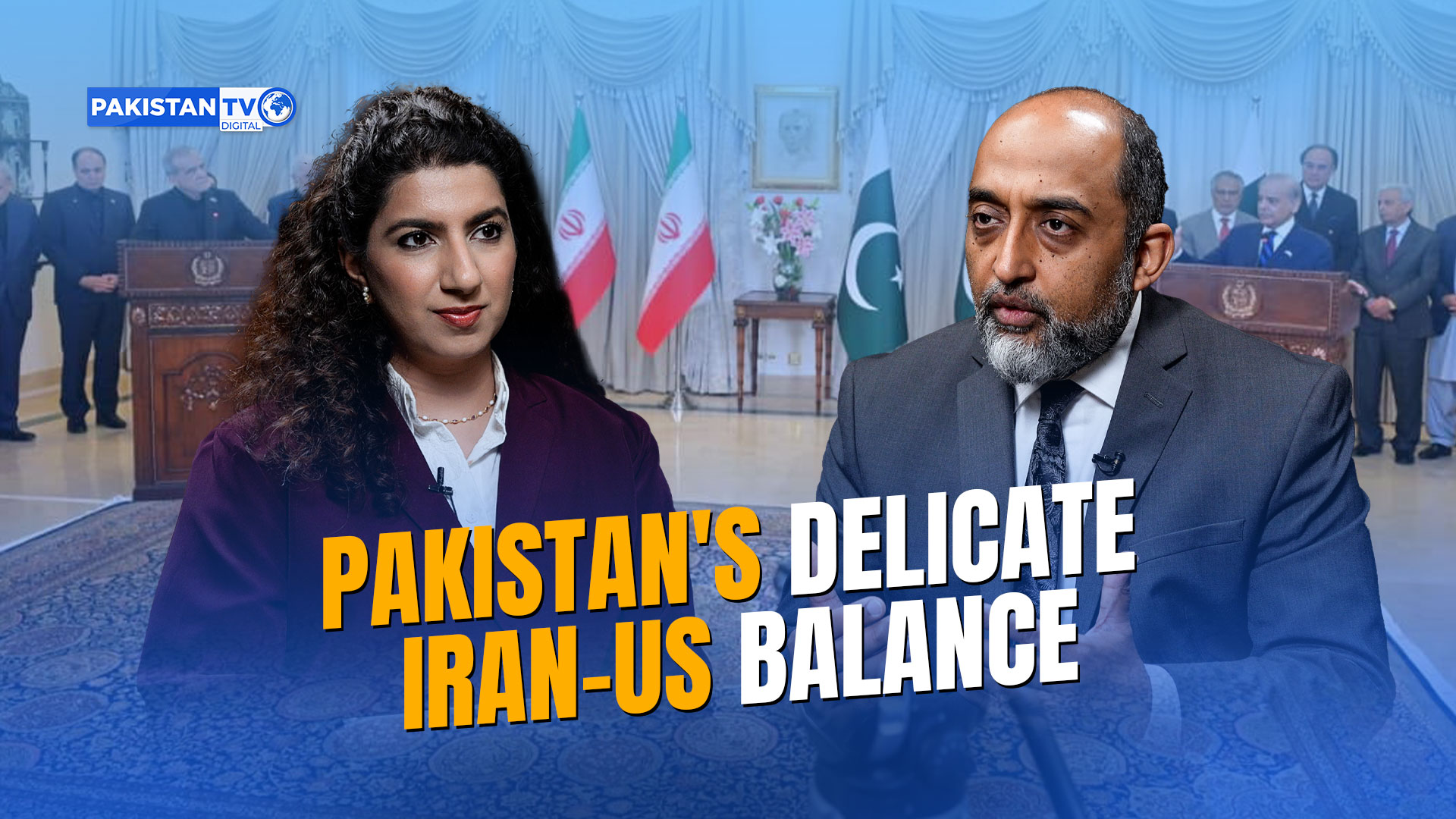
ISLAMABAD: Israel sought to draw India more deeply into West Asia's strategic landscape, but the recent Iran-US conflict instead elevated Pakistan's regional role, former Israeli peace negotiator Daniel Levy said, arguing that months of diplomacy reshaped geopolitical alignments across the Middle East.
His assessment comes as Pakistan and Qatar oversee implementation of the Islamabad Memorandum of Understanding, signed after 110 days of conflict between the United States and Iran.
The first round of high-level talks under the agreement concluded in Bürgenstock, Switzerland, with both sides agreeing on a 60-day roadmap toward a final deal while technical negotiations continue this week.
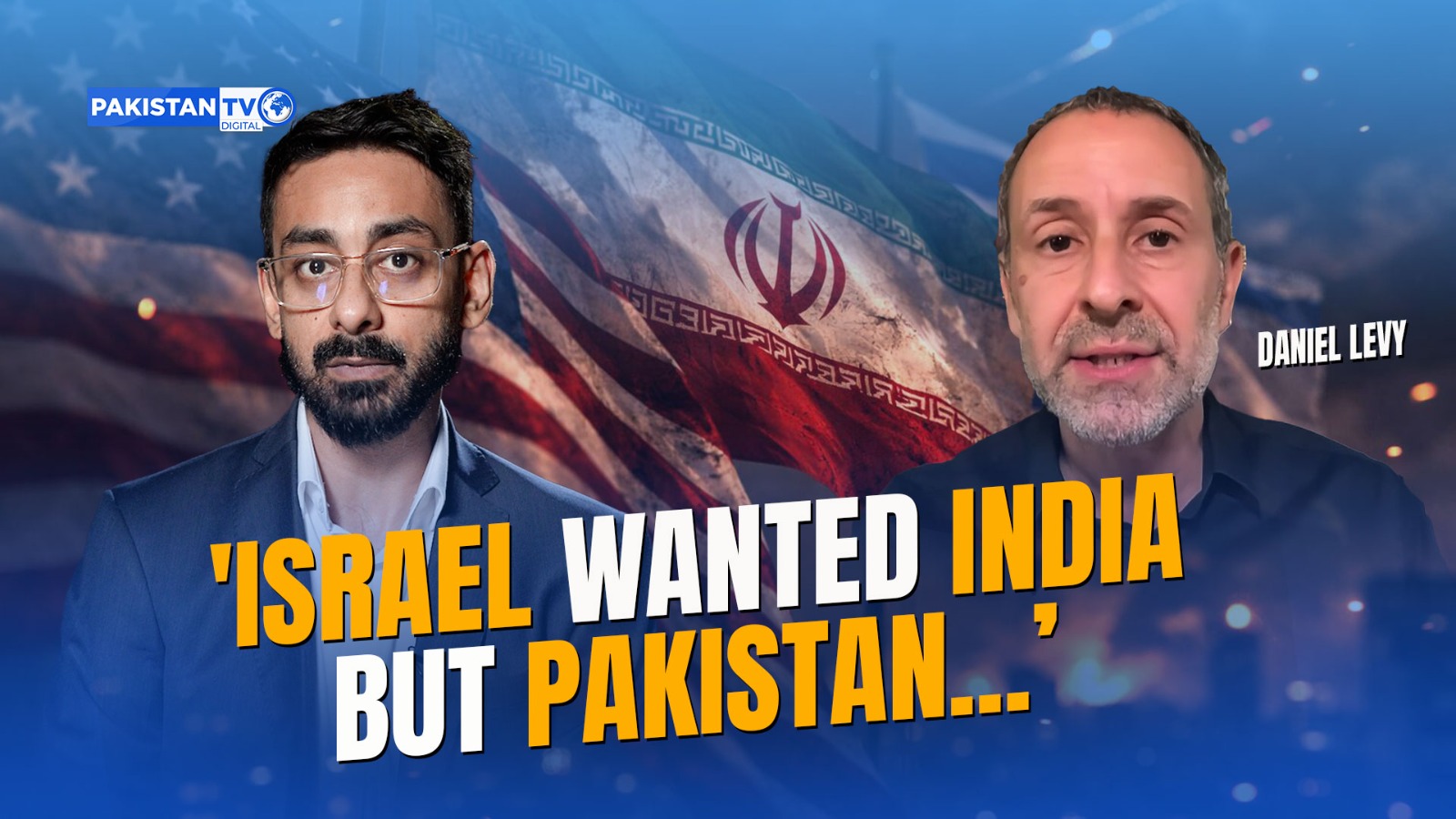
Levy, president of the US/Middle East Project and a former adviser to Israeli prime ministers Yitzhak Rabin and Ehud Barak, made the remarks in an interview with Pakistan TV Digital, describing the diplomatic breakthrough as evidence of a broader shift in regional geopolitics.
Watch the full interview here:
He said the conflict had reordered diplomatic alignments across West Asia, elevating Pakistan's role while exposing the limits of military solutions.
"Israel tried to pull India deeply into the West Asia equation," Levy told Pakistan TV Digital. "And the events of the last months have now pulled Pakistan more into that equation."
"I think the main takeaway is that the meeting occurred in the context of implementing the Islamabad Memorandum of Understanding," he said.
"This happened after 110 days of an ill-conceived war that never should have occurred."
While describing the agreement as fragile, Levy said Pakistan and Qatar had helped create conditions for diplomacy after months of fighting.
"This deal is fragile, but the mediation efforts by the state of Pakistan and Qatar have given a basis to try and make it permanent," he said.
"The meeting in Switzerland was primarily about 'thickening the thin ice' to prevent the war from resuming."
Pakistan's growing diplomatic role
Levy said Pakistan's importance during the crisis stemmed from its ability to maintain dialogue with actors that were often unwilling to engage directly with one another.
According to Levy, the conflict demonstrated that influence in the region was no longer determined solely by military or economic strength, but also by the ability to sustain communication across competing political camps.
"Pakistan is now on the radar screen in West Asia and the Middle East in ways that it has previously probably not been," he said.
Levy also suggested the conflict had altered regional diplomatic calculations involving India.
He argued that Israeli leaders had begun to notice the emergence of new diplomatic channels beyond their traditional partners.
"I think Netanyahu began to worry that in the Gulf, in Islamabad, in Ankara, there were a set of relationships being built, which perhaps could have as much access to the ear of the American president as that which comes from Jerusalem and Tel Aviv," Levy said.
Why Washington sought diplomacy
Levy argued that the conflict exposed the limits of military pressure after the United States and Israel failed to achieve their objectives through force.
"After about 38 to 39 days of active military attack, it became clear that America was heading for a strategic defeat as their war plans weren't working," he said.
He credited Iran's asymmetric military strategy with altering the course of the conflict.
"Iran conducted effective asymmetric warfare," Levy said, pointing to the closure of the Strait of Hormuz and the vulnerability of American military installations across the region.
Reflecting on the diplomatic efforts that followed, Levy said Pakistan's communication channel with Washington proved critical.
"Trump was looking for a way out because the US was stuck," he said.
"The active channel between Islamabad and Washington DC was pivotal because it gave Trump a ladder to de-escalate."
According to Levy, domestic political and economic pressures in the United States made a negotiated settlement increasingly attractive as the conflict dragged on.
Critique of Israel's regional strategy
Levy was also critical of Israeli Prime Minister Benjamin Netanyahu's broader regional strategy, arguing that Israel sought to reinforce its position as the dominant security power in the Middle East.
"The current Israeli leadership is pursuing a 'Greater Israel' project," he said.
According to Levy, Israeli policymakers expected Iran's response to military action would ultimately strengthen Israel's strategic position by encouraging Gulf states to rely more heavily on Israeli security guarantees.
"They expected Iran to be summarily defeated, which would then force the Gulf states to see Israel as their primary security shield," Levy said.
"This hasn't worked out."
Instead, he argued, the conflict encouraged greater coordination among regional powers.
Levy pointed to meetings involving Pakistan, Saudi Arabia, Türkiye and Egypt during the conflict, saying they reflected efforts to build broader regional cooperation outside traditional geopolitical alignments.
A fragile path ahead
Despite the progress made under the Islamabad Memorandum of Understanding, Levy cautioned that the diplomatic process remained vulnerable.
"Every time a deal gets closer, Israel does something to undermine it," he said, referring to renewed violence in Lebanon during the negotiations.
Levy said he believed the political challenges surrounding the agreement were far from over, warning that pro-Israel lobbying remained influential in Washington despite changing political currents.
"My fear is that when Americans try to make Israel 'happy,' the Palestinians become the punching bag," he said.
Still, Levy argued that the conflict had already altered Pakistan's place in regional diplomacy.
Whether that influence proves lasting will depend on future developments, he said, but Islamabad had already assumed a more prominent place in discussions on the future of West Asia.
"Pakistan is now on the radar screen in West Asia and the Middle East in ways that it has previously probably not been."
Latest News
Magnitude 6.5 quake hits off southern Philippines
19 MINUTES AGO
How did Pakistan pull off the Islamabad MoU? PM's Spokesperson Mosharraf Zaidi explains
36 MINUTES AGO
Ex-Israeli negotiator says Pakistan replaced India in West Asia equation during US-Iran war
3 HOURS AGO
India arrests staff accused of theft from temple built on Babri mosque
4 HOURS AGO
.png)
Pakistan to enhance capacity of counter-narcotics institutions: PM
4 HOURS AGO