


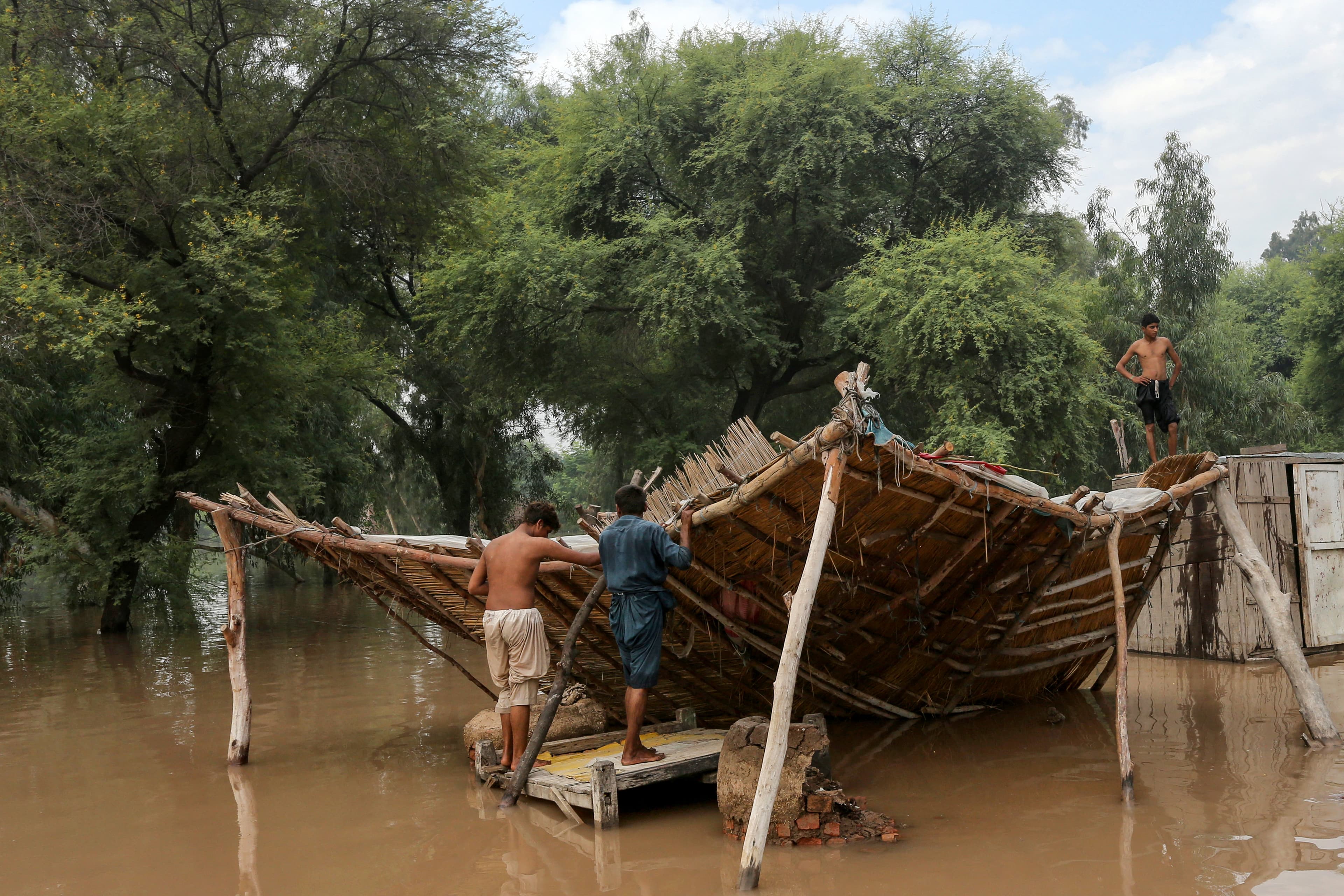
ISLAMABAD: Climate change and natural disasters are driving an unprecedented wave of human displacement worldwide, reshaping migration patterns and challenging governments’ ability to respond.
According to the Geneva-based Internal Displacement Monitoring Center (IDMC), in 2023, nearly 47 million new internal displacements were recorded globally, with 53% triggered by disasters, including storms, floods, wildfires, and earthquakes.
The report notes that by the end of 2023, nearly 8 million people were living as internally displaced persons (IDPs) due to disasters across 82 countries and territories.
In his message on International Migrants Day (IMD) on December 18, Prime Minister Shehbaz Sharif highlighted Pakistan’s commitment to addressing climate and disaster displacement, saying:
“Climate change is one of the defining challenges of our time. Pakistan — one of the countries most affected by extreme weather events — stands ready to deepen regional cooperation, strengthen early warning systems, and expand disaster-resilient infrastructure to protect affected populations and support those forced to flee their homes.”
Conflict and broader displacement crisis
While disasters drive mobility, conflict remains the primary driver of displacement. Oxfam reports that more than 82 million people worldwide are currently forcibly displaced, the highest number since World War II.
Five countries, Syria, Venezuela, Afghanistan, South Sudan, and Myanmar, account for two-thirds of cross-border displacement, with Syria alone responsible for 13.2 million refugees, asylum seekers, and internally displaced persons, Oxfam notes.
Climate change as a driver
The UN’s Intergovernmental Panel on Climate Change (IPCC) first warned in 1990 that climate impacts such as shoreline erosion, coastal flooding, and agricultural disruption could force millions to migrate.
According to the International Organization for Migration (IOM), climate and environmental stressors, ranging from slow-onset events like desertification and water scarcity to sudden disasters such as floods and storms, will increasingly shape migration trends in the coming decades.
Impacts and protection gaps
Forced migration, whether climate- or conflict-driven, undermines development by placing pressure on urban infrastructure, slowing economic growth, increasing conflict risk, and negatively affecting health and education outcomes for displaced populations.
However, climate migrants remain largely outside international refugee protections, leaving a significant legal and humanitarian gap.
According to IOM, addressing climate- and disaster-driven displacement requires integrated planning that combines disaster risk reduction, infrastructure resilience, legal protections for migrants, and international cooperation.
With extreme weather events projected to increase, the scale of displacement is likely to rise, making policy responses more urgent than ever, the IOM notes.