


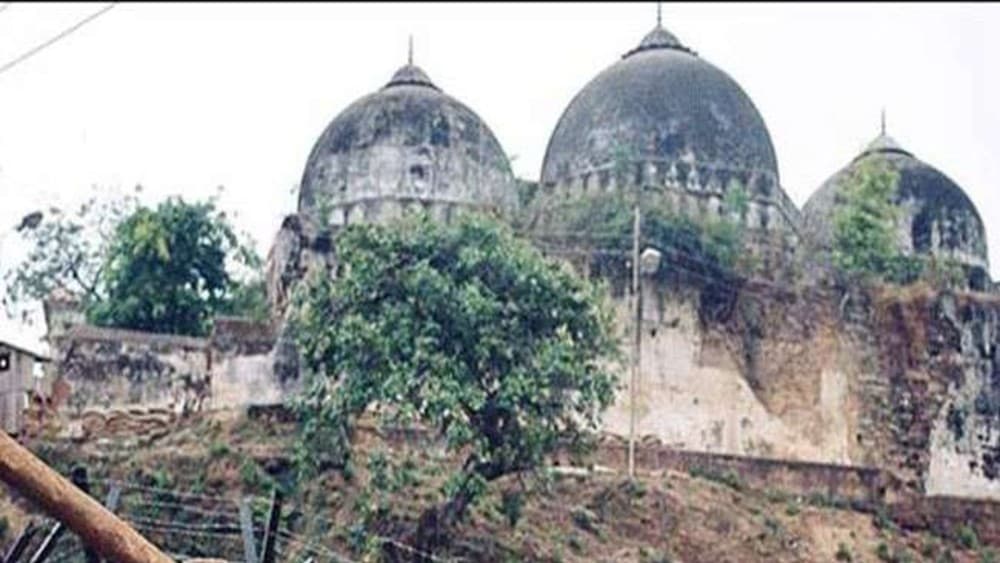
ISLAMABAD: India’s ruling Bharatiya Janata Party (BJP) marked the 33rd anniversary of the demolition of the historic Babri Masjid with a social-media post that laid bare the party’s anti-Muslim bias.
The Babri Masjid in Ayodhya, India's Uttar Pradesh, was a centuries-old mosque that was demolished in 1992 in a well-planned attack by mobs allegedly instigated by leaders of the BJP, Vishva Hindu Parishad (VHP), and other Sangh Parivar organizations.
The post on X stating, “Reviving. ✨Rebuilding. 🔱 Not just Ram Mandir — but entire India”, carries a video that starts with the opening word “REVOLT” celebrating the demolition of the historic mosque, and shows the Indian prime minister worshiping at the Hindu temple, Ram Mandir, which was built on top of the ruins of the razed mosque.
‘Celebration of destruction’
Indian academic Professor Rakhi Tripathi, in her post on X, lambasted the BJP, writing: "Calling this a 'revolt' is a shameless whitewashing of history driven by hate and a collapsing education system after 2014.”
“Glorifying the demolition of the Babri Masjid is not nationalism, it is the celebration of destruction,” she asserted.
Calling it the “most difficult period” of his career, Indian journalist Rajdeep Sardesai, in a post on X, lamented the horror of the day and its aftermath.
He wrote: “December 6 … a day of great shame and blood-letting that will be etched in memory forever, the day the Babri Masjid was demolished, the Constitution dismantled and Mumbai was scarred with horrific violence in which more than a 1000 people died.”
Demolition of mosques
The demolition of mosques has continued to take place in various parts of India under the BJP rule.
Shahi Masjid
In January 2023, Shahi Masjid, a 16th-century mosque on G.T. Road in Uttar Pradesh’s Saidabad, Prayagraj, was demolished by authorities to widen the highway, according to an Indian media report.
Barabanki Mosque
According to the same report, at the height of the pandemic in 2021, the Barabanki district administration in Uttar Pradesh demolished the Masjid Garib Nawaz Al Maroof, claiming it was an “illegal structure.”
Muzaffarnagar Mosque
Similarly, in November 2022, a 300-year-old mosque was razed to the ground in Uttar Pradesh’s Muzaffarnagar because it blocked the 709 A.D. Panipat-Khatima highway in Sherpur.
The Muzaffarnagar sub-divisional magistrate had claimed that the razing was carried out to expand the highway, and the locals had failed to move the structure by the stipulated period, according to the report.
Pakistan’s position
On Friday, Pakistan’s Foreign Ministry spokesperson, in a statement on the anniversary of the destruction of Babri Masjid, remarked, “On 6 December 1992, this historic mosque in Ayodhya was destroyed in circumstances that continue to evoke deep sadness and concern. The event remains unsettling for all who stand against intolerance and religious discrimination.”
He said, “Pakistan maintains that the preservation of religious heritage and sacred sites is a shared responsibility of the international community. It is essential that all acts undermining Muslim religious symbols or historical legacy be addressed with transparency, accountability, and a firm commitment to justice.”
The spokesperson said, “Pakistan emphasizes that the desecration of any place of worship constitutes a violation of the principles of religious equality and undermines the collective sense of security and mutual respect that all communities deserve.”
He said, “The continued sense of marginalization and emotional distress experienced by Indian Muslims in the wake of this event remains a serious concern.”
“Emboldened by state patronage, Hindu fascist organizations are now clamoring for the complete ghettoization of Indian Muslims and other religious minorities.”