


ISLAMABAD: Taliban intelligence officers have seized and shut down the privately owned Rah-e-Farda television station in Kabul, the latest in a series of raids targeting independent media, international media watchdogs reported.
According to the Committee to Protect Journalists, intelligence officers entered the broadcaster's headquarters on Feb. 28, forcing it off the air and ordering staff to leave the premises. The New York-based organization said the station’s assets were confiscated following an order by the Afghan Taliban’s supreme leader, Hibatullah Akhundzada.
The broadcaster was closed because of televised comments made by its owner, Mohammad Mohaqiq, regarding recent border skirmishes between the Afghan Taliban and Pakistan, according to a spokesperson for the Taliban’s Ministry of Information and Culture, Khubaib Ghufran.
Fighting erupted last week after Islamabad conducted airstrikes in Afghanistan to target terrorists harbored by the interim Afghan government.
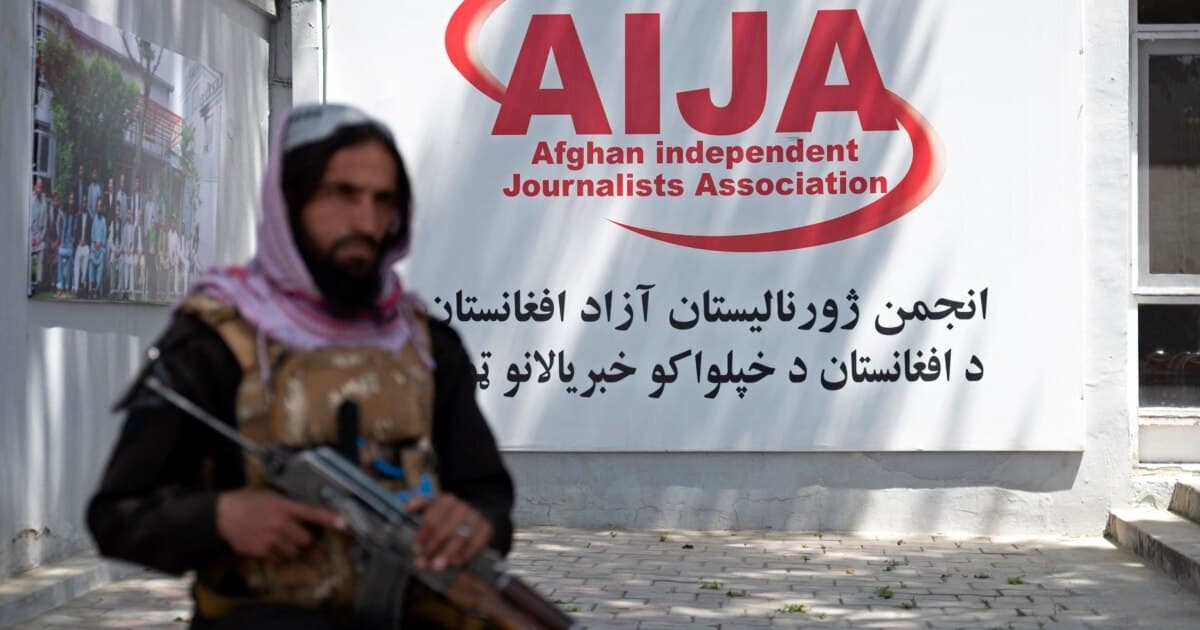
The seizure follows a broader collapse of the Afghan media landscape since the Taliban’s return to power in August 2021. More than half of the country’s media outlets have ceased operations in the last three years, according to figures released by UNESCO and the International Federation of Journalists.
At the time of the takeover, Afghanistan had 543 active outlets; only 312 remained by late 2021, according to a survey conducted by Reporters Without Borders (RSF) and the Afghan Independent Journalists Association.
Taliban authorities have intensified a crackdown on media professionals through arbitrary detentions and physical abuse. Between August 2021 and September 2024, the United Nations Assistance Mission in Afghanistan documented 336 rights violations against media staff, including 256 instances of arbitrary detention and 130 cases of torture.
The Afghanistan Journalists Center (AFJC) reported on March 4 that such violations increased by 56% in early 2025 compared to the previous year.
Stringent censorship laws now govern the remaining press. Under the 2024 Law on the Propagation of Virtue and Prevention of Vice, the Afghan Taliban has banned the broadcasting of images of living beings in several provinces, according to the AFJC.
Media organizations must also seek prior approval for political content, while direct criticism of Taliban officials is strictly prohibited, as per directives from the Ministry of Vice and Virtue.
The environment is particularly restrictive for women, with 80-90% of female journalists having lost their jobs since the takeover, according to RSF. In several regions, the Taliban have banned female voices from being broadcast on radio programs entirely.
Afghanistan’s global standing has plummeted as a result of these policies. The country ranked 178th out of 180 nations in the 2024 World Press Freedom Index, with RSF noting that it fell 44 places in a single year.