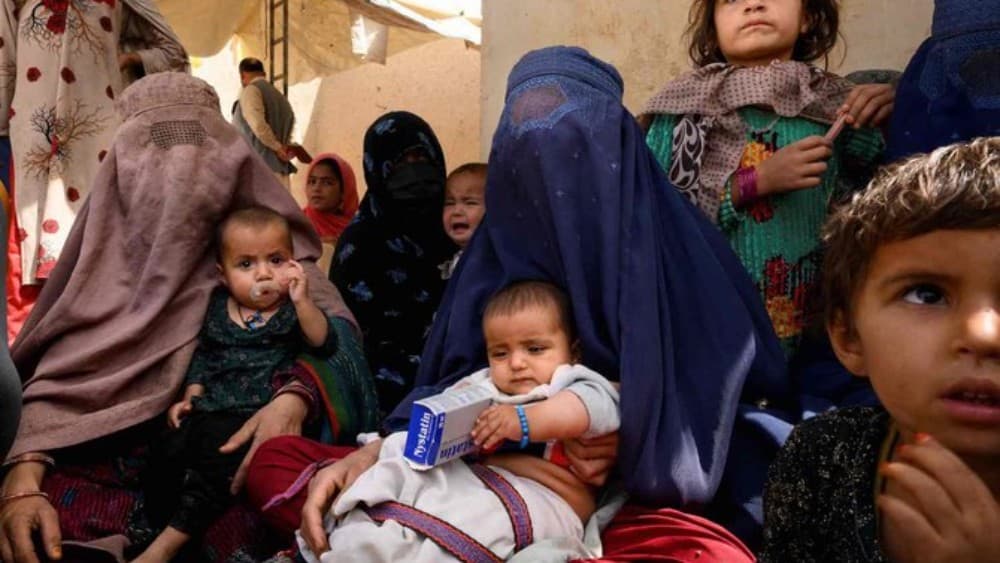
ISLAMABAD: Nearly 4.9 million mothers and children in Afghanistan will require urgent nutrition support in 2026, the United Nations Office for the Coordination of Humanitarian Affairs (OCHA) has warned, highlighting the worsening humanitarian crisis in a country already grappling with economic hardship, climate shocks and limited access to essential services.
The warning was issued by OCHA Afghanistan in a message posted on X on Monday, where the agency underscored the life-saving importance of timely humanitarian assistance.
“In 2026, 4.9M mothers and children will need nutrition support. With timely action, lives can be saved,” OCHA Afghanistan said in its post, released as part of its #WhatItMeansToStay campaign.
OCHA stressed that the nutrition crisis extends beyond statistics, affecting millions of families struggling to secure enough food amid years of conflict and economic instability.
“For millions of mothers in Afghanistan, it means holding on to hope despite the threat of malnutrition,” the agency said, adding that prompt humanitarian action can prevent irreversible harm to a generation of children already affected by years of crisis.
The latest warning comes days after the UN Children's Fund (UNICEF) reported that 3.7 million Afghan children under the age of five are at heightened risk of severe acute malnutrition.
UNICEF attributed the worsening situation to poor diets, rising food insecurity, recurrent disease outbreaks, inadequate water and sanitation services, low immunization coverage, and widening funding and supply gaps.
Afghanistan remains one of the world's largest humanitarian emergencies, with millions of people dependent on international assistance.
Aid agencies say the country's prolonged economic downturn, recurring climate-related disasters and restricted access to basic services continue to deepen food insecurity and undermine public health.
Humanitarian organizations have repeatedly appealed for increased international funding, warning that resource shortfalls are limiting their ability to provide nutrition treatment, healthcare and other essential services to vulnerable families.
OCHA said sustained support is critical to preventing avoidable deaths and long-term developmental damage among children, urging donors to act before conditions deteriorate further.
Taliban regime, since its inception in 2021, has been adopting policies causing a reduction in international assistance, besides heightened economic pressures on Afghanistan and its people.