

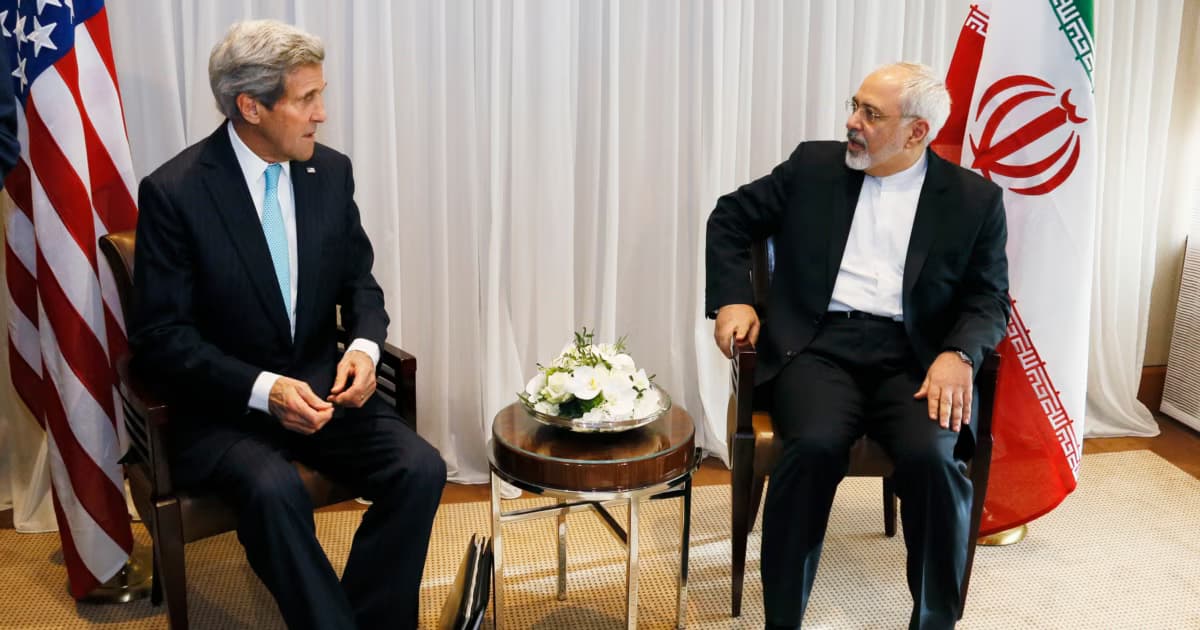
ISLAMABAD: Pakistan is hosting negotiations between the United States and Iran, the latest chapter in a decades-long diplomatic record that spans secret back channels, hostage negotiations, arms deals, and multilateral nuclear talks, most of which ended without a lasting agreement.
Official records and news archives show that despite the absence of formal diplomatic relations since 1980, the two governments have returned to the negotiating table repeatedly, across administrations and across continents.
What follows is a chronological account of every significant diplomatic engagement between Washington and Tehran on record.
November 28 – December 1, 1943 | The Tehran Conference
Venue: Tehran, Iran
US President Franklin D. Roosevelt met with Allied leaders in Tehran to coordinate military strategy during World War II. According to US State Department archives, the discussions covered military objectives for the remainder of the war, as well as the future of Iranian sovereignty.
The conference concluded with a formal declaration committing the Allied powers to the maintenance of Iranian independence and territorial integrity after the war.
November 4, 1979 – January 19, 1981 | The Algiers Accords
Venue: Algiers, Algeria (mediated)
Formal diplomatic ties dissolved during the Iran hostage crisis on November 4, 1979. According to US National Archives, the two nations conducted 444 days of negotiations through Algerian intermediaries.
The discussions covered four matters: the release of 52 American hostages; the unfreezing of Iranian government assets held in US banks; a formal US pledge of non-intervention in Iranian affairs; and the establishment of the Iran-US Claims Tribunal at The Hague to resolve financial disputes.
According to the Council on Foreign Relations, the Algiers Accords were signed on January 19, 1981. The agreement was properly concluded.
The Congressional Research Service noted that the two countries have not maintained formal diplomatic relations since 1980.
May 1986 | Secret Tehran Meetings
Venue: Tehran, Iran
US officials conducted secret meetings in Tehran in May 1986. As reported by the Reagan Library, a delegation led by former National Security Adviser Robert McFarlane traveled to Iran to discuss an exchange of arms for the release of American hostages held in Lebanon.
According to the Council on Foreign Relations, the broader arrangement also involved redirecting proceeds from arms sales to fund other covert operations. Iranian Ambassador Said Rajaie-Khorassani stated at a New York press conference that the visits were “fruitless.” The talks did not result in a formal agreement.
January 1998 | Cultural Diplomacy and Track-Two Contact
Venue: Various
Iranian President Mohammad Khatami proposed cultural engagement during a televised broadcast. As per US State Department files, this led to informal track-two diplomatic contact, including sporting exchanges later that year. Official government-level talks did not follow.
September 1998 | Six-Plus-Two Talks
Venue: United Nations General Assembly, New York
US Secretary of State Madeleine Albright and Iran's deputy foreign minister met on the sidelines of the UN General Assembly in New York, within the framework of the Six-Plus-Two multilateral talks on Afghanistan.
According to the Council on Foreign Relations, the meeting was the highest-level contact between US and Iranian officials since 1979.
The discussions addressed regional stability, specifically the situation in Afghanistan. The National Security Archive noted this as part of a broader shift in US approach toward pursuing direct contact with Tehran.
The meeting did not produce a bilateral agreement.
April 2000 | Bilateral Diplomatic Outreach
Venue: Washington, DC
Secretary of State Albright delivered a formal statement acknowledging the United States' role in the 1953 overthrow of Iranian Prime Minister Mohammad Mossadegh, calling prior US policy toward Iran "regrettably shortsighted," according to the Council on Foreign Relations.
The outreach included the lifting of some US sanctions on Iranian goods. The CRS noted that this period represented a brief improvement in bilateral relations.
No comprehensive diplomatic framework resulted.
December 5, 2001 | The Bonn Agreement
Venue: Bonn, Germany
Following the September 11, 2001 attacks and US military operations in Afghanistan, the United States and Iran participated in multilateral negotiations in Bonn on Afghanistan's political future.
The two governments coordinated on two specific issues: post-Taliban governing arrangements in Afghanistan, and the repatriation of Afghan refugees, as per the Council on Foreign Relations.
The two sides worked jointly on terms allowing displaced Afghan citizens to return home. The National Security Archive described this as a notable instance of direct US-Iran cooperation on a shared regional objective.
The Bonn Agreement was concluded and signed on December 5, 2001.
May 2003 | The Grand Bargain Proposal
Venue: Washington, DC (delivered through Swiss intermediaries)
Iran submitted a comprehensive diplomatic proposal to the United States through Swiss diplomats, who represented US interests in Tehran.
According to the Iranian Foreign Ministry, the document (which became known as the Grand Bargain) offered nuclear inspections, cooperation on regional security, and steps toward broader normalization.
The CRS noted that bilateral tensions had risen in the early 2000s amid reports of previously undisclosed nuclear facilities. The proposal was not taken up. Talks did not proceed to a formal conclusion.
March 2013 – July 14, 2015 | The Secret Oman Channel and the JCPOA
Venue: Muscat, Oman (back channel); Geneva, Switzerland (interim deal); Vienna, Austria (final agreement)
The Obama administration opened a secret diplomatic back channel with Iran in Muscat, Oman, beginning in 2011. As reported by the White House, the meetings centered on Iran's nuclear activities and laid the groundwork for formal multilateral engagement.
In September 2013, President Barack Obama and Iranian President Hassan Rouhani spoke by telephone (the most direct contact between the two countries' leaders since 1979).
The call opened a formal negotiating track between Iran and the P5+1 — the five permanent UN Security Council members plus Germany. An interim agreement, the Joint Plan of Action, was signed in Geneva on November 24, 2013, providing limited sanctions relief in exchange for a partial freeze of Iran's nuclear activities.
The process moved to full negotiations and concluded in Vienna on July 14, 2015, with the signing of the Joint Comprehensive Plan of Action.
The JCPOA required Iran to dismantle and redesign its nuclear reactor at Arak, submit to enhanced IAEA verification, and limit uranium enrichment for a minimum of 15 years. In exchange, the US waived secondary sanctions on Iran's oil exports and financial sector, the EU lifted its ban on Iranian oil purchases, and UN Security Council resolutions imposing related restrictions were revoked, per the CRS.
The agreement was concluded and signed by China, France, Germany, Iran, Russia, the United Kingdom, the United States, and the European Union.
April 2021 – August 2022 | JCPOA Revival Talks
Venue: Vienna, Austria
Multilateral negotiations aimed at restoring mutual compliance with the 2015 JCPOA were held in Vienna beginning in April 2021. According to the US State Department, the meetings focused on a mutual return to the terms of the 2015 nuclear agreement.
The sessions were structured as proximity meetings, in which US and Iranian delegations held separate sessions in the same building while European intermediaries carried proposals between them.
The CRS reported that the talks addressed the same core issues as the original JCPOA: the scope of Iran's nuclear activities and the corresponding level of sanctions relief. Multiple rounds were held over more than a year.
The talks did not reach a new agreement.
September 2023 | Prisoner Exchange
Venue: Doha, Qatar (transfer point)
The United States and Iran concluded a prisoner exchange mediated by Oman, Qatar, Switzerland, and the United Kingdom.
The specific terms covered two matters: the release of five Iranian-American dual citizens detained in Iran; and the transfer of approximately $6 billion in Iranian funds frozen in South Korea, released through a US sanctions waiver and routed through Qatar. The CRS reported that the funds were designated exclusively for humanitarian purchases.
The exchange was concluded. No broader nuclear or diplomatic agreement was attached to it.
April 12 – May 11, 2025 | Direct Nuclear Talks
Venue: Muscat, Oman (April 12, April 26, May 11); Rome, Italy (April 19)
Four rounds of direct US-Iran nuclear talks were held between April 12 and May 11, 2025. As reported by Iranian state news, the delegations were led by US Special Envoy Steve Witkoff and Iranian Foreign Minister Abbas Araghchi.
It was the first direct, face-to-face engagement between US and Iranian diplomats since 2017. Omani officials served as intermediaries across multiple sessions.
The discussions addressed Iran's nuclear enrichment program and the removal of US sanctions. The CRS reported that the two sides exchanged written proposals during this period. The discussions were inconclusive.
No agreement was finalized.
April 11, 2026 | Islamabad Talks
Venue: Islamabad, Pakistan
Pakistan is currently hosting negotiations between the United States and Iran in Islamabad. Officially dubbed Islamabad talks will begin on April 11, 2026, following a military conflict between the two sides that began February 28.
As per Iranian government statements, the agenda covers a 10-point peace plan addressing regional stability and the status of the Strait of Hormuz.
These negotiations are currently active.