


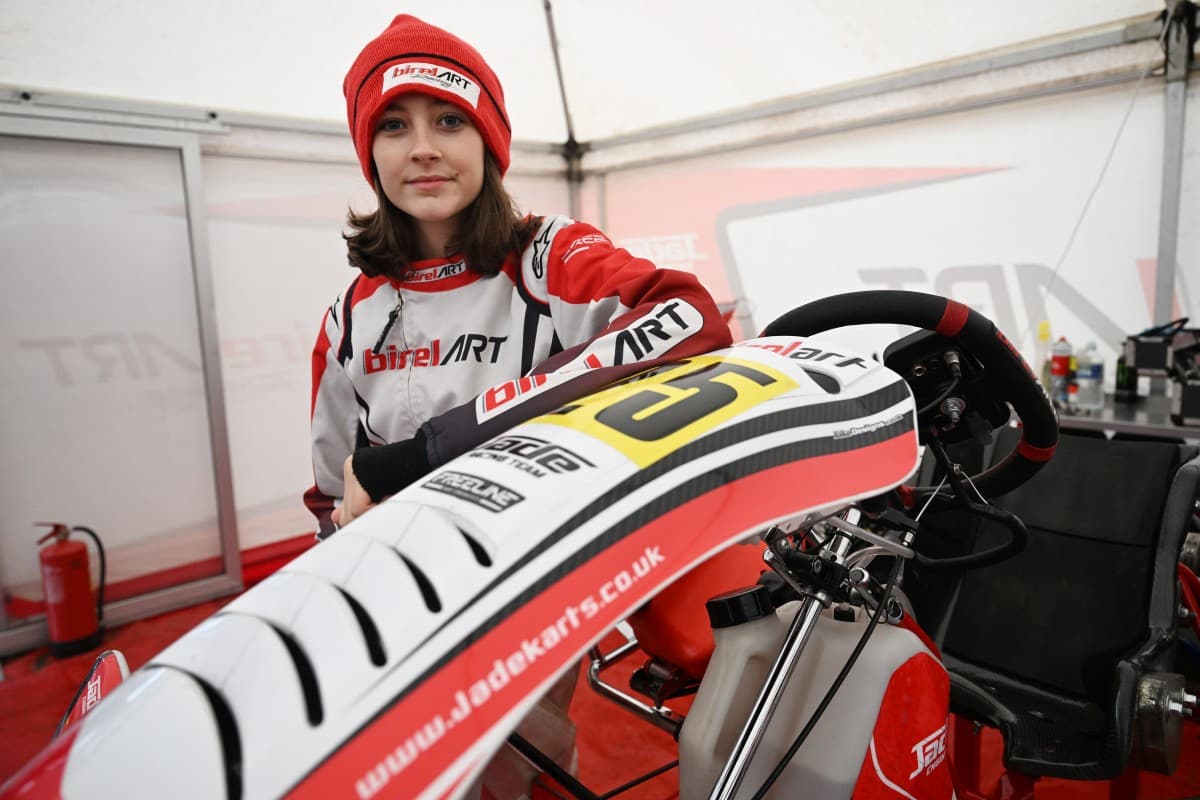
NOTTINGHAM, UK: A dozen girls whizzed around an English karting track, part of a pioneering drive to draw women into motorsports and maybe even race to the top in male-dominated Formula 1.
A special test day in October in Nottingham aimed to address a major gender gap in F1, one of the flashiest of sports.
Italian Lella Lombardi was the last woman to compete in an F1 Grand Prix in 1976, and the absence of women on the circuit is linked to young girls' limited exposure to motorsports, according to gender parity organisations.
More Than Equal, a non-profit that supports women drivers, said girls start karting on average two years later than boys. Seven-time F1 champion Lewis Hamilton, for example, got into the format aged just eight.
"These are the first steps that a girl could take," Cameron Biggs, coaching and academy pathway manager at Motorsport UK, told AFP.
"We're really trying to join the dots between grassroots and elite."
The enthusiasm was palpable among the youngsters, who were mostly new to karting.
Some attended the taster day, supported by makeup company Charlotte Tilbury, after watching F1, while others were encouraged by their parents.
None seemed put off by F1's breakneck speed, the thrumming engines and the prospect of driving a vehicle years before they are old enough to have a driver's licence.
"On the second time, I came first and I'm very proud," beamed 11-year-old Megan.
"I watch Formula 1 quite often, and so I kind of know how to get around the track," said Erin, also 11.
F1 paradox
F1's official website boasts a global fanbase of 827 million people -- a 63 percent increase since 2018.
But there is a paradox: F1 is one of the world's few non-gender-segregated sports yet one of the most male-dominated.
"We know that the pathway for female drivers hasn't successfully got a woman into Formula One competitively in the last 50 years," More Than Equal's head of driver development Lauren Forrow told AFP.
That means that girls are "not thriving within" the current system, she said.
The organisation has pledged to "make history" by training a woman not just to compete but to win.
"We know that this is a real challenge and that it's never been done before," CEO Tom Stanton told AFP.
More Than Equal lists limited access to motorsports at an early age, cultural and structural biases, sponsorship gaps and a lack of role models at the top as barriers obstructing women's entry into F1.
Forrow said the organisation's unique Driver Development Programme "acknowledges the physiological, psychological and technical differences" women face, such as the impact of menstruation on athletic abilities and daily life.
These realities "inform what the kind of right recipe is for supporting female athletes in this space", she said, of the programme created for young female racing drivers.
'Nobody to look up to'
Fifteen-year-old Skye Parker, from Trelogan, North Wales, told AFP she is determined to become "Formula 1 world champion", having started karting aged six and now loving the "feeling of excitement" she gets on the track.
On a wet December day, the assured teenager did laps in a Formula 4 car on Spain's Circuit de Barcelona-Catalunya. It has a challenging layout and is used by More Than Equal to hone female drivers' skills.
F4, for junior drivers, is an essential stepping stone for drivers on their way to the top.
Parker's personalised pink-and-green helmet distinguished her from other drivers as she drove for 45-minute stretches, concluding each session with a technical debrief.
Parker told AFP there are more women than before, but noted "boys definitely outnumber us".
"It is quite sad that there is nobody to look up to female-wise in Formula One," she said.
On top of obstacles unique to women, F1 is an "incredibly expensive" sport to pursue, Forrow said.
In Nottingham, Marcus McKenzie stood on the sidelines, using a headpiece to instruct his eight-year-old daughter Georgia as she rocketed around the karting track -- at 25 miles (40 kilometres) per hour, somewhat slower than the average speeds of 220 miles per hour characteristic of a Grand Prix.
The single father conceded that the cost of the sport made things difficult, but he is hoping to secure sponsorship for Georgia and her 11-year-old brother, who is also passionate about F1.
But money was far from the minds of the youngsters, who were exhilarated as they stepped off the track.
"Don't be shy to do it. Just be brave and have fun," was eight-year-old Thea's message to other girls her age.