


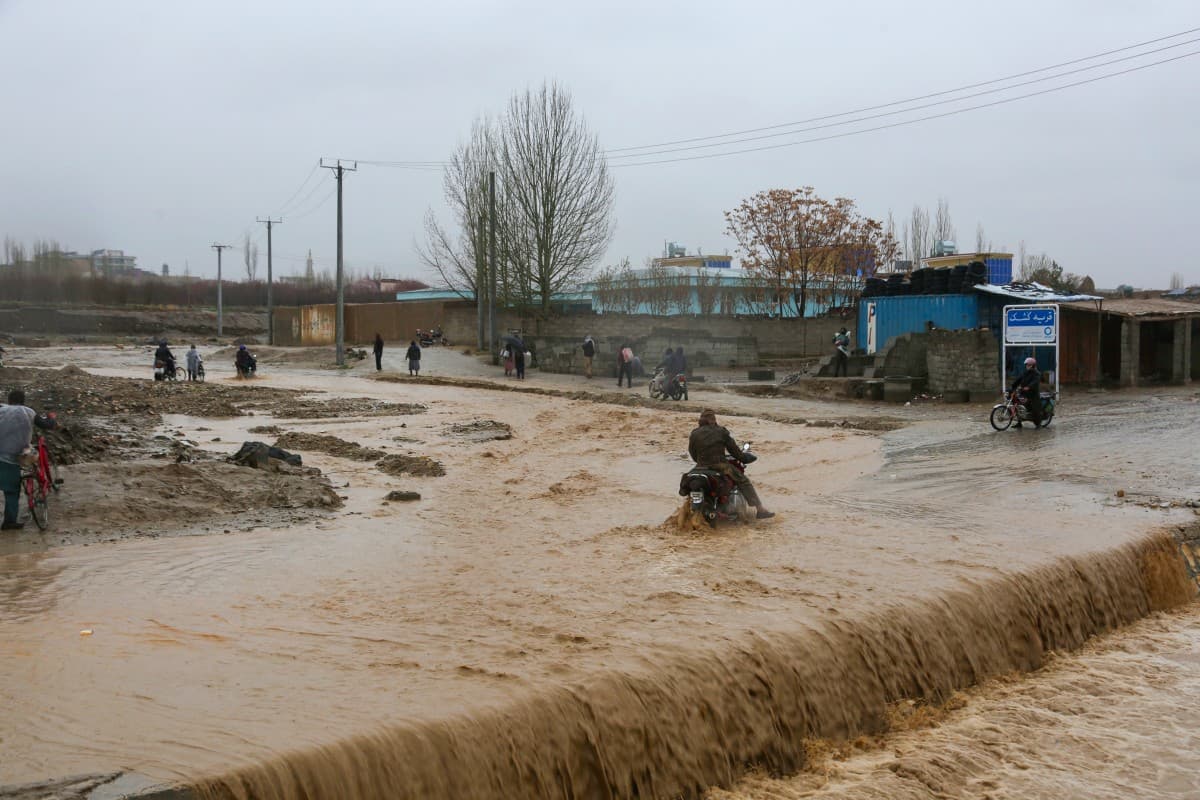
ISLAMABAD: For communities living along Afghanistan's riverbeds, the floods came fast. But for the aid system meant to reach them, the money never did.
Since late March, floodwaters have torn through 26 provinces, severing roads and cutting off delivery of food, medicine and clean water to some of the world's most vulnerable people, according to UNHCR's Emergency Flash Update #9, issued early April.
At least 51 people have been killed, 114 injured and five remain missing, according to Afghan Red Crescent Society (ARCS) field data published April 4. More than 2,634 families have lost their homes entirely.
But the deaths and rubble only tell part of the story. The floods have damaged about 13,400 acres of farmland and killed 1,730 head of livestock, according to the ARCS report, destroying the harvests and herds that millions of rural families rely on to survive the coming months.
Afghanistan was already hungry before the water came. Malnutrition exceeds emergency thresholds in 25 out of 34 provinces, according to the World Food Programme (WFP). The international organization warns that further destruction of farmland in designated hunger hotspots will push those numbers higher.
According to the UN Office for the Coordination of Humanitarian Affairs (OCHA), the country is confronting "intensifying climate shocks" on top of a hunger crisis already affecting 17.4 million people.
In addition, flood damage to water and sanitation infrastructure has raised the risk of waterborne disease outbreaks across affected provinces. The UNICEF 2026 Humanitarian Appeal aims to reach nearly 16 million people with urgent water, sanitation and health services in response to these compounding emergencies; however, aid has fallen short of its goals.
The system meant to deliver that response was already stretched to breaking point. In February, only 160,498 people received clean water and sanitation services, compared with a cluster target of 7.8 million, according to the Afghanistan WASH Cluster's 2026 report. Across all of 2026, only 304,290 people had been reached so far.
The reason is money – or rather, the absence of it. The 2026 Humanitarian Needs and Response Plan requires $1.71 billion to address needs across Afghanistan but remains critically underfunded, according to OCHA.
UNHCR alone requires $454 million for Afghanistan this year; as of the end of February, only 15% had been received.
Further rainfall is expected, with the IFRC warning that it would leave thousands of already-devastated families at risk of a third wave.