ISLAMABAD: More than 82 Afghan and international human rights organizations have urged the European Union and its member states to refrain from engaging with Taliban representatives amid reports that a Taliban delegation could visit Brussels in June 2026, as reported by the International Federation for Human Rights.
In an open letter published by the rights group, the signatories, including the International Federation for Human Rights (FIDH), expressed "grave concerns" over the possibility of an official Taliban visit to the Belgian capital, warning that such engagement could be viewed as a form of normalization or implicit recognition of the Taliban authorities.
The European Commission has invited a delegation of Taliban officials, expected to be led by Afghan Foreign Ministry spokesman Abdul Qahar Balkhi, to Brussels in June 2026 for high-level technical talks concerning the repatriation and deportation of Afghan migrants.
Democratic legitimacy
The groups stressed that the Taliban "do not represent the people of Afghanistan" because they lack democratic legitimacy and have not gained authority through any participatory, inclusive, representative, or constitutional process.
The letter noted that two senior Taliban leaders are currently subject to arrest warrants issued by the International Criminal Court (ICC) for the alleged crime against humanity of persecution on gender grounds. It also pointed out that multiple individuals associated with the Taliban remain subject to international sanctions, including those imposed by the European Union.
"Any official engagement with Taliban representatives, particularly on European soil, carries significant legal, political, and symbolic implications," the organizations wrote. "It risks being perceived as a form of normalisation or implicit recognition."
The groups said that since the Taliban's return to power in August 2021, authorities have implemented policies and decrees that have systematically dismantled fundamental rights and freedoms.
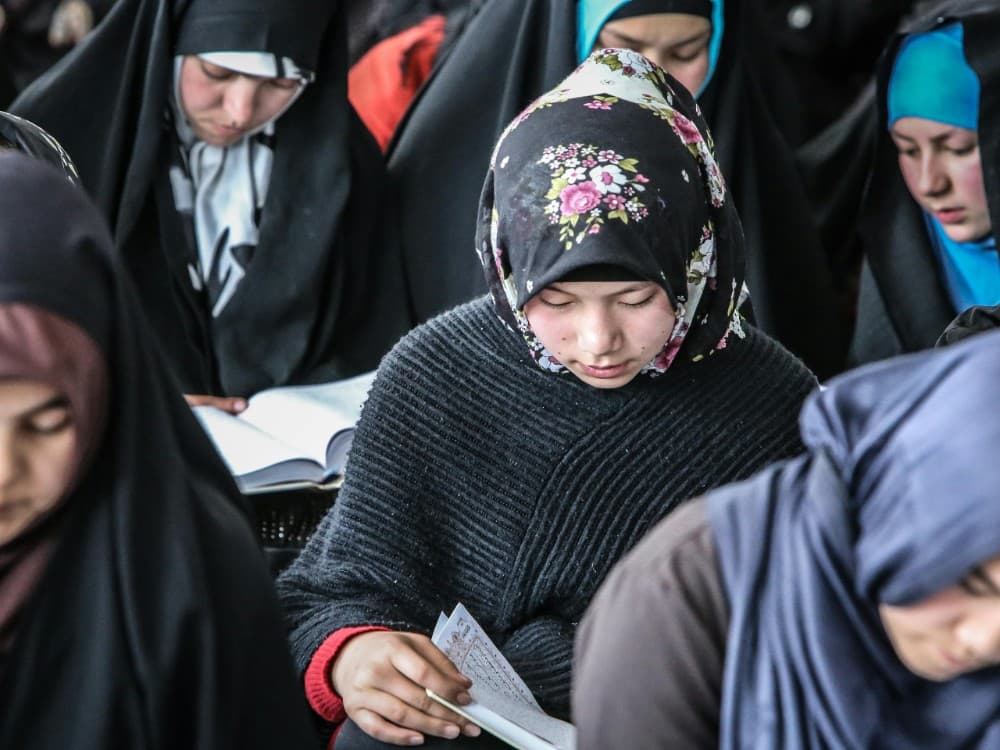
Women and girls, they said, have been largely excluded from public life through bans on secondary and higher education and severe restrictions on employment, freedom of movement, and participation in civic and political life.
"There has been no accountability for the victims and survivors" of serious human rights violations and potential international crimes, the letter stated.
The signatories further expressed concern over current and proposed policies involving the forced return of Afghan asylum seekers from EU member states.
Principle of non-refoulement
They argued that such returns would raise serious concerns under international law, particularly the principle of non-refoulement, which prohibits returning individuals to places where they face persecution or serious harm.
The concern is especially acute for women and girls, the groups said, describing Afghanistan as "one of the most dangerous places in the world to be a woman." Forced returns, they warned, could expose many to persecution, violence, and severe deprivation of rights.
The organizations called on the EU and its member states to avoid political or diplomatic engagement with Taliban representatives under current conditions, arguing that the minimum standards often cited by the bloc for engagement, including respect for fundamental rights and women's rights, are not being met.
They also urged European governments to support international justice efforts, including cooperation with the ICC's Afghanistan investigation, and to back strategic litigation initiatives aimed at holding alleged perpetrators accountable for serious international crimes.
Among their demands, the groups called for an immediate halt to forced return of Afghan asylum seekers, public affirmation that the rights of Afghan women and girls are non-negotiable, and meaningful consultation with Afghan civil society, victims, and women human rights defenders in shaping EU policy.
The signatories warned that failing to uphold these principles would risk entrenching impunity, undermining the EU's credibility on human rights and gender justice, and abandoning Afghan victims and survivors "at a critical moment."
The organizations said they remain ready to engage with European and international partners to ensure that responses to Afghanistan's ongoing crisis are grounded in accountability, justice, and the protection of fundamental rights.





.jpg&w=3840&q=75)
.jpg&w=3840&q=75)