


LAHORE: Pakistan’s central bank chief has projected economic growth of up to 4.75% in the next fiscal year, citing strengthening activity as inflation eases and financial conditions loosen.
According to the State Bank of Pakistan, Governor Jameel Ahmad said on Thursday that gross domestic product (GDP) is expected to expand by 3.75%-4.75% in fiscal year 2026, following a 3.7% growth rate in the first quarter.
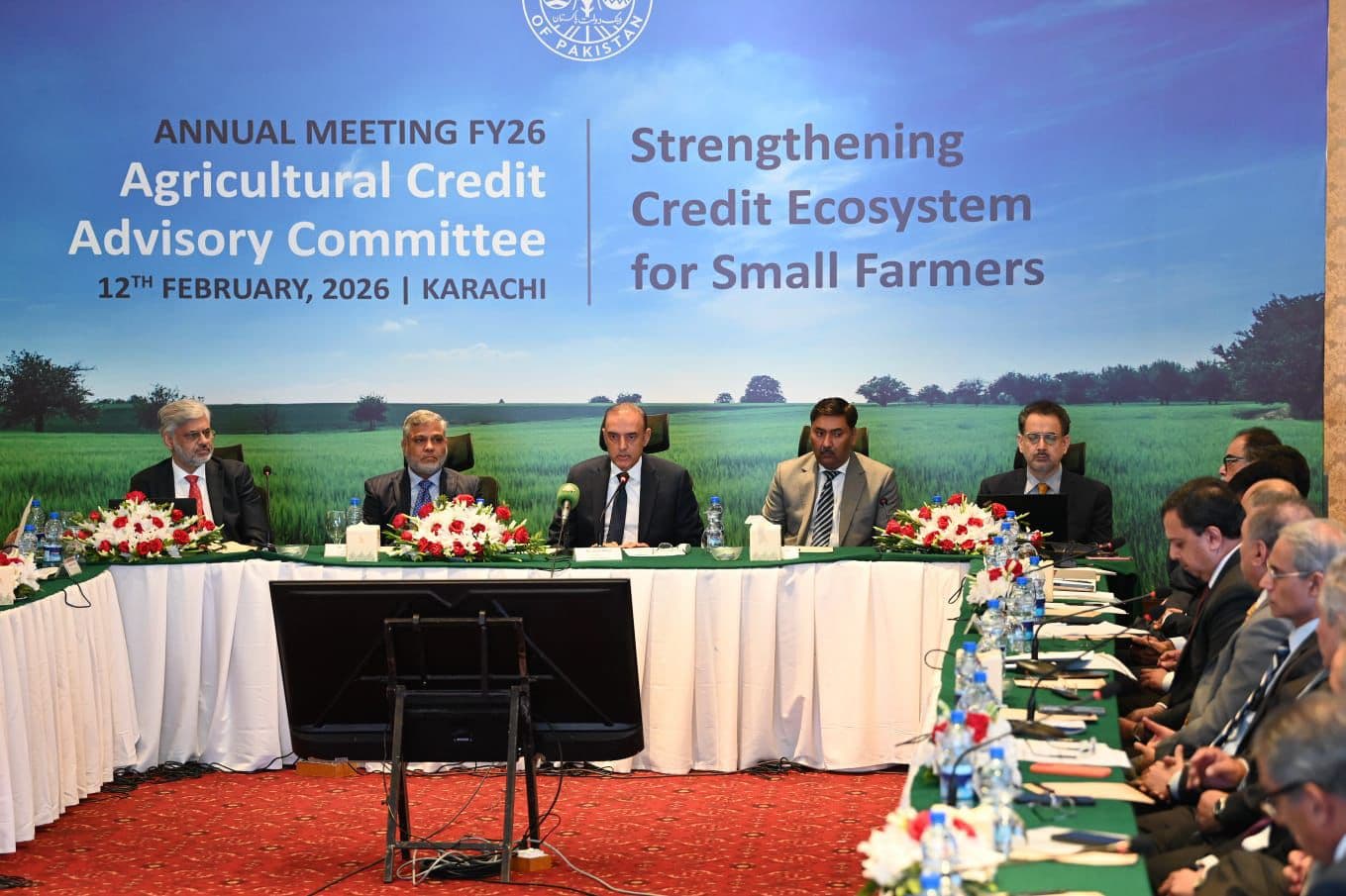
The remarks were made during a meeting of the Agricultural Credit Advisory Committee (ACAC), where officials reviewed the performance of agri-lending. The projection marks a gradual recovery for an economy that only recently stabilized after a balance-of-payments crisis that forced Islamabad into a $7 billion IMF bailout programme.
Inflation eases, stability returns
Jameel Ahmad said macroeconomic conditions had “significantly improved,” with overall inflation falling to 5.8% in January, a sharp decline from the double-digit levels seen in recent years, and reiterated that Pakistan had regained macroeconomic stability and was now moving toward sustainable growth.
The governor attributed part of the recovery to aggressive monetary easing. The statement comes after Ahmad noted that financial conditions had eased considerably following cumulative policy rate cuts of 1,150 basis points since June 2024.
He added that the full impact of those reductions was still feeding through the economy, supporting growth while maintaining price stability.
Despite market expectations for more easing, the State Bank kept its benchmark interest rate unchanged at 10.5% last month, signaling caution as it balances domestic recovery with IMF commitments.
Agriculture lending hits record high
Agriculture, a sector that accounts for nearly a fifth of GDP and employs a large share of the workforce, remains central to the State Bank’s recovery strategy. The SBP governor said banks disbursed a record Rs2.58 trillion ($9.2 billion) in agricultural loans during FY25, up 16% year-on-year. In the first half of FY26 alone, lending reached Rs1.41 trillion, while the number of borrowers rose to 2.97 million.
The governor stressed the importance of expanding financial inclusion among small and underserved farmers, urging banks to make full use of the central bank’s Risk Coverage Scheme for Small Farmers and Underserved Areas, as well as Zarkhez-e, the SBP’s flagship digital agricultural lending platform.
The ACAC also reviewed progress under Zarkhez-e, which officials describe as a key component in digitalizing agricultural credit delivery.
Boosting post-harvest liquidity
The committee discussed expanding electronic warehouse receipt financing, a system that allows farmers to store crops and access credit against warehouse receipts, rather than resorting to distress sales immediately after harvest.
Officials say the move could strengthen agricultural market linkages and improve post-harvest liquidity. Ahmad underlined that agriculture remains critical not only for farm productivity but also for rural livelihoods and food security.
Strengthening agricultural financial intermediation, he said, is essential to promote value addition and ensure long-term sectoral sustainability.
Balancing growth and IMF oversight
The SBP’s cautious stance reflects the delicate stage of Pakistan’s recovery. The country is still operating under IMF oversight after narrowly avoiding default in 2023.
While inflation has eased and foreign exchange pressures have stabilized, policymakers remain wary of reigniting external imbalances. By holding rates at 10.5% despite expectations of a cut, the central bank signaled that monetary easing will proceed gradually.
For now, the SBP’s message is clear: macroeconomic stability has been restored, inflation is moderating, credit is expanding, particularly in agriculture, and growth is set to strengthen. The challenge will be sustaining that momentum without undermining hard-won stability.