ISLAMABAD: Pakistan and Türkiye have agreed to intensify cooperation to boost bilateral rice trade, with a focus on price competitiveness, higher export volumes and improved market access, according to a statement issued by the Press Information Department on Wednesday.
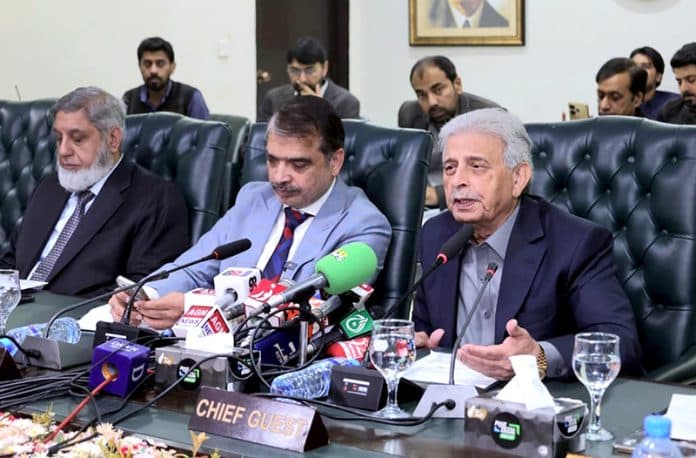
The understanding was reached during a meeting between Pakistani Minister for Commerce Jam Kamal Khan and Turkish Ambassador to Pakistan Dr İrfan Neziroğlu, held at the Ministry of Foreign Affairs on the directions of Prime Minister Shehbaz Sharif, the statement said.
The prime minister has “assigned priority to strengthening agricultural exports, particularly rice, amid intensifying global competition,” the press statement said.
The Pakistani Minister for Commerce highlighted that Pakistan had recorded “an excellent rice harvest this season, ensuring both quality and sufficient exportable surplus,” according to the statement.
However, the statement noted that aggressive pricing by competing exporters, especially India and Vietnam, was “creating challenges in global markets, exerting downward pressure on prices despite Pakistan maintaining strong export volumes.”
The statement said Jam Kamal Khan informed the Turkish side that the government, in close consultation with rice exporters and industry stakeholders, has developed “a pricing support mechanism to ensure Pakistan remains competitive in international markets.”
“Pakistan is prepared to match prevailing global prices so that buyers do not face any cost disadvantage when sourcing rice from Pakistan,” the statement said.
The minister emphasized that Pakistan is “fully prepared to supply both basmati and non-basmati rice to Türkiye at internationally competitive rates.”
He urged Türkiye to consider increasing import volumes from Pakistan as a special case, stressing that Pakistan’s primary objective is “volume enhancement rather than price maximization, in order to safeguard farmer incomes and sustain the agricultural value chain.”
Both sides also discussed activating government-to-government trade channels alongside existing private-sector mechanisms. Under the proposed framework, Pakistani state trading entities would coordinate with relevant “Turkish public and private sector institutions, including state-owned grain procurement bodies, to enable bulk procurement where price competitiveness is ensured,” the statement said.
Market-access issues, including tariff-rate quotas, import licensing procedures and the possibility of zero or reduced tariffs on basmati rice, were also raised by the federal minister. He called for better utilization of the “existing TRQ of 18,000 metric tons under the Pakistan-Türkiye Preferential Trade Agreement, noting that the quota had remained underutilized in previous cycles due to procedural constraints,” according to the statement.
The Turkish ambassador welcomed Pakistan’s proposals and reaffirmed Türkiye’s commitment to strengthening economic ties. He noted that “bilateral trade volumes remain below potential despite strong political relations, and recalled the jointly agreed target of achieving USD 5 billion in bilateral trade, set during the Pakistan-Türkiye High-Level Strategic Cooperation Council meeting,” the statement said.
The meeting concluded with an agreement to fast-track technical consultations, enhance business-to-business engagement and expand cooperation in agriculture and value-added rice products, including parboiled rice.




.jpg&w=3840&q=75)