


ISLAMABAD: Pakistan will not become a party to the Abraham Accords and has “not decided” to join any International Stabilization Force, the Foreign Office said on Thursday, reiterating that Islamabad’s position on the issue remains unchanged.
Foreign Office Spokesperson Tahir Andrabi said during the weekly media briefing that Pakistan’s participation in the Board of Peace (BOP) has no connection to the Abraham Accords.
“It is a misconception that joining the Board of Peace is in any way linked to the Abraham Accords or serves as a sidetrack on this issue,” Andrabi said. “Pakistan’s position remains unchanged, and we will not become a party to the Abraham Accords.”
The Abraham Accords, signed at the White House on September 15, 2020, during US President Donald Trump’s first term, paved the way for the normalization of relations between Israel and several Arab states, beginning with the United Arab Emirates and Bahrain and later extending to Morocco.
He stressed that the Board of Peace is not a substitute for the United Nations, saying it was established under a specific mandate authorized by UN Security Council Resolution 2803. Pakistan understands the body is intended to complement, not undermine, the UN system, he added.
Andrabi said Pakistan’s decision to join the Board of Peace was taken collectively and in line with all procedural requirements under the federal government’s Rules of Business.
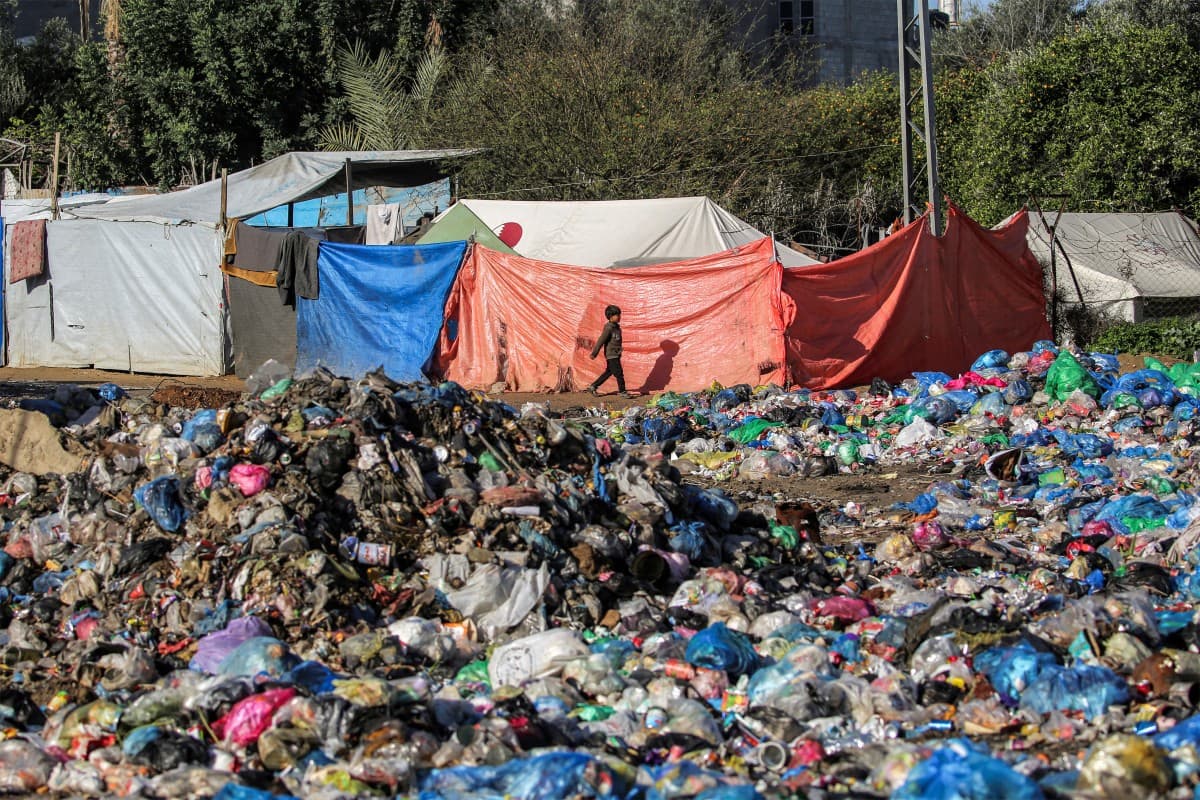
“We hope that the framework established by the Board of Peace will lead to concrete steps towards a permanent ceasefire, expanded humanitarian assistance, and the reconstruction of Gaza,” he said, adding that Pakistan aims to play a “constructive role” in alleviating the suffering of Palestinians.
Iran’s internal affairs
Responding to questions on Iran, Andrabi said Pakistan has consistently advocated peace and diplomacy to resolve regional disputes and opposes interference in Iran’s internal affairs.
“We oppose the use of force and the imposition of sanctions,” he said, adding that the region cannot afford further conflict as it would undermine economic development and prosperity.
He referred to recent diplomatic engagements, including a virtual call between Foreign Minister Ishaq Dar and his Iranian counterpart, as well as discussions with the United States, saying Pakistan’s position remains focused on dialogue and de-escalation.
On Iran’s nuclear issue, Andrabi said Pakistan’s stance has been clearly articulated in the context of the Joint Comprehensive Plan of Action (JCPOA) and subsequent UN Security Council resolutions.
‘Provocative and instigating’
Turning to Afghanistan, the spokesperson strongly condemned what he described as a “provocative” and “instigating” speech by the head of a madrassa in Khost province, calling it harmful to regional peace and stability.
“Threatening Pakistan with revenge for actions taken against the TTP will further aggravate already strained relations,” he said.
While reiterating Pakistan’s desire for a mutually beneficial relationship with Afghanistan, including cooperation on regional connectivity and trade, Andrabi said progress depends on addressing Islamabad’s core concern over militancy operating from Afghan territory.