ISLAMABAD: Italian government officials have seized 216 kilograms of the stimulant drug "khat" from an Israeli passenger at Rome’s Leonardo da Vinci-Fiumicino airport.
An Italian newspaper, Lasicilia, quoting government officials, said that the passenger, travelling from Tel Aviv, was randomly selected for a check by the military personnel of the Fiumicino group and the staff of the Customs and Monopolies Agency.
"The passenger was providing vague and contradictory answers regarding the reasons for the trip and the details of the stay in Italy," the newspaper quoted government officials as saying.
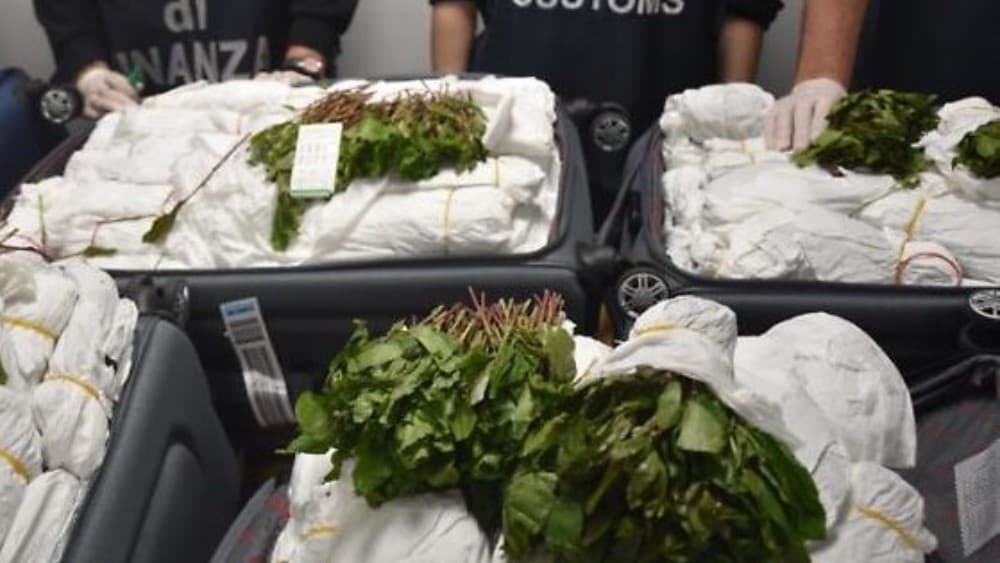
In-depth inspection, carried out through X-ray scanning and subsequent opening of his seven bags, led to the discovery of a large quantity of the narcotic substance (catha edulis).
The Guardia di Finanza’s Rome provincial command, in coordination with the Customs and Monopolies Agency, carried out the operation.
Officials said that the contraband consisted of bunches and fresh shrubs of leaves and shoots. The illegal goods were seized as evidence.
As the only holder of the baggage tags associated with the load, the passenger was reported to the Prosecutor's Office of Civitavecchia. Later, the passenger was released pending further investigation.
Khat, a plant native to East Africa and the Arabian Peninsula, contains the psychoactive alkaloids cathinone and cathine.
These produce amphetamine-like effects, including euphoria, increased alertness, and reduced appetite, though milder than those of methamphetamine or cocaine.
In Italy, khat is classified as a controlled narcotic substance, making its import, possession, and distribution illegal.
Khat is traditionally chewed in social and cultural contexts in parts of Africa and the Middle East but faces strict controls in Italy and many other EU countries due to its stimulant properties and potential health risks, including insomnia, gastrointestinal issues, and dependency with prolonged use.


.jpg&w=3840&q=75)