


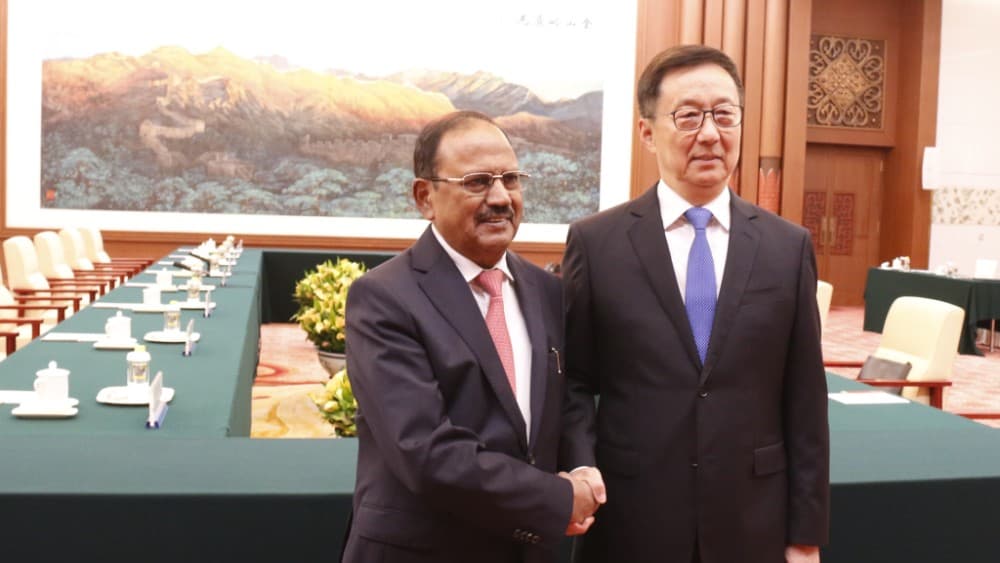
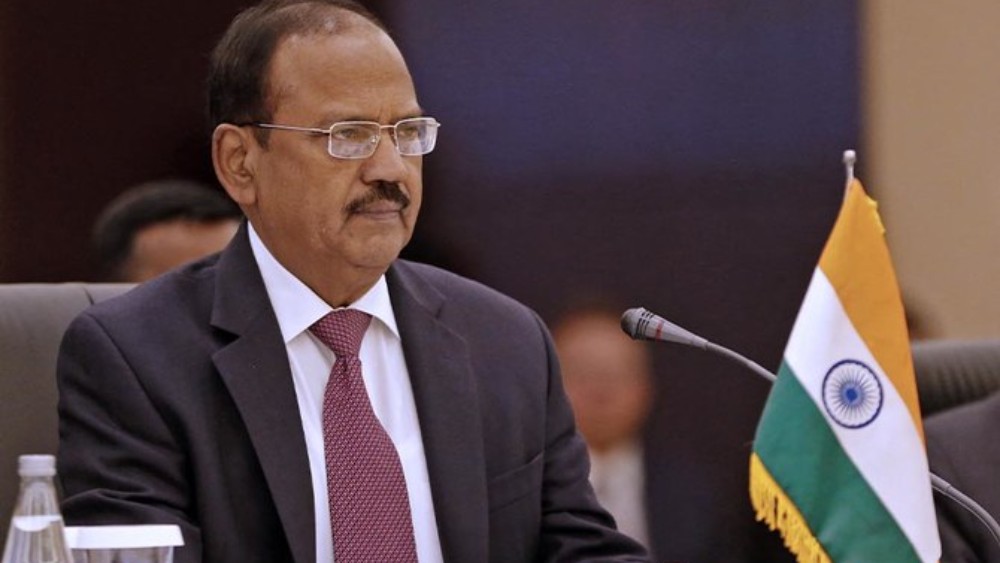
ISLAMABAD: India’s National Security Adviser Ajit Doval is in Beijing for high-level talks with Chinese officials aimed at stabilizing bilateral relations, but analysts say the latest engagement is unlikely to produce a breakthrough in the long-running border dispute.
Doval is scheduled to hold talks with Chinese Foreign Minister Wang Yi under the Special Representatives (SR) mechanism, a high-level dialogue framework established in the early 2000s to provide political guidance and strategic direction for resolving the China-India boundary dispute.
Analysts say the two sides are more likely to focus on “institutionalizing stability” and preventing tensions from escalating than seeking a comprehensive settlement of the disputed border.
Dr Dost Muhammad Barrech, a Quetta-based expert on regional and international politics, said the territorial dispute between India and China could not be resolved during a single round of talks.
“This is a big outstanding issue between the two. So, I don't think it can be resolved that quickly,” he told Pakistan TV Digital.
Qian Feng, director of the Research Department at Tsinghua University’s National Strategy Institute, also described the boundary dispute as a complex issue rooted in history that could not be resolved overnight, according to Chinese newspaper Global Times.
Chinese strategic affairs expert Hu Shisheng said the priority for Beijing and New Delhi was to “institutionalize stability” in bilateral ties rather than seek an immediate fundamental breakthrough.
“Structural differences shaping China-India ties have not disappeared and continue to influence the relations,” Shisheng, a former head of the Institute of South Asian Studies at the China Institutes of Contemporary International Relations, told The Hindu.
Hu Zhiyong, a professor at Zhejiang International Studies University and a research fellow at the Institute of International Relations at the Shanghai Academy of Social Sciences, said the boundary dispute should not be allowed to dominate the entire bilateral relationship.
“The boundary issue is one part of bilateral relations, which also encompass political, economic, diplomatic, security and people-to-people exchanges. It should not be allowed to hijack the entire relationship,” he told Global Times.
He also argued that Indian politicians could at times bring border issues with China and Pakistan to the forefront of public debate when facing domestic economic and social challenges.
What brings Doval to Beijing? Doval’s visit comes ahead of two major multilateral engagements, the Shanghai Cooperation Organization (SCO) Summit scheduled for August 31-September 1 and the BRICS Summit in New Delhi on September 12-13.
Analysts say the upcoming BRICS summit has added significance to Doval’s talks, with New Delhi keen to improve the overall atmosphere in ties with Beijing.
Dr Dost Mohammad Khan said India would like Chinese President Xi Jinping to attend the BRICS summit in New Delhi.
If Xi visits India for the summit, it would be his first trip to the country in seven years.
Indian journalist Anmol Singla, who covers foreign policy and defense issues, said in a Firstpost article that the timing of Doval’s Beijing visit linked border management with major multilateral engagements involving the two countries.
He described the visit as a diplomatic bridge between the upcoming SCO and BRICS summits, arguing that progress in the Special Representatives’ talks could help ensure that any high-level India-China engagement focuses on broader strategic and economic issues rather than renewed border tensions.
For now, however, analysts expect the talks to concentrate on maintaining stability and managing differences, rather than producing a final settlement of the decades-old boundary dispute.