


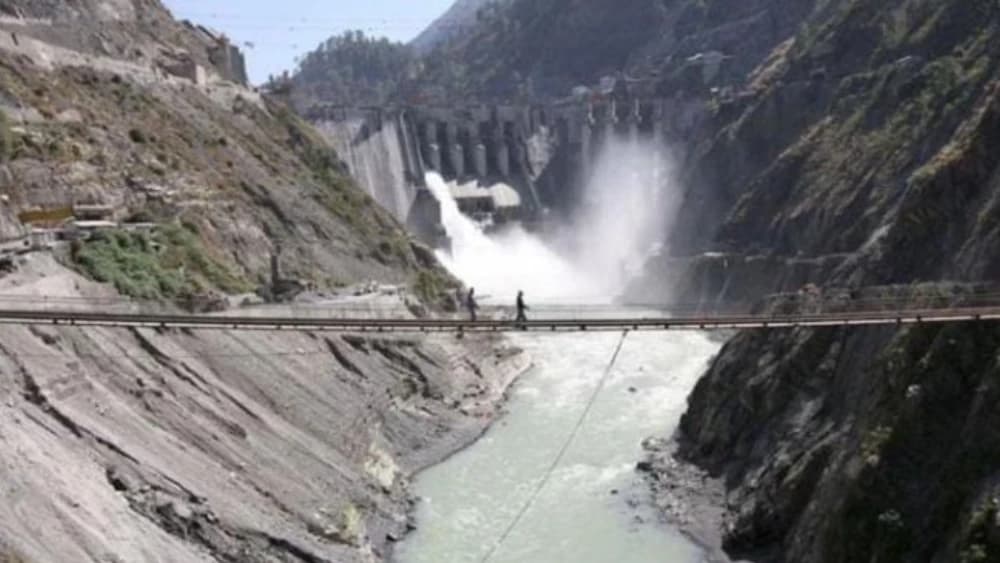
ISLAMABAD: India has approved the Dulhasti Stage-II hydropower project on the Chenab River in Indian-Illegally Occupied Jammu and Kashmir (IIOJK), a move that violates the 1960 Indus Waters Treaty (IWT), which governs water sharing between Pakistan and India.
The construction on the project, estimated to cost about 327.7 billion Indian rupees (about $3.65 billion), is expected to begin early next year and will be developed by India’s state-run National Hydroelectric Power Corporation (NHPC) Limited. It is designed to generate 260 megawatts of electricity, according to Indian media reports.
'Flagrant violation'
Pakistani lawmaker Sherry Rehman raised strong objections, saying the project breaches treaty provisions covering the western rivers — the Indus, Jhelum and Chenab — allocated largely to Pakistan under the World Bank-brokered agreement.
Rehman, Pakistan’s former climate change minister, said India’s decision amounted to a “flagrant violation” of the treaty.
“The IWT cannot be unilaterally revoked, as recent UN rapporteurs have also confirmed,” she said in remarks posted on X. “Pakistan has control over the waters of the Indus, Jhelum and Chenab rivers, while the Ravi, Beas and Sutlej fall under India’s control.”
Rehman said India was fast-tracking several disputed hydroelectric projects in the Indus Basin following what Pakistan describes as an illegal suspension of treaty mechanisms. She listed Sawalkot, Ratle, Bursar, Pakal Dul, Kwar, Kiru and Kirthai-1 and 2 among the projects, adding that Dulhasti Stage-II was part of the same strategy.
'Weaponization of water'
She warned the “weaponization of water” would deepen tensions in an already strained bilateral relationship. “This is neither sane nor acceptable in a region on the frontlines of climate change and environmental stress,” she said.
The approval comes amid heightened tensions between the two nuclear-armed neighbors over disputed Kashmir. Pakistan has said it remains committed to the Indus Waters Treaty and will continue to participate in dispute-resolution mechanisms, including proceedings before neutral experts.
In August, the Permanent Court of Arbitration ruled that India must allow the waters of the western rivers to flow for Pakistan’s use, according to Pakistan’s Foreign Office.
Dulhasti Stage-II will use existing infrastructure from the 390-MW Dulhasti Stage-I plant, commissioned in 2007. Under the plan, water from the Marusudar River will be diverted through the Pakal Dul project to boost power generation, a move Indian authority have acknowledged could alter natural river flows downstream.
India maintains that its hydropower projects comply with treaty provisions and has sought changes to streamline approval procedures. The treaty does not allow either country to unilaterally suspend or terminate the agreement.