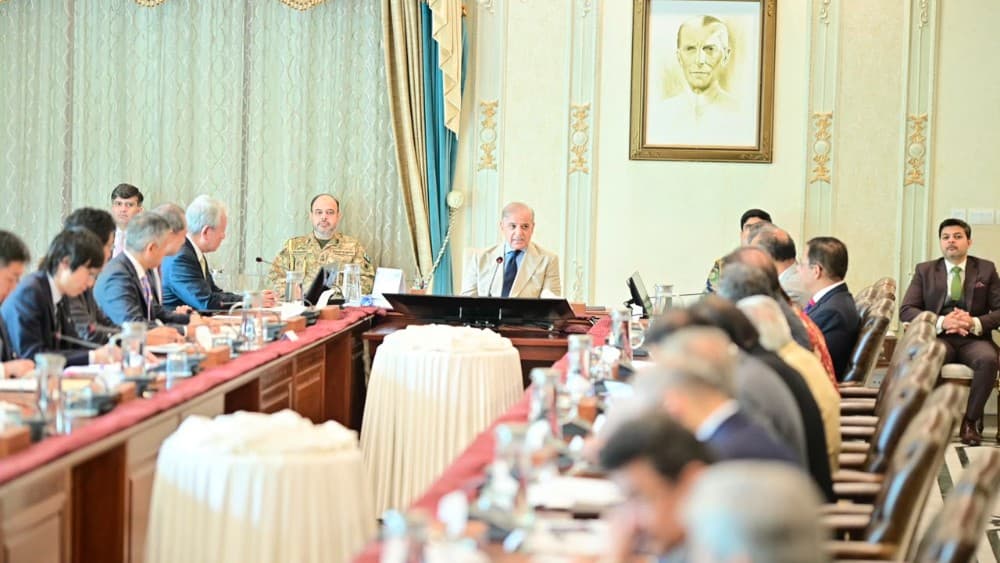
ISLAMABAD: The International Monetary Fund on Tuesday completed the review of its programs, allowing Pakistan to draw $1.2 billion under the Extended Fund Facility (EFF) and the Resilience and Sustainability Facility (RSF), bringing total disbursements under the two arrangements to about $3.3 billion.
After an IMF team left Pakistan in October, the fund reached a staff-level agreement with the country, stating that authorities were committed to strengthening public finances, providing support to flood victims, ensuring the inflation target is met, restoring the energy sector’s viability, and advancing structural reforms.
According to a statement issued by the IMF early on Tuesday, the approval of the programs would allow Pakistan to access $1.2 billion — $1 billion under the Extended Fund Facility and $200 million under the Resilience and Sustainability Facility.
The fund said that the country’s policy efforts under the EFF delivered significant progress in stabilizing the economy and rebuilding confidence in a challenging global environment.
It said that fiscal performance was strong, with a primary surplus of 1.3% of GDP achieved in fiscal year 2025, which was in line with targets. It stated that gross reserves stood at $14.5 billion at the end of FY25, up from $9.4 billion the previous year, and were projected to continue rebuilding in FY26.
The RSF program was supporting the authorities’ efforts to “reduce vulnerabilities to natural disasters and to build economic and climate resilience,” the press release said.
Deputy Managing Director and Acting Chair Nigel Clarke — quoted in the press release — said that the country’s reform implementation under the EFF arrangement “helped preserve macroeconomic stability.”
The fund said that Pakistan needed to maintain “prudent policies to further entrench macroeconomic stability” but keep “accelerating reforms necessary to achieve stronger, private sector-led, and sustainable medium-term growth.”
Clarke said that an "appropriately tight monetary policy” was “pivotal in reducing inflation,” adding that it should continue to ensure that inflation remains anchored under the target range.
“Further improvements in central bank communication will support effective monetary policy implementation,” he advised. He also said that accelerating reforms in the energy sector was “critical to safeguarding its viability and improving Pakistan’s competitiveness.”
Clarke advised that efforts to “advance structural reforms should continue,” adding that state-owned enterprises should additionally be focused on.
“The RSF arrangement is supporting efforts to strengthen natural disaster response and financing coordination, improve the use of scarce water resources, raise climate considerations in project selection and budgeting, and improve the information on climate-related risks in financing decisions,” Clarke said.
Citizens see economic stabilization through IMF, FATF exit
Separately, according to a study by Transparency International Pakistan, a wide majority of Pakistanis, either partially (42%) or fully (18%), agreed that the government “successfully stabilized the economy through the IMF agreement and exiting the FATF grey list.”
According to research, the majority (66%) of people “did not experience a situation where they felt compelled to offer bribe to access any public service.”
The study, based on what perception people held of the government’s performance, also said that 42% of respondents believed they would feel safe reporting corruption if strong whistleblower protection laws were in place.




.jpg&w=3840&q=75)