


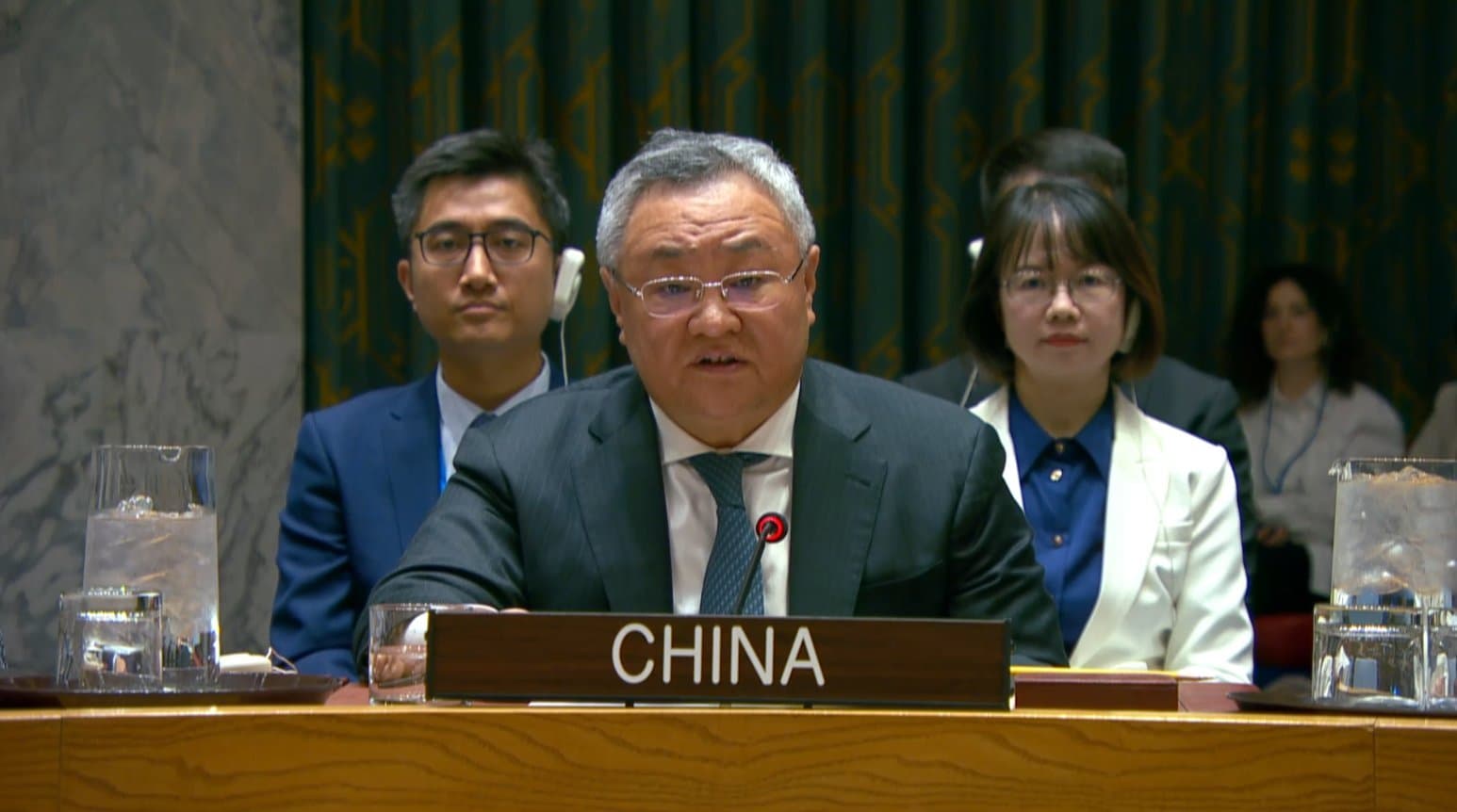
ISLAMABAD: China, at the UN Security Council Briefing on Monday, said that the local and transnational terrorist groups that remain “active in Afghanistan" pose serious threats not only to Afghanistan but also to neighboring countries.
Speaking about the United Nations Assistance Mission in Afghanistan (UNAMA), Permanent Representative of the People's Republic of China to the United Nations, Fu Cong, highlighted a recent terrorist attack in January this year on a Chinese restaurant in Kabul that caused multiple casualties, including Chinese nationals.
The attack was claimed by the Islamic State in Khorasan Province (IS-KP), which, as per the UN monitoring reports, is largely situated across Afghanistan.
According to the statement, China strongly condemns and firmly opposes terrorism in all its forms and urged the Afghan government to conduct a “thorough investigation” to establish the facts as soon as possible to bring the perpetrators to justice.
Referencing the UN report, the representative highlighted terrorist groups such as Islamic State of Iraq and the Levant-Khorasan, Al-Qaida, the East Turkestan Islamic Movement, Tehreek-e-Taliban Pakistan, and Balochistan Liberation Army remain active in Afghanistan, posing serious threats to Afghanistan and its neighbouring countries.
“We call on the Afghan side to recognize the grave harm posed by terrorism, strengthen counterterrorism cooperation with regional countries, and resolutely eliminate all terrorist forces operating in Afghan territory in order to maintain regional stability and security," it added.
Afghan girls not been able to receive modern education
Talking about women's education in Afghanistan, the Chinese representative stated that safeguarding the basic rights and interests of the people is a ”necessity.”
“In recent years, Afghan girls have not been able to receive modern education beyond the sixth grade, and women's basic rights and interests, such as employment and access to health care, public services, and participation in social life, have become increasingly restricted," he added.
The envoy stated that this not only harms the physical and mental well-being of Afghan women but also undermines social stability and economic development.
“We hope that the Afghan authorities will demonstrate openness, inclusiveness, and a sense of responsibility by listening to the legitimate aspirations of their people and the reasonable concerns of the international community, promptly adjusting relevant policies, and effectively safeguarding the basic rights of all people, including women, so as to gain greater trust and support from the international community," it added