


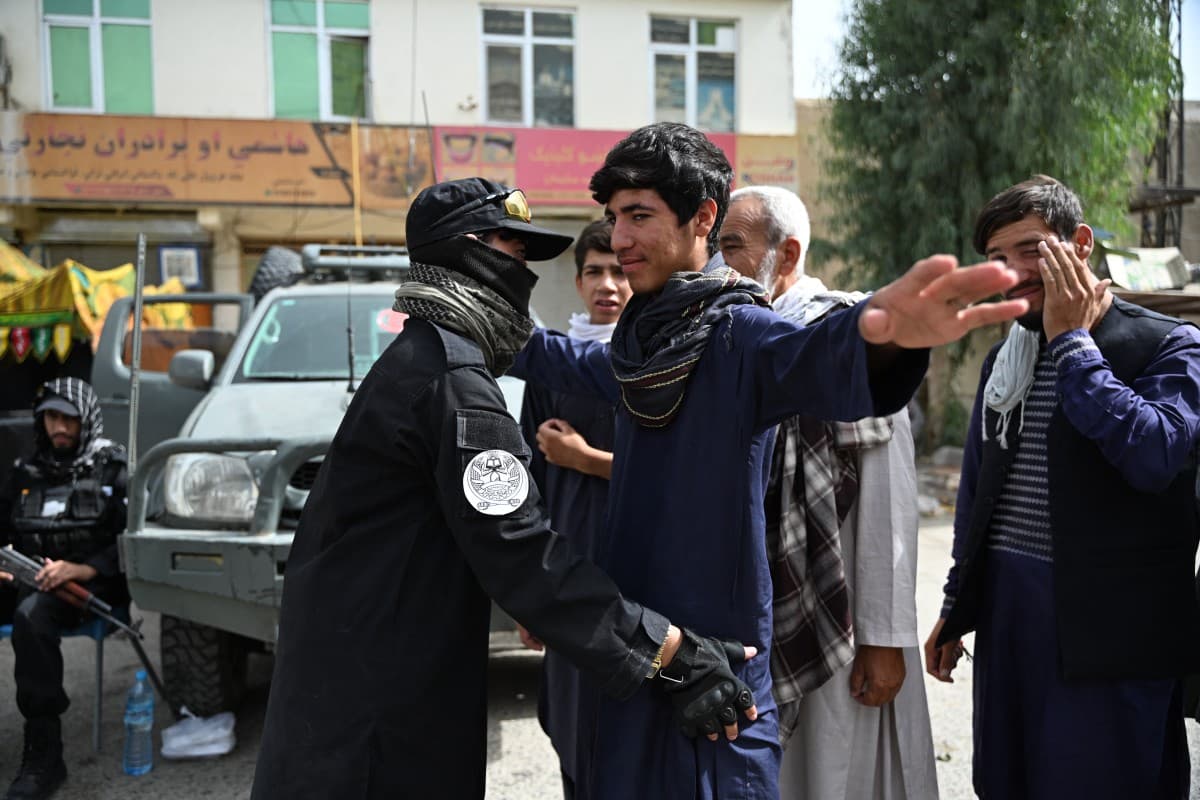
ISLAMABAD: Five years after the Taliban regained power, the global outlook on Afghanistan remains grim. On Tuesday, the Australian government became the latest to make this clear, as its Department of Foreign Affairs and Trade announced that no area in the country, including Kabul, is considered safe. As a result, it renewed its highest-level travel ban for its citizens.
Australians, the department said, have been injured, killed and arbitrarily detained, and the government's ability to help them is severely limited because it has no embassy in the capital.
Australia's warning is not an outlier. It is the newest entry in a list of more than 30 governments, spanning North America, Europe, Asia and the Middle East, that have placed Afghanistan under their strictest possible travel designation, according to a review of national advisories.
What once might have read as a patchwork of cautious diplomatic language now amounts to something closer to consensus. By 2026, the world's major foreign ministries agree that Afghanistan is not a place their citizens should enter for any reason.
The United States set the tone years ago with its Level 4: Do Not Travel rating, the State Department's most severe classification, citing wrongful detention, kidnapping and terrorism, and noting it has no way to extract citizens in an emergency.
Britain's Foreign, Commonwealth and Development Office goes further on the financial side, warning that travel insurance is automatically voided the moment a traveler crosses the border. Canada cites arbitrary arrest by Taliban authorities while New Zealand warns explicitly of kidnapping for ransom.
Not merely travel advisories
What distinguishes 2026 from earlier years is how far some governments have gone in turning advisory language into enforceable law. South Korea does not merely discourage travel; it bans it. Under Article 17 of the country's Passport Act, South Korean citizens who enter Afghanistan without prior ministerial approval risk prosecution, fines or the revocation of their passports, according to the Ministry of Foreign Affairs.
That a sovereign government would criminalize travel to a single country says as much about Afghanistan's status as any advisory bulletin.
The reasoning offered by European governments converges on similar themes. France tracks its citizens through a dedicated evacuation portal. Germany warns dual nationals they may face exit bans once inside the country. Spain points to the systematic denial of visas to journalists. Italy says its own consular operations have effectively shut down. Switzerland describes the absence of any functioning rule of law. Each ministry has framed the danger slightly differently, but the conclusion is identical: do not go.
The restrictions extend past Afghanistan's borders. Uzbekistan had sealed its crossing entirely for four years before reopening it for trade in 2025, subject to strict screening, according to the Uzbek Chamber of Commerce and Industry.
Tajikistan's frontier remains highly volatile, heavily militarized, and only partially open for commercial transit and approved travelers. Official policy focuses on securing the 1,300 km border, regulating official checkpoints such as Panji Poyon, and countering cross-border militancy and drug smuggling, according to the Ministry of Foreign Affairs of Tajikistan.
Turkmenistan requires a special government permit just to approach its border zone, with strict restrictions under the 50-kilometer "Border Zone Permit" system, according to the Turkmenistan embassy in Türkiye.
Public health adds another layer. Turkiye requires proof of polio vaccination from anyone transiting Afghanistan, while Spain and Germany mandate boosters for longer stays. Canada and New Zealand warn that rabies treatment is unavailable there.
Taken together, the advisories describe something more than risk. They describe a country that, five years on, much of the world has effectively written off as unreachable. Australia's update this week is simply the latest government to say so out loud.