


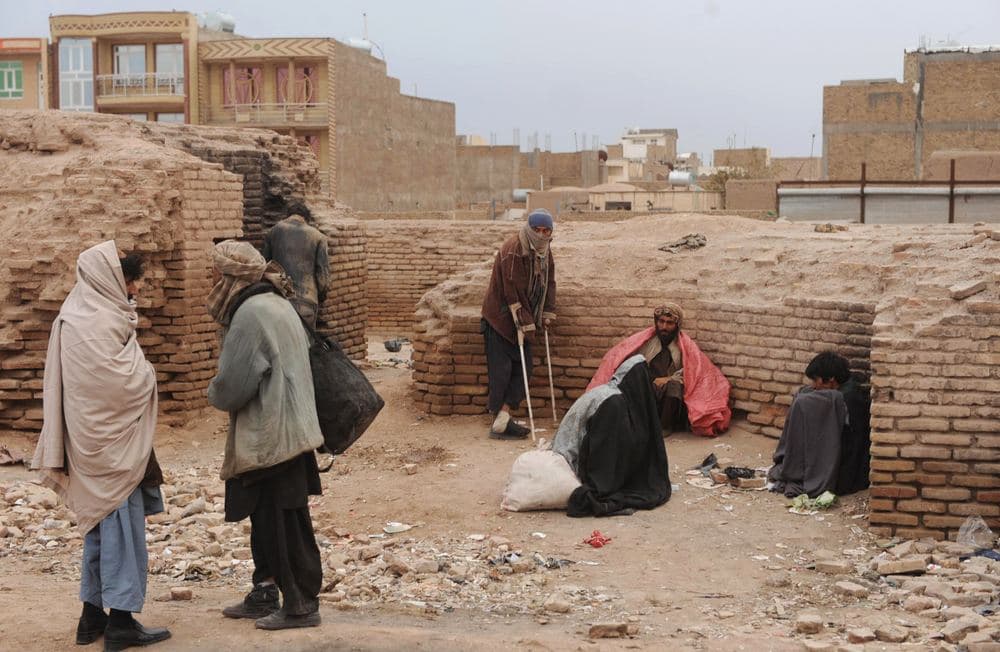
ISLAMABAD: When the Afghan Taliban banned opium production in 2023, reducing it by 95%, users switched to cheaper, more dangerous alternatives, according to a UN drug assessment published this month.
According to the “Afghanistan Drug Use Assessment” by the UN Office on Drugs and Crime (UNODC), the war-torn country’s dramatic opium crackdown has triggered an unintended consequence.
While traditional opiate use has plummeted, pharmaceutical and synthetic drug consumption has increased.
Lifetime opium and heroin use ranked second among Afghan men, but past-year use dropped to third place, overtaken by pharmaceutical drugs, including sedatives and opioid analgesics.
Cannabis remained the most consumed drug across both timeframes.
The UNODC report attributed the shift to the de facto authorities' 2023 ban, which reduced opium production from 6,200 tons to just 333 tons. "This is presumably linked to the efforts by authorities to eliminate opium production starting in 2023, which could have reduced supply or access and thus nudged some consumers to substitutes that may still be available," the assessment stated.
Switching to alternatives
Provincial drug markets show distinct profiles, according to the survey of approximately 21,000 Afghan men across 21 provinces. Kabul stands out dramatically: 38% of respondents identified "Tablet K" (an illegally manufactured tablet often containing methamphetamine) as among the most-used drugs. This far exceeds the 11% national average.
Pregabalin, a pharmaceutical drug, ranked third in Kabul, accounting for 30% of responses.
Eastern provinces showed higher perceived use of Tablet K. Meanwhile, western regions reported greater methamphetamine prevalence, suggesting possible regional variations in drug formulations or nomenclature, the UNODC noted.
The financial toll is devastating. Men who used methamphetamine in the past month spent an average of 3,994 afghanis ($61.50), equivalent to 138% of a casual laborer's daily wage. This is based on April 2024 employment data. Per use day, methamphetamine cost 432 afghanis ($6.65), opium 325 afghanis ($5), and cannabis 166 afghanis ($2.56).
This burden hits hardest among vulnerable populations. Men reporting past-year drug use showed significantly higher unemployment rates — 41% versus 28% among non-users. They also reported lower educational attainment: 54% had formal education, compared with 63% in the assessment's demographic analysis.
"Unemployment and weak economy" emerged as the top reason for continued drug use, cited by 13% of past-month users. Health issues, pain and self-medication also accounted for 13% of responses. Men who used drugs were more likely to have diagnosed medical conditions, 43% versus 29%, and to self-medicate, 47% versus 33%.
The human cost extends beyond users. Among those reporting past-month use, 85% noted direct health harms, 27% cited problems with family relationships and 18% linked their drug use to poverty.
Fieldwork restrictions prevented proper sampling. Women comprised only 9.8% of respondents, leaving female patterns unmeasured. "These limitations have precluded any nationally representative estimates," the UNODC acknowledged.
While the Afghan Taliban may have succeeded in curtailing opium, they have yet to address the demand that drives consumption of dangerous alternatives.