


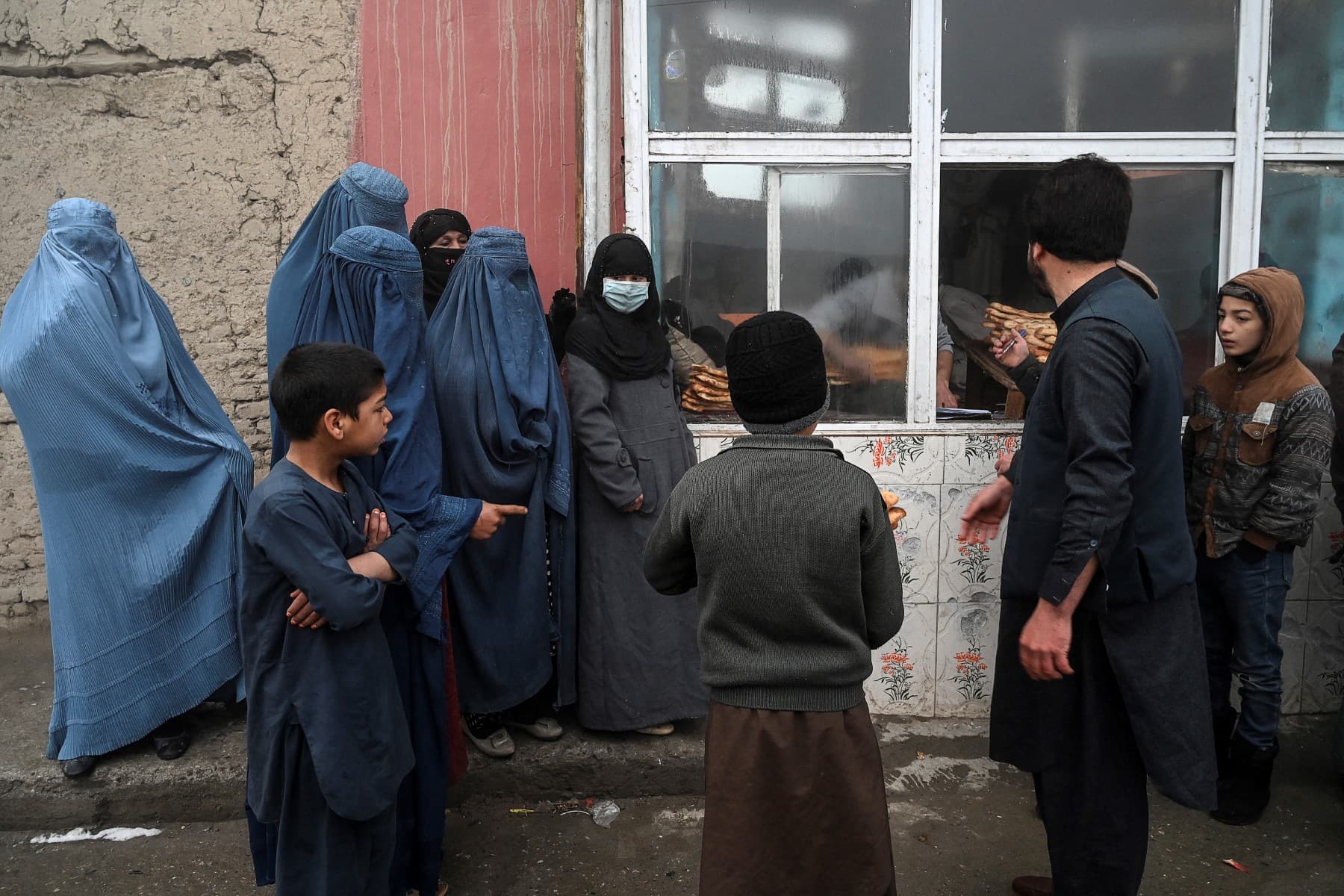
ISLAMABAD: Afghanistan ranks third globally among countries facing the most severe hunger emergencies, with 4.7 million people experiencing crisis-level or catastrophic-level food insecurity in 2025, according to a World Food Programme report.
In a global overview report published recently by the humanitarian organization, the total number of Afghans facing acute food insecurity reached 12.7 million this year, as extreme weather conditions slashed crop production across the country.
The WFP's global analysis found that weather extremes in the Middle East, North Africa, and Afghanistan have significantly reduced harvests, compounding an already dire humanitarian situation.
"Extreme weather in MENA, Afghanistan, and Yemen has cut crop production," the report stated. It warned that deteriorating conditions threaten to push more populations into emergency phases of hunger.
Afghanistan acute food insecurity breakdown (2025)
IPC Phase | Severity Level | Population (millions) |
Phase 3 | Crisis | 8.0 |
Phase 4 | Emergency | 4.66 |
Phase 5 | Catastrophe/Famine | 0.01 |
Total Phase 3+ | Acute Food Insecurity | 12.7 |
The United Nations agency's assessment shows acute food insecurity remains at persistently high levels worldwide, with 318 million people across 68 countries experiencing severe hunger. Of those, 41.1 million face emergency or worse conditions.
Sudan tops the list with 8.1 million people in emergency or catastrophic hunger phases, followed by Yemen with 5.5 million. Afghanistan's 4.7 million places it ahead of the Democratic Republic of Congo's 3.9 million.
The report identifies conflict as the primary driver of global food insecurity, affecting 44% of acutely food-insecure populations. Economic shocks account for 27%, while weather extremes account for 29% of cases.
Famine conditions were confirmed in parts of Gaza and Sudan in 2025, and South Sudan remains at risk of famine. The number of people living in catastrophic hunger conditions (IPC Phase 5) reached 1.4 million this year, down from 1.95 million in 2024 but still alarmingly high by historical standards.
Nigeria has the highest total number of food-insecure people at 29.4 million, though most face crisis rather than emergency conditions. The Democratic Republic of Congo follows with 23.8 million.
Countries with the highest emergency-level hunger (Phase 4+)
Rank | Country | Emergency/Catastrophe Population (millions) |
1 | Sudan | 8.10 |
2 | Yemen | 5.51 |
3 | Afghanistan | 4.66 |
4 | Democratic Republic of Congo | 3.90 |
5 | Myanmar | 2.79 |
6 | South Sudan | 2.43 |
7 | Haiti | 2.10 |
8 | Palestine (Gaza Strip) | 1.14 |
9 | Pakistan | 1.71 |
10 | Syria | 1.38 |
Source: World Food Programme, December 2025
The apparent decrease from 343 million food-insecure people in 2024 to 318 million in 2025 does not reflect actual improvement, the WFP cautioned. The drop stems primarily from reduced country coverage and data availability rather than better conditions on the ground.
"The continued prevalence of Emergency and Famine conditions over time underscores the critical need for sustained humanitarian interventions," the report stated. "Additionally, improving data coverage remains essential for understanding and responding to these crises effectively."
Weather forecasts suggest conditions may worsen. La Niña is expected to intensify drought in the Horn of Africa and the Middle East, while floods threaten crops in South Sudan and other conflict-affected regions.
The report notes 70% of acutely food-insecure people live in fragile or conflict-affected situations, with armed conflict nearly doubling since 2019. Economic headwinds, including weak growth, high local food prices, and mounting debt, continue undermining food security in many countries.
Myanmar saw one of the largest deteriorations, with emergency-level hunger increasing by more than 500,000 people compared to 2024, following an earthquake and significant reductions in humanitarian funding.