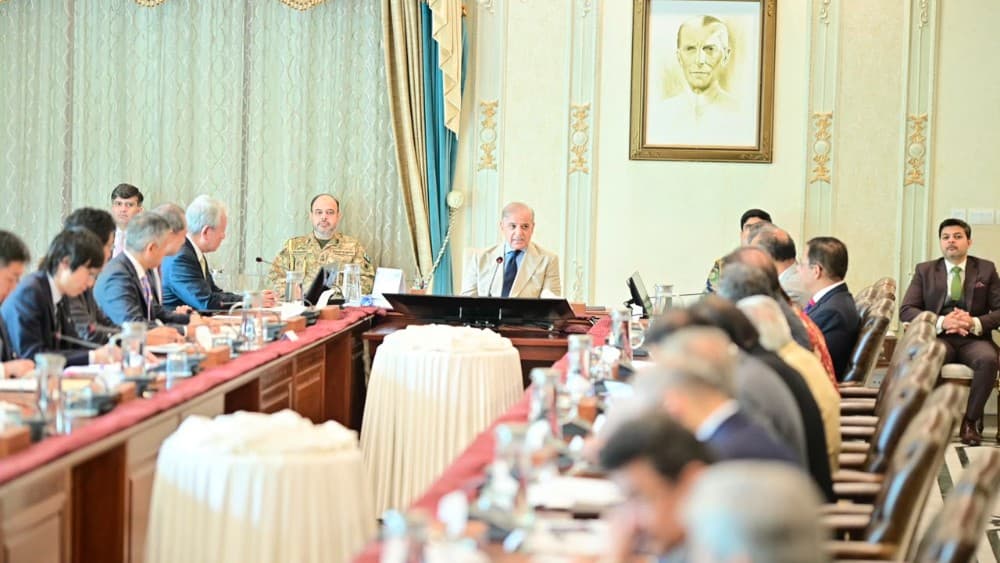
Strait of Hormuz reopening may take months despite US-Iran peace deal

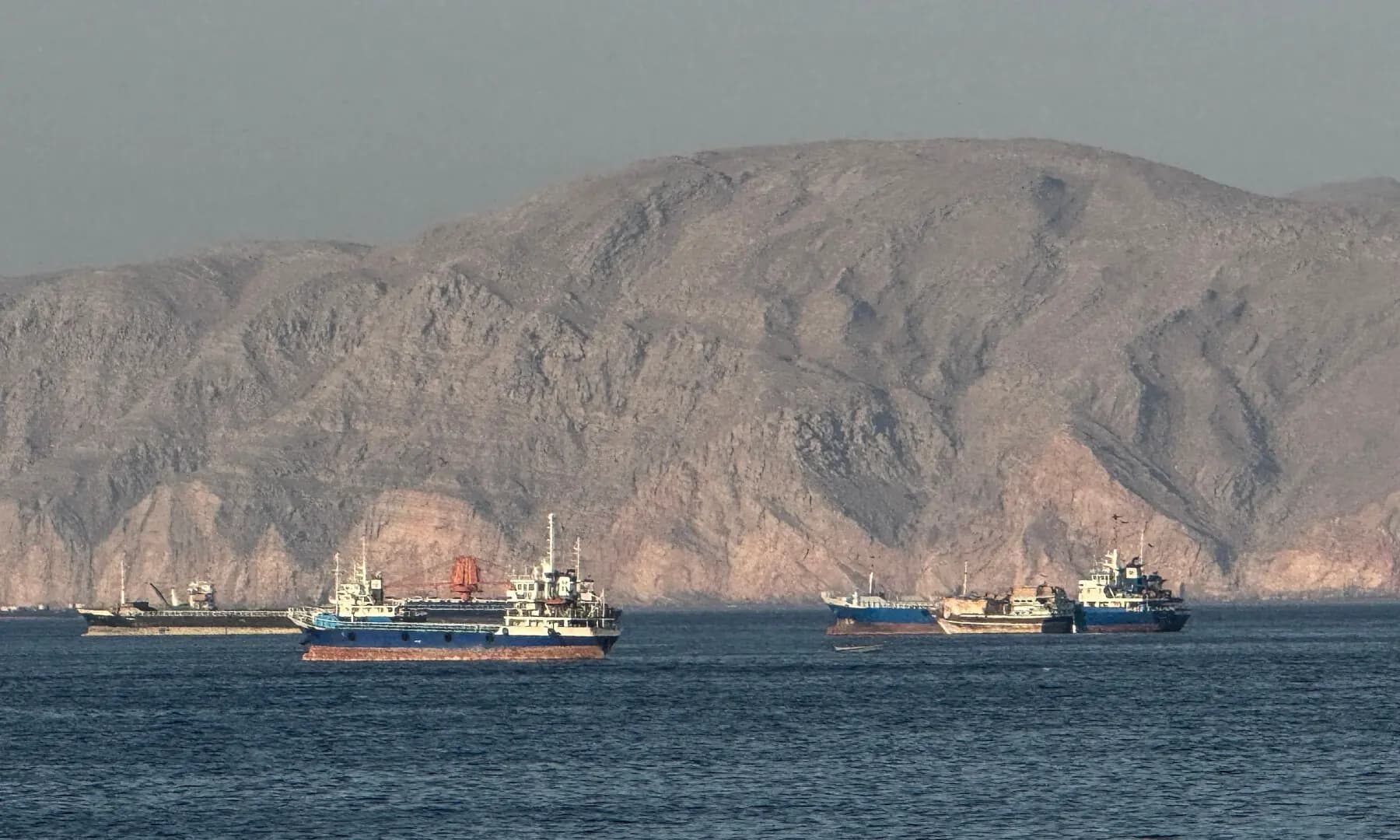
Vessels are seen anchored in the Strait of Hormuz, off the port city of Khasab on Oman’s northern Musandam Peninsula on May 17, 2026. — (AFP)
ISLAMABAD: US President Donald Trump said Sunday that a peace deal with Iran is "now complete," announcing the Strait of Hormuz is open, and the United States will lift its naval blockade.
"The Deal with the Islamic Republic of Iran is now complete. Congratulations to all!" Trump said on his Truth Social network, shortly after mediator Pakistan said both sides had reached an agreement.
“Ships of the World, start your engines. Let the oil flow!" he said.
Later in the day, Pakistan's Prime Minister Shehbaz Sharif also announced: "Both sides have declared the immediate and permanent termination of military operations on all fronts, including in Lebanon."
When will the Strait actually open?
The announcement has raised hopes of restoring one of the world's most important energy corridors, but the reopening of the strait will be more complicated than we may think.
Though Trump had said in an earlier statement that the waterway would open immediately, he later added that it would reopen after the planned signing of an Iran peace deal on Friday.
Iran's Mehr news agency reported that Iran would reopen the waterway "within 30 days under Iranian arrangements," without elaborating.
Few of the details were made public, but both Washington and Islamabad said the agreement will be signed in Switzerland.
While the proposed memorandum of understanding is expected to provide a framework for restoring commercial navigation, industry experts and analysts say a full return to normal shipping and oil trade could take months, and that even then, the challenge of making it safe for global shipping remains.
British Prime Minister Keir Starmer said attention must now turn to implementing the agreement.
"Attention must now turn to fully implementing the memorandum of understanding to ensure the Strait reopens and remains fully and permanently open," he said.
Moving ships won't be easy
Al Jazeera reported that roughly 2,000 ships remain stranded in the Gulf awaiting clearance to transit the waterway, while maritime intelligence firm Kpler has estimated the figure at around 600 vessels.
Analysts say shipping companies are still facing significant uncertainty and will require guidance on navigation routes, security arrangements, and transit procedures before normal operations can resume.
Analysts say shipping companies are facing significant uncertainty and will need guidance on routes.
According to The New York Times, more than 130 ships were transiting the strait each day before the blockade. Returning to those levels could take weeks or even months, helping explain why energy prices are not expected to fall immediately.
Jakob P. Larsen, chief safety and security officer at the Baltic and International Maritime Council, told the newspaper that shipping companies first need clarity on how vessels will be prioritized.
"We will need to know which route to take and then, of course, what kind of coordination or permits or whatever would need to be obtained with which authorities," Larsen said.
He added that vessels would ideally operate under speed restrictions to reduce the risk of collisions or grounding in shallow waters.
Lasse Kristoffersen, chief executive of the shipping and logistics company Wallenius Wilhelmsen, said it would take 30 to 45 days for shipping activity in the region to return to normal, even if reopening efforts proceed smoothly.
Dimitris Ampatzidis, risk manager at maritime data firm Kpler, estimated that traffic would recover to only 40%-50% of normal levels during the first three to four weeks, even if authorities establish an orderly transit system.
"The key question for shipping markets is what comes next: a managed reopening, escorted transit system, restricted passage, or a genuine return to normal operations," he said.
On Monday, Iran's Fars news agency said that Tehran had also added the imposition of maritime service fees in the Strait of Hormuz in the final moments of negotiations.
Risky mines
The threat posed by sea mines remains one of the biggest obstacles to restoring normal shipping operations.
The International Energy Agency said this month that navies from the US, Britain, France and Germany would need several weeks to deploy minesweepers to the region. Until shipping lanes are cleared and declared safe, maritime insurers are expected to maintain elevated war-risk premiums.
Trump said mine-clearing efforts were already underway.
"Additionally, our mine 'sweepers' are clearing the Strait right now. I am hereby ordering that activity to continue, but at a tripled up level!" he wrote on Truth Social.
On April 21, Pentagon officials told the US House Armed Services Committee that it could take up to six months to fully clear the Strait of Hormuz of mines deployed during the conflict.
"We feel confident in our ability, in the correct period of time, to clear any mines that we identify," US Defence Secretary Pete Hegseth told reporters on Friday.
Oscar Seikaly, chief executive of NSI Insurance Group, told Al Jazeera that insurers can manage risk but struggle with uncertainty.
"The market can insure volatility, but it struggles to insure uncertainty," he said.
"War-risk insurers are not looking for a risk-free environment; they are looking for a risk they can quantify, price, and spread across enough capacity."
Global impact
The blockade has had consequences far beyond the Middle East, contributing to higher fuel costs, inflationary pressures, and supply chain disruptions worldwide.
The waterway normally carries around one-fifth of global oil supplies and a significant share of global liquefied natural gas exports.
"What we're going to be able to do is drive down the cost of energy, not just now but for the long term, and create a real engine of prosperity in the Middle East," US Vice President JD Vance told Fox News.
Iran's Deputy Foreign Minister Kazem Gharibabadi said in televised comments that the deal put an "immediate end" to the countries' war and that they would hold talks within two months to seek a "final agreement."
.jpg&w=3840&q=75)
.jpg&w=3840&q=75)
Latest News
Pakistan team reaches base camp with body of renowned climber killed in avalanche
AN HOUR AGO
.jpg&w=3840&q=75)
'Deceitful' Infantino 'must go' says Luis Figo
2 HOURS AGO
.jpg&w=3840&q=75)
Tech back in fashion as Asian markets extend rebound
5 HOURS AGO

India monsoon floods, landslides kill more than 100 since July: officials
5 HOURS AGO
.jpg&w=3840&q=75)
Pakistan, Japan reaffirm commitment to expand cooperation in key sectors
5 HOURS AGO