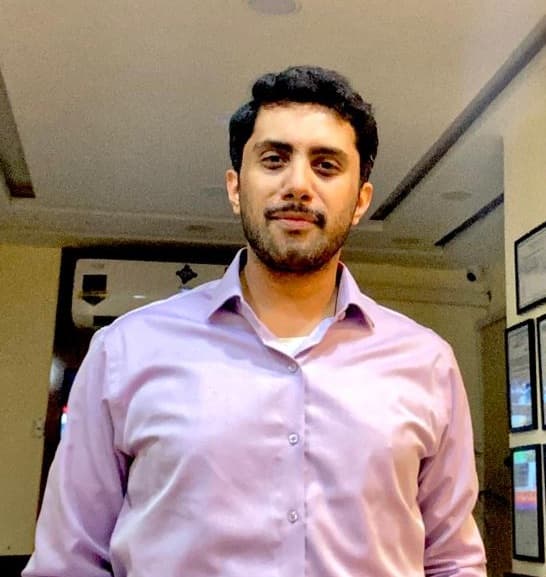
LAHORE: Pakistani undergraduate economists delivered a standout performance at the 20th South Asian Economics Students’ Meet 2025 held in Kathmandu, Nepal.
The event, organized by the Nepal Economic Association in partnership with Tribhuvan University and supported by the World Bank, brought together the brightest young minds from across South Asia. The theme of this year’s conference was “Assessing Risks and Vulnerabilities in South Asia and the Path to Economic Resilience.”
The delegation from Lahore University of Management Sciences (LUMS) emerged as the most successful team, securing the highest number of accolades among participating countries. Leading the charge, the LUMS team, representing the Chaudhry Nazar Muhammad Department of Economics, included Muhammad Hasaan Haroon, Hiba Sajjad, Maria Khalid, Simran, Zainab Asad, Zulekha Shoib, and Amen.
The delegation was accompanied by faculty members Dr. Ali Hasanain and Dr. Fahd Ali. Alongside LUMS, participants from the Lahore School of Economics also contributed to Pakistan’s remarkable showing.
Pakistan’s impressive performance included four wins in paper presentations, the most by any nation, along with a victory in the Policy Discussion Round. The team also performed strongly in the flagship Budding Economist Quiz, with all four LUMS participants making it to the top ten.
The LUMS delegates made notable contributions with their research. Simran’s study on the impact of covariate and idiosyncratic shocks on poverty and welfare, Maria Khalid’s exploration of trade disruptions and investment risks, Muhammad Hasaan Haroon’s work on energy transition pathways, and Hiba Sajjad’s examination of urbanization and infrastructure resilience all won top honors.
Other Pakistani delegates also performed strongly, finishing as runner-ups in various categories.
The LUMS team’s performance was further solidified by its dominance in the Budding Economist Quiz. All four participants advanced to the top ten, with Zulekha Shoib from LUMS reaching the final five after presenting her research on the long-term economic effects of floods in Pakistan.
Shoib’s paper extended an existing mathematical model, drawing attention to the lasting economic consequences of natural disasters.
Reflecting on the experience, Shoib described it as both academically rewarding and culturally enriching. “Sharing a room with an Indian participant was a unique learning experience,” she said.
Muhammad Shahwali Najmi, team leader from LUMS, called the conference “unforgettable” and highlighted Pakistan’s exceptional performance.
“Our team members, Hassan, Simran, Maria, and Hiba won their respective paper presentation categories, and we were runners-up in several others. Pakistan secured four wins in paper themes, India three, with the remaining awards shared among other nations. We also emerged victorious in the policy discussion and had the most students in the top ten of the Budding Economist competition,” he told Pakistan TV Digital.
The experience left a lasting impression on the participants, many of whom noted the academic depth and regional solidarity fostered during the event.
“The conference was academically rich, and I particularly appreciated the opportunity to interact with leading specialists from the World Bank,” said Aman from LUMS, who presented on carbon and solar taxes.
Mobeen Mukhtar, from the Lahore School of Economics, who spoke on education disruption, called the event a “major learning leap.” Zainab Asad from LUMS noted that engaging with economists from across the region provided her with “valuable insights” into the shared vulnerabilities facing South Asia.
Aliza Waseem, winner of the Policy Discussion Round from the Lahore School of Economics, emphasized that the region’s common economic challenges demand collaborative solutions. “South Asia’s economic future hinges on regional cooperation,” she said.
Hasaan Haroon, from LUMS, who presented on the “utility death spiral” in energy tariffs, echoed this sentiment. “The conference reinforced the idea of a ‘One South Asia,’ where the challenges we face are interconnected, and our solutions must be too,” he remarked.
Upon returning to Pakistan, the delegation was warmly received by Pakistan Ambassador to Nepal Abrar H. Hashmi who praised the students for their “outstanding national performance.”
He commended their achievements at what is regarded as one of the region’s most competitive academic forums.
The success of the LUMS team further underscored the university’s role as a leading institution in nurturing Pakistan’s brightest young economists.
With 2025 marking one of LUMS’ most successful years at the regional level, the university’s leadership remains committed to fostering academic excellence and international collaboration.

.jpg&w=3840&q=75)


.jpg&w=3840&q=75)

.jpg&w=3840&q=75)
.jpg&w=3840&q=75)