

Photo: Pakistan TV Digital
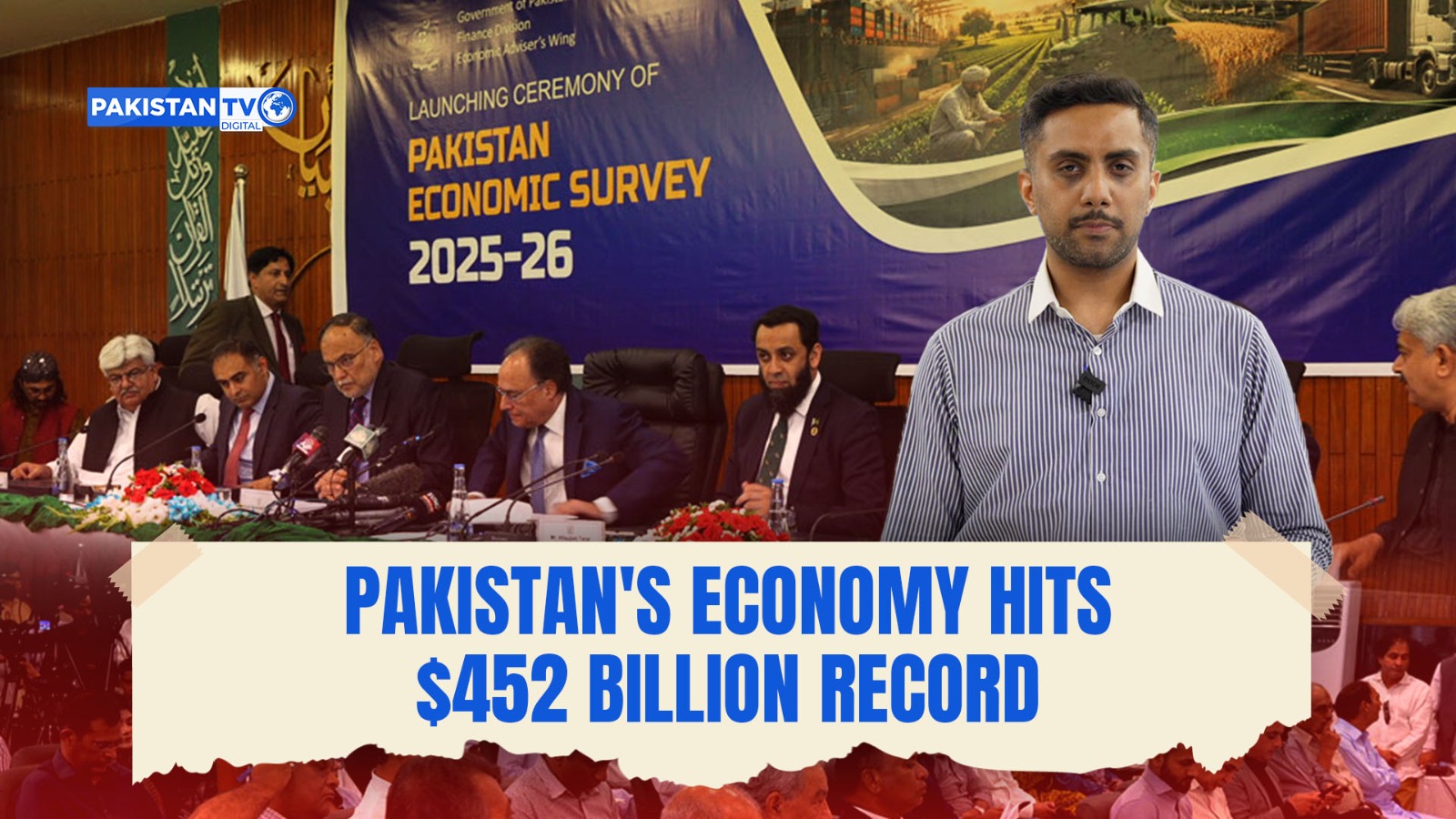
ISLAMABAD: Pakistan’s external sector showed resilience during July-March FY2026, posting a current account surplus and strengthening external buffers despite a sharp fall in food exports, higher import pressures, and global energy market volatility, according to the Pakistan Economic Survey 2025-26.
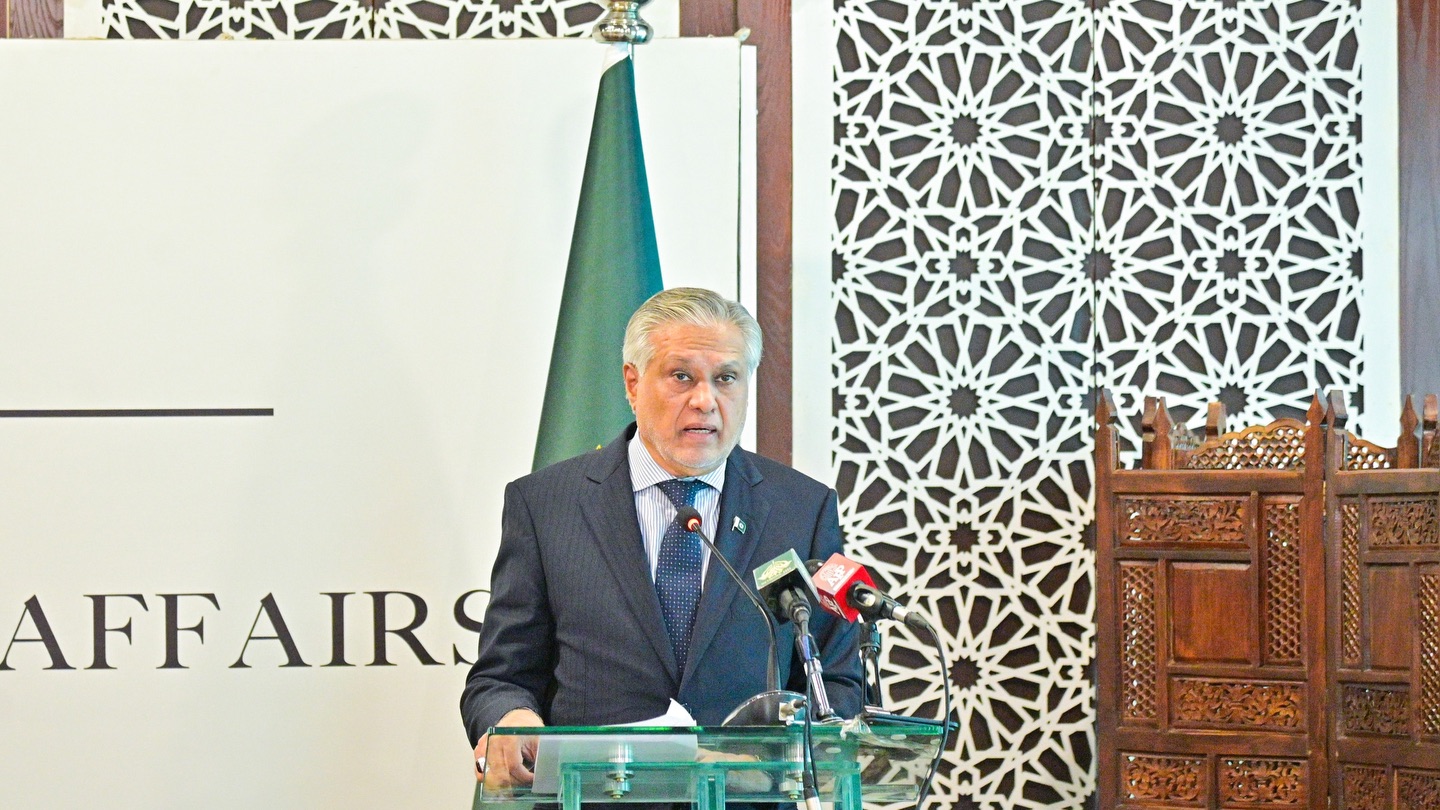
The Economic Survey was presented by Finance Minister Muhammad Aurangzeb at a press briefing in Islamabad on Thursday.
The report said Pakistan’s external account remained broadly manageable during the period, with improvements driven by strong workers’ remittances, higher services exports, and lower primary income outflows due to reduced interest payments on external debt.
These inflows helped offset the widening goods trade deficit and supported foreign exchange liquidity, reserve accumulation and exchange rate stability.
Pakistan recorded a current account surplus of $72 million during July-March FY2026, reflecting what the survey described as continued improvement in external account dynamics compared to the previous year.
Remittances and services exports
Workers’ remittances increased by 8.2% to $30.3 billion, the Economic Survey said, forming a key pillar of external stability.
The survey noted that remittance inflows were supported by greater use of formal channels, while Saudi Arabia and the United Arab Emirates remained the leading source countries. It added that inflows from the European Union — particularly Italy, Spain, and Ireland also recorded noticeable growth, indicating gradual diversification of remittance sources.
At the same time, services exports provided a crucial offset to pressure in goods trade.
Services exports rose 17.2% during July-March FY2026, supported mainly by the information technology sector, where exports grew 19.8%.
Aurangzeb said Pakistan’s IT exports had crossed $3.8 billion, and expressed hope that they would reach $4.5 billion in the near term.
He added that freelancer exports were now approaching $900 million, highlighting what he described as the growing contribution of digital services and remote work to Pakistan’s external earnings base.
Goods exports decline
Despite gains in remittances and services, goods exports declined by 5.8% to $22.7 billion during July-March FY2026.
The finance minister said the decline was led primarily by the food sector.
“In the food sector, our rice exports have declined by $1.1 billion,” Aurangzeb said, adding that sugar exports fell by $403 million, bringing the total decline in food exports to around $1.5 billion.
The Economic Survey explained that the contraction in food exports was driven by multiple external and structural factors, including weak global demand, flood-related losses, normalization of global rice supply conditions after earlier shortages, and disruptions in Pak-Afghan trade following tensions along the western border since mid-October 2025.
These factors combined to significantly reduce export earnings from key agricultural commodities, particularly rice, which had previously been a major driver of Pakistan’s food export growth.
Textile sector stable
While food exports weakened, the textile sector remained broadly stable and continued to form the backbone of Pakistan’s export structure.
Textile exports accounted for 59.6% of total exports, standing at $13.5 billion, according to the Economic Survey.
Within the sector, readymade garment exports increased by 3.8%, reflecting steady performance in value-added segments.
The finance minister also pointed to growth in sports goods exports, highlighting Pakistan’s manufacturing presence in global supply chains.
He said the football to be used in the upcoming FIFA World Cup was manufactured in Pakistan, underscoring the country’s role in specialized export manufacturing.
Sports goods exports recorded 18% growth during July-May FY2026, according to the minister.
Imports rise
On the import side, Pakistan recorded a 7.8% increase in imports during July-March FY2026, reflecting rising demand for production-related inputs as domestic economic activity improved.
The Economic Survey said machinery imports increased by 10.3%, reaching $7.9 billion, led by a 27.3% increase in telecom machinery imports.
The transport group saw a sharp increase of 82.8% to $2.9 billion, driven primarily by a doubling of motor car parts imports to $1.5 billion, following the easing of import restrictions.
Food imports rose by 15.2% to $7.1 billion, mainly due to higher palm oil prices in international markets.
Petroleum imports, however, declined by 5.9% to $11.2 billion, supported by lower LNG demand and increasing contribution of solar power to energy generation.
Toward the latter part of the period, however, the import bill came under renewed pressure due to global energy market volatility.
Brent crude prices surged from an average of $62.7 per barrel in December 2025 to $103.7 per barrel in March 2026, following the escalation of the US-Iran conflict, which increased global freight and energy costs.
Services trade deficit narrows
The services sector continued to provide a structural offset to goods trade pressures.
The services trade deficit narrowed by 10.4% to $2.1 billion, the Economic Survey said.
Services exports rose to $7.4 billion, while services imports increased by 10.7%.
IT exports alone reached $3.4 billion, accounting for 46.1% of total services exports, and growing by 19.8%.
Other business services increased by 27.7% to $1.6 billion, driven largely by a threefold rise in freelance technical services.
The Economic Survey highlighted that workers’ remittances of $30.3 billion exceeded total goods export receipts of $22.7 billion during the period, underscoring their central role in external account stability.
Foreign exchange reserves rise
Pakistan’s foreign exchange reserves strengthened significantly during the year, reaching $20.6 billion as of April 17, including $15.1 billion held by the State Bank of Pakistan, the survey said.
Reserves rose to multi-year highs during the outgoing fiscal year, reflecting improved external inflows and stabilization in the balance of payments.
Finance Minister Aurangzeb said reserves were currently around $17 billion and were expected to reach $18 billion by end-June, providing approximately three months of import cover.
Improvement in inflows
The financial account recorded net inflows of $194 million during July-March FY2026, compared with a net outflow of $1 billion in the same period last year.
The Economic Survey said this turnaround, combined with the current account surplus, strengthened Pakistan’s external position and contributed to reserve accumulation, which reached $21.8 billion by end-March 2026.
Overall, the survey concluded that Pakistan’s external account remained resilient during FY2026, supported by remittances, services exports, and improved financial inflows, even as goods exports contracted and global commodity markets remained volatile.


Latest News
After three sessions, SpaceX already among world's most valuable companies
3 HOURS AGO
.jpg)
Pakistan, Egypt foreign ministers discuss US-Iran agreement, regional issues
5 HOURS AGO
Pakistan’s IT exports hit $4B-mark for first time
5 HOURS AGO
Elon Musk's AI tool Grok was used in strikes against Iran: US govt
6 HOURS AGO

Pakistan facilitating repatriation of 30 Iranian nationals, says FM Dar
7 HOURS AGO