ISLAMABAD: Pakistan on Monday voted in favor of a United Nations Security Council resolution extending the mandate of the United Nations Assistance Mission in Afghanistan (UNAMA) by three months, reaffirming its support for the mission’s role in promoting peace, security, and stability in Afghanistan.
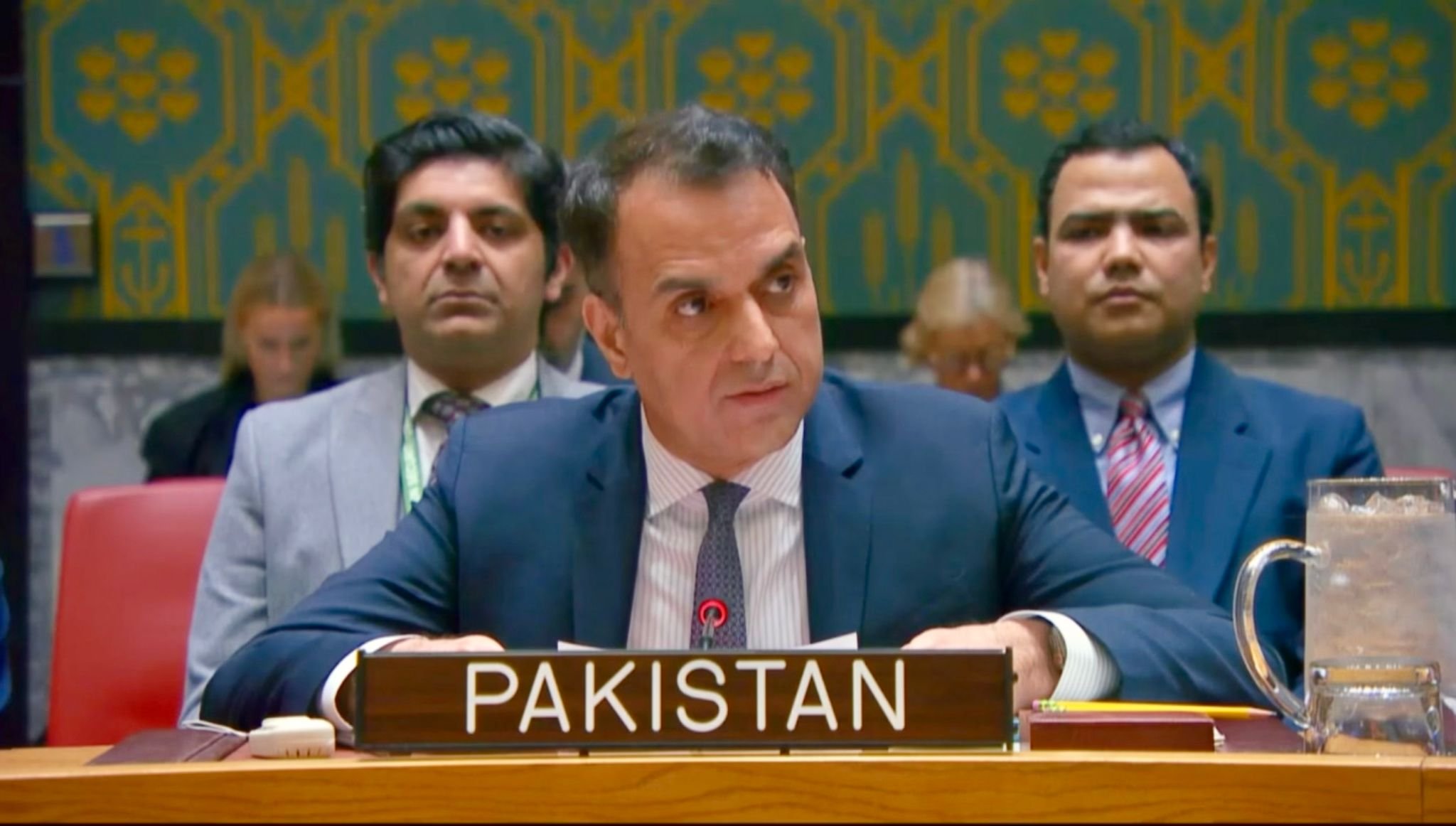
Speaking at the Security Council following the adoption of the resolution, Pakistan’s Deputy Permanent Representative to the United Nations Usman Jadoon said Afghanistan continues to face multiple challenges, including an increasing threat of terrorism, human rights concerns, narcotics issues, and diminishing humanitarian assistance.
He said Pakistan supports UNAMA’s efforts in addressing these challenges and welcomed the unanimous adoption of the resolution.
Jadoon also commended China for its role as penholder and for efforts to build consensus among Security Council members.
He said Pakistan has consistently maintained that the deteriorating security situation and the rise in terrorism emanating from Afghanistan remain among the most serious challenges facing the country.
He added that elements within the Taliban administration were collaborating with, or providing a permissive environment for, several militant groups, including Tehreek-e-Taliban Pakistan (TTP); the Baloch Liberation Army (BLA) and its Majeed Brigade; Islamic State Khorasan (ISIL-K); Al-Qaeda; and the East Turkestan Islamic Movement (ETIM).
According to Jadoon, these groups operate with impunity inside Afghanistan and are responsible for cross-border attacks targeting Pakistani civilians, law enforcement personnel, critical infrastructure, and public places.
He said the Security Council resolution expressed serious concern over the presence of terrorist groups in Afghanistan, which it said “continue to constitute a threat to international peace and security,” and called on the Taliban to take “active, immediate, demonstrable and concrete measures” to combat terrorism in all its forms.
The resolution also outlined expectations for strengthening the safe and secure management of weapons and ammunition to prevent their diversion to terrorist groups.
Jadoon said UNAMA, as mandated, has a responsibility to monitor and analyze security dynamics across Afghanistan, including gaining a better understanding of the illicit economy.
He added that the mission is also expected to support efforts aimed at preventing the illicit trade and destabilizing accumulation of small arms and light weapons, as well as their diversion within Afghanistan and the wider region.
He further said UNAMA should support efforts to create conditions conducive to the reintegration of refugee populations in Afghanistan.
Jadoon also cautioned against what he described as disinformation advanced by local Taliban elements that could create obstacles to UNAMA personnel accessing different parts of the country. At the same time, he said Pakistan expects the mission to report objectively on developments on the ground while taking into account the security concerns of Afghanistan’s neighboring countries.
He expressed hope that the three-month extension would allow the Security Council to review UNAMA’s role in Afghanistan in a manner that contributes to long-term peace and stability in the country and in the wider region.