


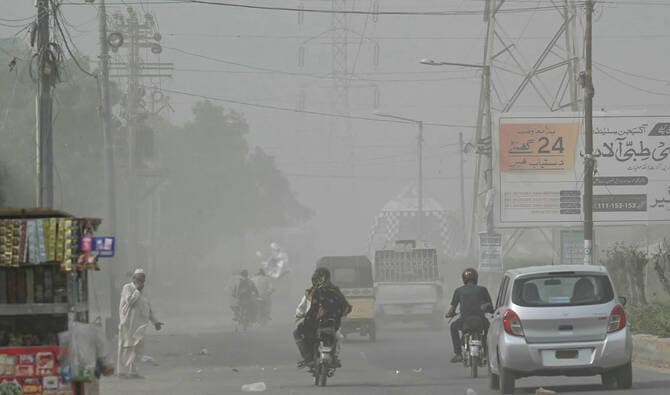
KARACHI: An intense heatwave coupled with powerful dust storms has created a dangerous weather emergency across Sindh, causing deaths, damaging infrastructure, disrupting agriculture, and exposing Pakistan's growing climate vulnerabilities.
According to the Pakistan Meteorological Department, Dadu recorded a scorching 51.5 degrees Celsius on May 30, the highest temperature reported in the country this season and an all-time high for the district.
While extreme heat gripped upper and central Sindh, strong winds and dust storms swept through areas including Nawabshah and Moro, uprooting trees, damaging homes, disrupting power supplies, and destroying commercial solar installations.
Environmental and public health expert Dr Zafar Fatmi said the destructive weather pattern was driven by a combination of severe pre-monsoon heat, dry land conditions, and thunderstorm-generated winds.
“When temperatures remain exceptionally high, the atmosphere becomes unstable, and the arrival of cooler air masses or moisture can trigger intense wind events,” Dr Fatmi told Pakistan TV Digital.
He explained that vast stretches of land across Sindh undergo intense solar heating during May and June, creating low-pressure zones over the interior. As hot air rises rapidly, incoming cooler or more humid air can trigger violent wind bursts, dust storms, and localized thunderstorms.
Authorities advise avoiding prolonged exposure to sun
PMD heatwave alerts warned that temperatures in districts including Dadu, Jacobabad, Shaheed Benazirabad, Larkana, Sukkur, Ghotki, and Khairpur could range between 47 C and 50 C, remaining 4 C to 6 C above normal levels.
Authorities have advised residents, particularly children, women, and the elderly, to avoid prolonged exposure to sunlight and stay hydrated.
However, Dr Fatmi said the accompanying windstorms have transformed the heatwave into a broader public safety crisis.
“The loss of life in such events is often caused by collapsing roofs, falling trees, damaged structures, flying debris, road accidents, and electrocution from downed power lines rather than dust inhalation alone,” he said.
Beyond the immediate damage, the storms are also taking a toll on Sindh's agricultural sector by stripping away fertile topsoil, damaging standing crops, accelerating moisture loss, and affecting livestock health.
Dr Fatmi warned that climate change, prolonged drought, land degradation, and vegetation loss are increasing the frequency and intensity of such extreme weather events across the arid and semi-arid regions of Sindh, Balochistan, and southern Punjab.
He added that when large dust clouds reach urban centers such as Karachi, they combine with existing air pollution, creating serious health risks for people suffering from respiratory and cardiovascular diseases.
Pakistan remains among the countries most vulnerable to climate change despite contributing less than 1% of global greenhouse gas emissions.
Dr Fatmi stressed the need for stronger early warning systems, climate-resilient infrastructure, improved land management practices, and greater community preparedness to reduce future economic losses and save lives.