


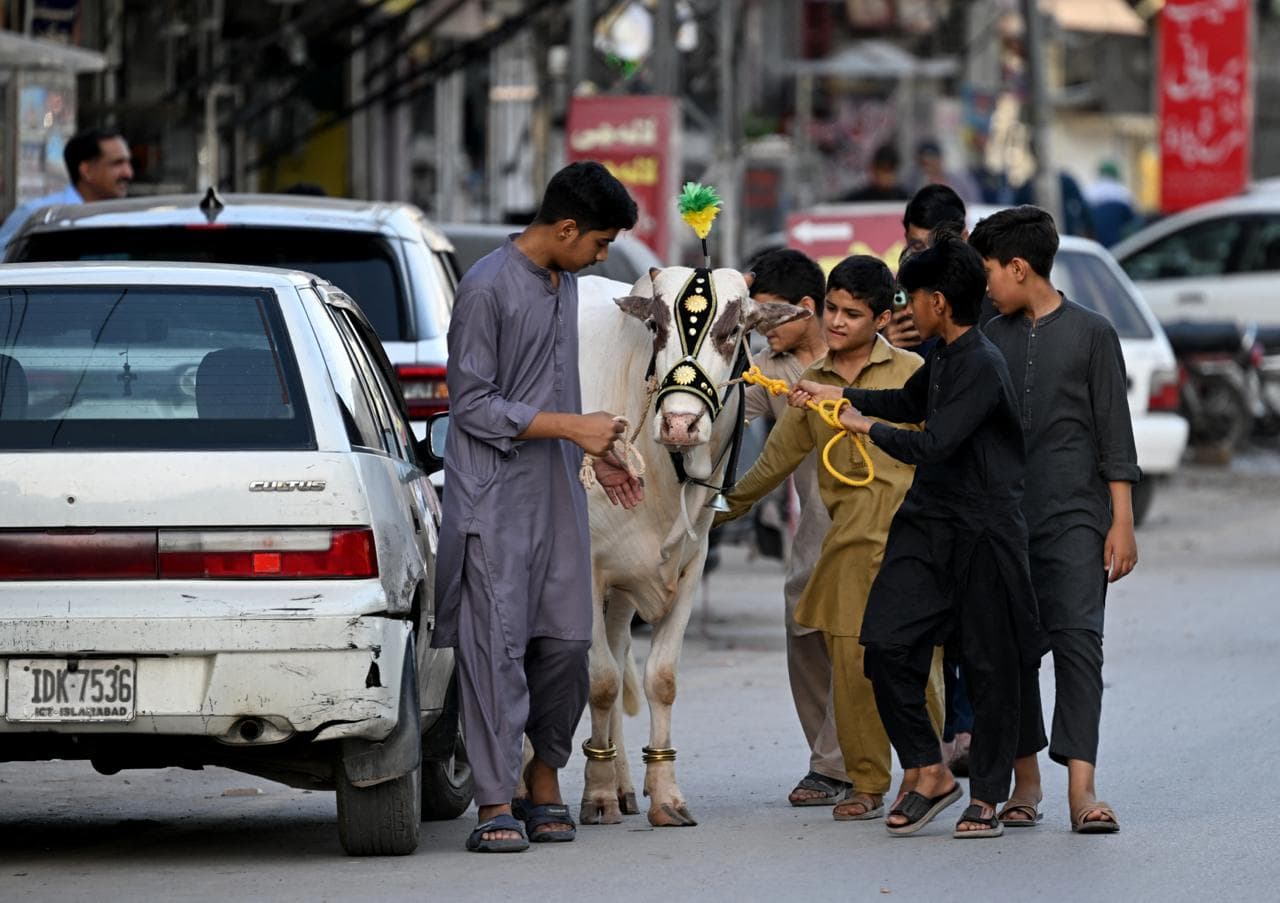
Muslims across the world are preparing to celebrate Eid al-Adha, one of the two major Islamic festivals, marked by the ritual sacrifice of animals in remembrance of Prophet Ibrahim’s devotion and obedience to Allah.
According to Islamic tradition, Prophet Ibrahim was willing to sacrifice his son after receiving a command from Allah in a dream, before Allah replaced the sacrifice with a ram after testing his faith and submission. The event is referenced in the Holy Quran in Surah As-Saffat:
“And We ransomed him with a great sacrifice.”
(Surah As-Saffat 37:107)
Also known as the “Festival of Sacrifice,” Eid al-Adha is observed annually on the 10th day of Dhul Hijjah, the final month of the Islamic lunar calendar, following the completion of the Hajj pilgrimage in Saudi Arabia.
Millions of Muslims gather in mosques and open prayer grounds for special Eid prayers before carrying out Qurbani, or ritual animal sacrifice, a practice rooted in faith, charity and social responsibility.
The sacrifice
Each year, millions of animals are sacrificed globally during Eid al-Adha. In Pakistan alone, around 6.8 million animals were sacrificed during Eid al-Adha in 2024, according to data cited by the Pakistan Institute of Development Economics (PIDE).
The figure represented an increase from approximately 6.18 million animals sacrificed during Eid al-Adha in 2023. The total included about 2.86 million cows and bulls, 165,000 buffaloes, 3.3 million goats, 385,000 sheep and nearly 99,000 camels.
Under Islamic tradition, the meat from the sacrifice is commonly divided into three portions: one for the family, one for relatives and friends, and one for the poor and needy, reflecting Islam’s emphasis on compassion, charity and care for the less fortunate.
Beyond its religious significance, Eid al-Adha also generates major economic activity in Pakistan, particularly for livestock farmers, traders, transporters, tanners and small businesses linked to the seasonal cattle market economy.
The rules of Qurbani
The practice of sacrifice is rooted in the traditions of Prophet Muhammad (peace be upon him).
Narrated Anas bin Malik:
“The Prophet sacrificed two horned rams, black and white in colour. He slaughtered them with his own hands, mentioned Allah’s name over them, said Takbir and placed his foot on their sides.”
(Sahih al-Bukhari, Book of Sacrifice, Hadith 5558)
Islamic scholars cite this Hadith as evidence for the method and significance of Qurbani, as well as the importance of offering the sacrifice after the Eid prayer.
Islamic jurisprudence also prescribes detailed conditions for a valid sacrifice. The animal must belong to permitted categories, goat, sheep, cow, buffalo or camel, and meet minimum age requirements generally accepted by scholars: at least one year for goats and sheep, two years for cows and buffaloes, and five years for camels.
The animal must also be free from major defects such as blindness, severe illness or lameness.
A goat or sheep is considered sufficient for one household, while a cow, buffalo or camel may be shared by up to seven people.
Managing Eid in Pakistan
Authorities across Pakistan typically launch extensive cleanliness, waste disposal and security operations during Eid days to manage animal waste, traffic congestion and crowds in major urban centres.
Municipal workers, volunteers and local administrations remain on high alert throughout the holiday period, particularly in large cities where temporary cattle markets and large-scale animal slaughter create additional logistical challenges.
For Muslims, however, Eid al-Adha remains above all a spiritual occasion centred on sacrifice, obedience, gratitude and generosity, values deeply rooted in Islamic faith and tradition.