


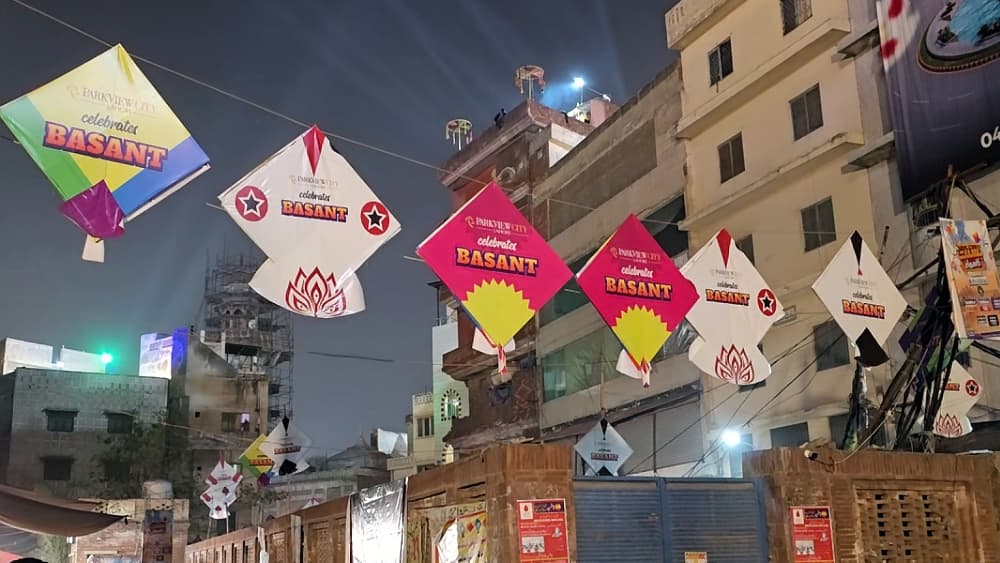
LAHORE: The city's three-day Basant festival wrapped up this week, marking the first officially supervised celebration of the spring festival in nearly 20 years.
Aside from its cultural symbolism, the event provided measurable insights into public participation, economic activity, and the practicality of hosting large-scale traditional festivals under modern regulations.
Basant has historically been central to Lahore’s cultural identity, but concerns over safety led to its suspension in the mid-2000s. Its revival, even in a limited format, was therefore closely observed by authorities, businesses, and the public alike.
The scale of engagement during the three days suggests sustained public demand for cultural events rooted in local tradition.
Preliminary market estimates show that kite-related items alone generated sales of over Rs 2 billion, with additional revenue across the hospitality, transportation, retail, and food sectors.
During televised remarks, Punjab Chief Minister Maryam Nawaz said that billions of rupees in total business were recorded during the Basant period, benefiting small vendors as well as large industries, including hotels, catering services, and transport providers.
Millions entered the city during the festival
Mobility and tourism data further highlight the festival’s reach.
According to government estimates, 4-5 million people entered Lahore by road during the festival days, while nearly one million vehicles were recorded entering the city.
Air travel to Lahore also remained fully booked, reflecting strong domestic travel demand linked to the event.
To manage urban movement and accessibility, the Punjab government provided free public transportation services, which were utilized by an estimated 2.6 million passengers over the three days.
The numbers indicate a strong reliance on public infrastructure during major cultural events and serve as a reference for future planning.
First-ever Basant for young people
Socially, the festival bridged generational gaps.
While older residents returned to familiar customs, rooftop kite flying, traditional yellow and white clothing, and communal meals, many younger Lahoris experienced Basant for the first time. This first-time participation underscores how cultural practices can re-enter public life after long absences and regain relevance among new audiences.
The event was conducted under heightened security measures, including Safe City camera monitoring, thermal drones, and coordinated surveillance.
Authorities reported that the controlled environment allowed celebrations to proceed while addressing longstanding safety concerns associated with Basant.
Foreign visitors attended
Foreign visitors also participated in noticeable numbers, attending rooftop gatherings and public events. Their presence reinforced Lahore’s image as a regional cultural destination and highlighted the festival’s potential role in cultural tourism.
Speaking to Pakistan Television Digital, David Wagner, who arrived in Lahore from Germany for a local literature festival, expressed his excitement about Basant.
He shared his experience flying a kite and highlighted how the Basant festival can bring people together.
“I had the chance to be on a rooftop, I flew the kite myself, and I loved it,” he said, adding, “I like it very much to have it in spring. To celebrate and bring the community together — it’s a wonderful thing.”
As the festival ended, Basant’s return offered more than just nostalgia. It provided data-backed evidence of economic boost, public participation, and logistical strength.
For policymakers and cultural organizers, the three-day event serves as a case study in how heritage festivals can be reintroduced responsibly, balancing tradition with regulation and celebration with civic order.